samiwarraich
- 3
- 0
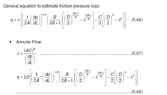
Can soView attachment 2339me one help to these equation for variable dp/dL
The discussion revolves around solving equations for the variable dp/dL, with participants seeking assistance in manipulating and solving these equations, particularly those involving fractional powers of dp/dL. The scope includes mathematical reasoning and software application for solving equations.
Participants generally agree on the need to solve the equations for dp/dL, but there are varying opinions on the methods and software to use for solving them. The discussion remains unresolved regarding the best approach and tools.
There are limitations in the discussion regarding the assumptions needed for the equations and the specific conditions under which the proposed methods would work. The effectiveness of the suggested software solutions is also not confirmed.