The Evolution of the Universe, Cosmic Web and Connections

  • Context: Insights 
  • Thread starter Thread starter Prof Mark R Smith
  • Start date Start date
  • Tags Tags
    Evolution Universe Web
Click For Summary
SUMMARY

The discussion centers on the evolution of the universe, emphasizing the formation of galaxies within areas of high density, which are part of a large-scale structure known as the cosmic web. This cosmic web connects clusters of galaxies through filaments, as illustrated in a model derived from observed galaxies. The conversation highlights the role of supermassive black holes and the impact of extreme environments on galaxy formation and star activity, particularly referencing the galaxy M87, which is noted for its lack of star formation.

PREREQUISITES
  • Understanding of cosmic web structure and galaxy formation
  • Familiarity with supermassive black holes and their influence on surrounding matter
  • Knowledge of tidal stripping and ram pressure stripping in astrophysics
  • Basic concepts of X-ray emissions from hot gas in galaxies
NEXT STEPS
  • Research the dynamics of the cosmic web and its implications for galaxy formation
  • Study the characteristics and behavior of supermassive black holes in galaxies
  • Explore the effects of tidal stripping and ram pressure stripping on galaxy evolution
  • Investigate the Quasar epoch and its significance in the context of galaxy clusters
USEFUL FOR

Astronomers, astrophysicists, and students interested in the large-scale structure of the universe, galaxy formation processes, and the role of black holes in cosmic evolution.

Prof Mark R Smith
Insights Author
Messages
5
Reaction score
17
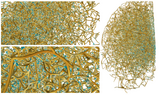
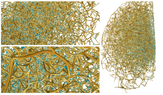
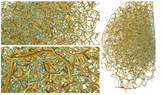
The universe was not perfectly uniform when it started, some areas had a higher density than others. During the evolution of the universe, these areas of high density contained most of the matter and started forming galaxies where there was the highest concentration of matter. This large-scale structure (‘cosmic web’) connects the observed clusters of galaxies via a series of filaments. Figure 1 is a model of what this looks like.
web.png
Figure 1: Skeleton of a cosmic web traced out by an algorithm run on a sample of observed galaxies. The far right shows the complete web, and the left images show close-up portions. Blue areas are points of higher density. 


Table of Contents
ToggleCosmic Web Key...


[url="https://www.physicsforums.com/insights/the-evolution-of-the-universe-cosmic-web-and-connections/"]Continue reading...
 

Attachments

  • web.png
    web.png
    158.7 KB · Views: 313
  • web.png
    web.png
    158.7 KB · Views: 68
  • web.png
    web.png
    158.7 KB · Views: 57
  • web.png
    web.png
    158.7 KB · Views: 302
  • web.png
    web.png
    158.7 KB · Views: 791
  • web.png
    web.png
    158.7 KB · Views: 243
  • web.png
    web.png
    158.7 KB · Views: 187
  • web.png
    web.png
    158.7 KB · Views: 173
  • web.png
    web.png
    158.7 KB · Views: 104
Last edited by a moderator:
  • Like
Likes   Reactions: Dragrath, RUQIAN and Drakkith
Space news on Phys.org
Doesn't seen surprising to me I mean nodes tend to be where galaxy clusters form which seen to have relatively quickly built massive dense galaxies not long after the formation of the universe. Moreover most of these behemoth galaxies contain large supermassive to ultra massive black holes and hot gas radiating primarily in the X ray regime. As any other galaxies entering the vacinity experience extreme tidal stripping and or ram pressure stripping it wouldn't really matter how much gas they had in such extreme enviornments. It is primarily going to be funneled into the heart of the monster lurking within either feeding it or getting energetically ejected heating up the surrounding material inducing quenching. The nearest galaxy node is M87 and it certainly isn't undergoing star formation... Am I missing something here that would make this outcome less obvious? The Quasar epoch and galaxy clusters are always what I think of for well connected galaxies sitting at the heart of nodes and they are especially devoid of star formation.
 
Nothing surprising, this is an overview of the cosmic process which applies to various galaxies and the composition of matter within and surrounding!
 
  • Like
Likes   Reactions: Dragrath

Similar threads

  • · Replies 1 ·
Replies
1
Views
2K
  • · Replies 37 ·
2
Replies
37
Views
6K
  • · Replies 13 ·
Replies
13
Views
6K
  • · Replies 80 ·
3
Replies
80
Views
11K
  • · Replies 3 ·
Replies
3
Views
3K
  • · Replies 62 ·
3
Replies
62
Views
9K
  • · Replies 6 ·
Replies
6
Views
4K
  • · Replies 8 ·
Replies
8
Views
3K
  • · Replies 1 ·
Replies
1
Views
2K
  • · Replies 11 ·
Replies
11
Views
2K