Trouble understanding coordinates for the Lagrangian

Join the discussion
Ask a follow-up here, or get your own question answered by working scientists, mathematicians and engineers — people, not an autocomplete.
Real named experts · corrections over time · the nuance an AI answer skips
4 replies · 1K views
p1ndol
Messages
7
Reaction score
3
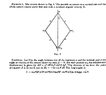
Hello, I'm having some trouble understanding this solution provided in Landau's book on mechanics. I'd like to understand how they arrived at the infinitesimal displacement for the particles m1. I appreciate any kind of help regarding this problem, thank you!
 

Attachments
  • Captura de Tela (65).png
    Captura de Tela (65).png
    16.8 KB · Views: 177
Reply
  • Like
Likes   Reactions: Leo Liu
Physics news on Phys.org
It's nothing more than Pythagoras applied to orthogonal infinitesimal displacements ##ad\theta## and ##a\sin{\theta} d\phi##, however if you want a (very slightly) more formal approach in terms of the holonomic basis...

if ##\phi## is held constant then ##\mathbf{E}_{\theta} = \dfrac{\partial \mathbf{r}}{\partial \theta} = a \hat{\boldsymbol{e}}_{\theta}## whilst if ##\theta## is held constant then ##\mathbf{E}_{\phi} = \dfrac{\partial \mathbf{r}}{\partial \phi} = a\sin{\theta} \hat{\boldsymbol{e}}_{\phi}##. Since ##\mathbf{E}_{\theta}## and ##\mathbf{E}_{\phi}## are orthogonal you have $$dl^2 = \displaystyle{\sum_i \sum_j }dx^i \mathbf{E}_i \cdot dx^j \mathbf{E}_j= {E_{\theta}}^2 d\theta^2 + {E_{\phi}}^2 d\phi^2 = a^2 d\theta^2 + a^2 \sin^2{\theta} d\phi^2$$
 
Last edited:
Reply
  • Like
Likes   Reactions: vanhees71, Leo Liu and p1ndol
Thank you very much!
 
Reply
  • Like
Likes   Reactions: ergospherical
I think he did it in spherical coordinates. The infinitesimal motion of m1 can be disassembled into two parts; this disassembly is correct since the displacements in the two directions are small (meaning they are kinda linear) and orthogonal:

Displacement^2 caused by horizontal rotation ##\Omega##:
$$dl^2_{horizontal}=R^2(\Omega\mathrm{dt})^2=a^2\sin^2 \theta(\Omega\mathrm{dt})^2$$

Displacement^2 caused by the rotation of m1 about A in the plane of book:
$$v=r\omega\implies dl^2_{vertical}=(a\mathrm d{\theta})^2$$

Hope this helps.
 
Reply
  • Like
Likes   Reactions: p1ndol