Unraveling the Mystery of Pulleys: Understanding Force and Distance Ratios

  • Thread starter Thread starter ali PMPAINT
  • Start date Start date
  • Tags Tags
    Pulleys
Click For Summary
SUMMARY

The discussion focuses on the mechanics of pulleys, specifically addressing the relationship between force and distance ratios. It highlights that when a rope is pulled, the force exerted is doubled, but the distance moved by the load is halved, maintaining the principle of work equivalence. The conversation emphasizes the confusion surrounding these concepts and encourages participants to present specific problems for clarification.

PREREQUISITES
  • Understanding of basic physics principles, particularly work and energy.
  • Familiarity with pulley systems and their mechanical advantages.
  • Knowledge of force measurements, specifically Newtons (N).
  • Ability to solve basic algebraic equations related to force and distance.
NEXT STEPS
  • Research the mechanical advantage of different types of pulleys.
  • Study the principles of work and energy conservation in physics.
  • Explore real-world applications of pulleys in engineering and construction.
  • Learn how to solve problems involving force and distance ratios in pulley systems.
USEFUL FOR

This discussion is beneficial for physics students, educators, and anyone interested in mechanical engineering principles, particularly those studying the functionality and applications of pulley systems.

ali PMPAINT
Messages
44
Reaction score
8
Homework Statement
---
Relevant Equations
---
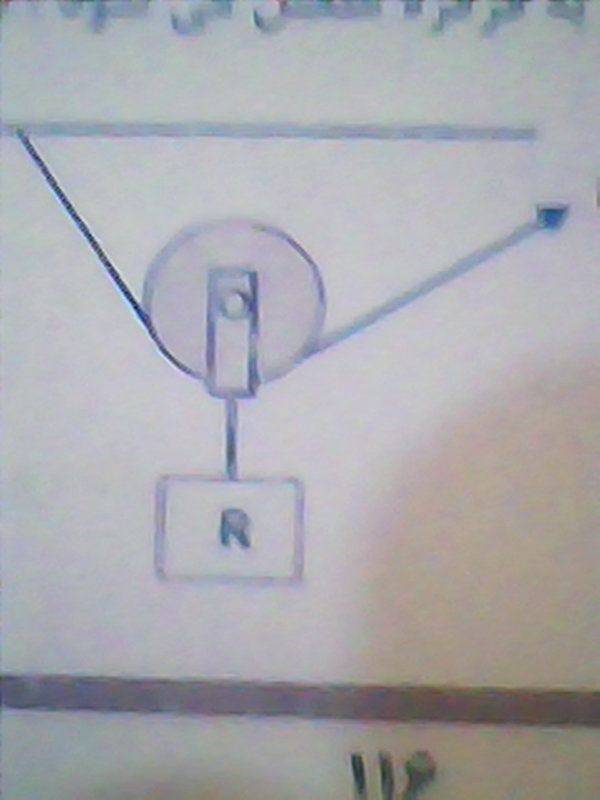
So, there are is a type which I couldn't understand.
1: (I don't know this type name is, so tell me please)
243384
243385

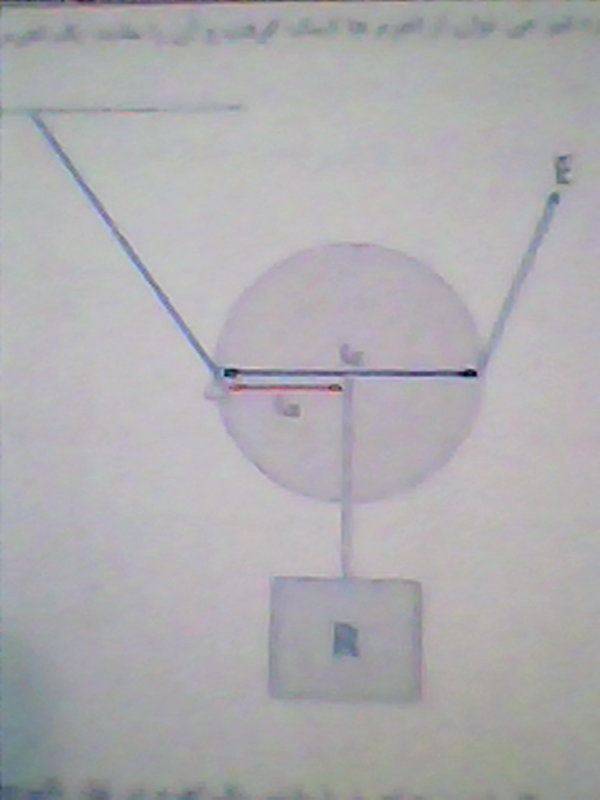
So, the books says if you push the rope, you will double your force, but instead, for every x distance you push, it will go x/2 distance(their work is the same), which I couldn't fiqure(How to spell the word?) out why. And when I think about it, I get to the weird conclusion that the rope must have increased its' size.
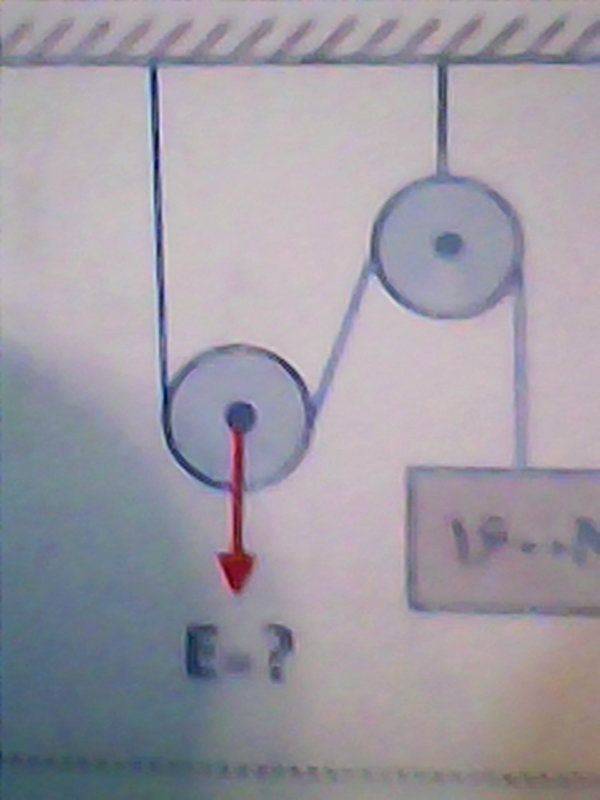
And it got much worse when I tried to solve this:
243388

(it is 1600N)
 

Attachments

  • DSC_0000010.jpg
    DSC_0000010.jpg
    24.9 KB · Views: 241
  • DSC_0000014.jpg
    DSC_0000014.jpg
    29.4 KB · Views: 263
Physics news on Phys.org
I suggest that you pick one specific problem, take a crack at it, and show us where you are stuck.
 

Similar threads

  • · Replies 18 ·
Replies
18
Views
2K
  • · Replies 22 ·
Replies
22
Views
7K
  • · Replies 11 ·
Replies
11
Views
2K
  • · Replies 10 ·
Replies
10
Views
1K
  • · Replies 2 ·
Replies
2
Views
2K
Replies
13
Views
4K
  • · Replies 11 ·
Replies
11
Views
2K
  • · Replies 38 ·
2
Replies
38
Views
5K
  • · Replies 30 ·
2
Replies
30
Views
4K
Replies
6
Views
1K