Using the Fourier transform to interpret oscilloscope data

Join the discussion
Registration is free. Ask a follow-up in this thread, or start your own.
4 replies · 2K views
rwooduk
Messages
757
Reaction score
59
We have a waveform that is composed of several waves, maybe something like this:
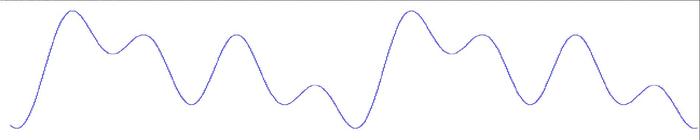
original.jpg


If we Fourier transform the graph we get something like this:

zhGVrnz.jpg


My question is, does the value of the largest column represent the peak to peak voltage of the waveform pictured above?
 
Engineering news on Phys.org
rwooduk said:
We have a waveform that is composed of several waves, maybe something like this:
If we Fourier transform the graph we get something like this:
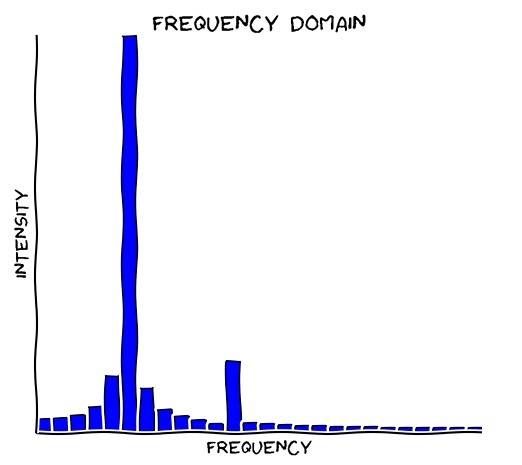
My question is, does the value of the largest column represent the peak to peak voltage of the waveform pictured above?

That's too simple. The peak value of the whole time domain signal will depend on the relative phases of the frequency components. That frequency domain display will be the actual values of the amplitudes of the components in volts. The DFT gives you an actual value and would not 'normalise' the scale unless you ask it to.
 
  • Like
Likes   Reactions: rwooduk
Many thanks for the reply! So although my OP was in simple terms (apologies I'm fairly new to this) it is correct?

I have 200+ snapshots (1ms) of data from our oscilloscope and I'm trying to use MATLAB using the Fourier transform to determine the pressure amplitude for each waveform. Similar to what is shown here:

https://uk.mathworks.com/help/examples/matlab/FFTOfNoisySignalExample_01.png

https://uk.mathworks.com/help/examples/matlab/FFTOfNoisySignalExample_02.png

https://uk.mathworks.com/help/matlab/ref/fft.html

I'm a little confused what you mean by "normalise", if you could give a few more comments it would be appreciated.
 
Last edited by a moderator:
rwooduk said:
I'm a little confused what you mean by "normalise",
I just meant scaled to bring the displayed maximum frequency domain value to, perhaps, the maximum time domain value. (For convenience, when the input range is inconveniently small, for instance.)
If you Google around the Fourier Transform (finding a link that suits you) the constants outside the transform do not depend on the maximum amplitude of the time function.
 
  • Like
Likes   Reactions: rwooduk
I see, that's great many thanks for the suggestions and your help!