What happens to cations and electrons during and after a gas discharge event?

Join the discussion
Registration is free. Start your own thread to ask a follow-up.
1 reply · 2K views
vis viva
Messages
29
Reaction score
10
As I understand both cations and electrons are produced between cathode and anode in a gas discharge, but what is their imminent fate, during and post discharge event? The majority of information I could find only covers the electrons from the time of the first ionization event to impacting the anode, but no word about what happens afterwards, and the cations are not mentioned at all either.

For the purpose of education, let's assume open air discharge.

For reference, taken from wiki
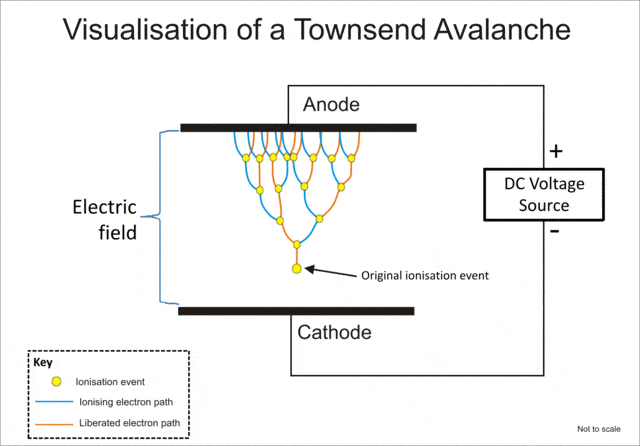
640px-Electron_avalanche.gif
 
Physics news on Phys.org
Ok, then I will venture a guess myself, let me know if I need to apply for a tuition refund.

I'm guessing that if there is a cation at cathode the exact same moment an electrons impacts the anode, then electron will be absorbed by the anode and the cation will suck out an electron from the cathode.

I also guess the above would satisfy nature's accountant in theory, but what about the distinct ozone odor associated with an open air discharge? That would either indicate to me that there could be unaccounted electrons in the circuit and/or that some electrons and cations can leave the electric field without recombining.

Would that be a plausible explanation in accordance with prevailing physics?