What happens to power when voltage is negative

Click For Summary

Discussion Overview

The discussion centers around the implications of negative voltage on power calculations, specifically examining the relationship between voltage, current, and power in various electrical components. Participants explore theoretical aspects, practical implications, and the behavior of different types of loads in response to changing voltage and current directions.

Discussion Character

  • Exploratory
  • Technical explanation
  • Debate/contested

Main Points Raised

  • One participant questions whether negative voltage results in negative power, suggesting a need for clarification on the power equation P = V * I.
  • Another participant argues that when voltage is negative, current also reverses direction, implying that power remains positive regardless of the sign of voltage.
  • A later reply notes that for non-purely resistive loads, there can be instances where voltage and current are of opposite signs, indicating a shift from power consumption to power provision.
  • Discussion includes the concept of power factor and its relevance to reactive power, particularly in relation to electric utilities and their requirements.
  • Participants discuss the behavior of pure resistive, inductive, and capacitive loads, highlighting that reactive components can lead to alternating positive and negative power over a cycle.
  • Subsequent posts shift focus to the induction of voltage in a coil of wire, raising questions about resistance and the relationship between induced voltage and current.
  • Some participants express frustration over topic changes, emphasizing the importance of staying on the original question regarding power and voltage.

Areas of Agreement / Disagreement

Participants exhibit a mix of agreement and disagreement regarding the effects of negative voltage on power. While some assert that power remains positive due to the direction of current, others highlight the complexities introduced by reactive components, indicating that the discussion is not fully resolved.

Contextual Notes

Participants reference specific electrical components and their behaviors, but there are unresolved assumptions regarding the definitions of power factor and reactive power. The discussion also touches on practical implications for electric utilities, which may not be fully explored.

Who May Find This Useful

This discussion may be of interest to students and professionals in electrical engineering, physics, and related fields, particularly those exploring concepts of power, voltage, and current in various electrical systems.

anj16
Messages
38
Reaction score
0
Hello,

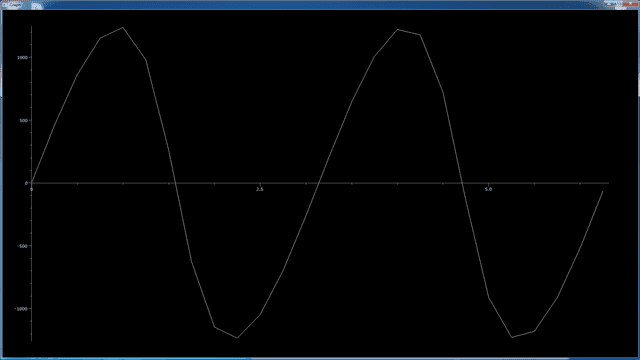
In the following voltage vs time graph as we can see the voltage becomes negative often time.
My question is: if power= V*I then when voltage is negative do I have negative power?
12682059.png
 
Physics news on Phys.org
When your voltage switches direction, your current would as well. So if V = +ve, then I = +ve and if V= -ve then I=-ve.

So either way P is always positive.
 
Ah true, didn't realize that. Thank You.
 
rock.freak667 said:
When your voltage switches direction, your current would as well. So if V = +ve, then I = +ve and if V= -ve then I=-ve.

So either way P is always positive.

For a load that's not purely resistive, there'll be a period of time where your voltage and current is of opposite sign, which means whatever was consuming power before is now providing it. The power factor of your load is a measure of how "severe" this effect is.

The extra line loss associated with this return flow of power (reactive power) is one of the reasons why electric utilities won't provide you with power unless you bring your power factor up to code.
 
Last edited:
For pure resistance V and I are in phase so power is always positive and power is dissipated.
For pure inductance and pure capacitance V and I are out of phase by 90 degrees which means that power goes positive then negative and zero power is dissipated over one cycle.
these components are described as 'reactive' to distinguish them from 'resistive'
 
If I take a single coil of wire and take magnet and induce a Voltage will the R in v=IR be the internal resistance of the wire?

Edited.
 
Last edited:
If you take a magnet and wave it around near a coil of wire you will induce a VOLTAGE (not a flux).
The current you get will be given by V/r
 
That 'r' will it be the internal resistance of the wire?

Therefore r =ρL/A were ρ=resistivity, L=length, A=cross sectional area ?
 
Last edited:
changing the subject...not as interested.
 
  • #10
technician said:
changing the subject...not as interested.

Quite rude to try to change subject without answering the question when you are not the one that asked the question in the first place...

If you don't want to answer then just don't.
 
  • #11
Ok, sorry but did not want to go onto something else.
If you want to raise a different topic you are supposed to open a new thread so that everyone can see a new topic.
 

Similar threads

  • · Replies 1 ·
Replies
1
Views
2K
  • · Replies 3 ·
Replies
3
Views
1K
  • · Replies 3 ·
Replies
3
Views
2K
  • · Replies 7 ·
Replies
7
Views
3K
  • · Replies 52 ·
2
Replies
52
Views
4K
  • · Replies 17 ·
Replies
17
Views
4K
  • · Replies 6 ·
Replies
6
Views
1K
  • · Replies 26 ·
Replies
26
Views
3K
  • · Replies 15 ·
Replies
15
Views
2K
  • · Replies 6 ·
Replies
6
Views
2K