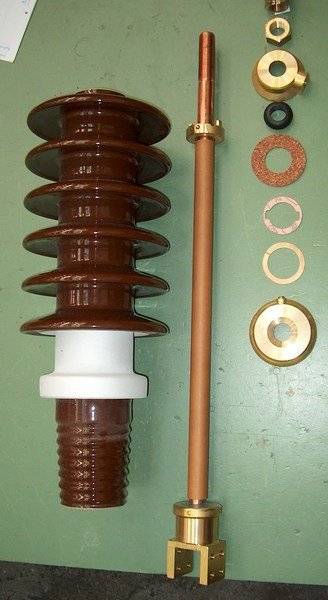
Discussion Overview
The discussion revolves around the unusual shapes of capacitor bushings, particularly in high voltage (HV) applications. Participants explore the design features, functions, and similarities to other electrical components, including insulators and dampers, while addressing various environmental factors affecting their performance.
Discussion Character
- Exploratory
- Technical explanation
- Conceptual clarification
- Debate/contested
Main Points Raised
- Some participants suggest that the wavy shape of the bushings is designed to maximize surface path length and minimize surface leakage, corona, and arcing due to environmental factors.
- There is a question about whether the absence of sharp corners helps reduce electric field concentration in certain areas.
- Participants discuss the function of bushings as hollow insulators with capacitive coupling devices inside, noting their ability to shed rain and maintain insulation.
- Some express confusion about the purpose of specific components, such as whether they are merely for hanging conductors from towers.
- Mechanical dampers, referred to as Stockbridge dampers, are mentioned as devices that prevent cables from vibrating in the wind, which could lead to fatigue.
- One participant describes the umbrella shape of HV lines as a design feature to prevent current from "crawling" along water streams formed during rain.
Areas of Agreement / Disagreement
Participants generally agree on the functional aspects of the bushings and their design considerations, but there are multiple competing views regarding specific purposes and mechanisms, leaving some questions unresolved.
Contextual Notes
Some claims depend on assumptions about environmental conditions and the specific designs of components, which are not universally applicable. There are unresolved questions about the exact functions and interactions of the discussed components.