Our Beautiful Universe - Photos and Videos

2,468 replies · 365K views · last reply
Monkey head nebula. Total integration time 30 minutes, via Tecnosky 70/420 Apo, with ASI 533 color camera, on iOptron SkyHunter mount, guided.
Processed with Pixinsight and SetiAstroSuite.
Bortle 7, Ploiești, Romania.

Astrophotograph of the Monkey Head Nebula, a glowing red emission nebula with a mottled cloud shape against a dense field of stars.
 
Last edited by a moderator:
  • Like
  • Love
Likes   Reactions: DennisN, Astronuc, davenn and 4 others
Rosette nebula. Total integration time 60 minutes.
With Canon 600 D, on iOptron SkyGuiderPro mount, through APO Tecnosky 70/420, Ploiești, bortle 7, Romania.
Initial processing with Pixinsight and later reprocessed with SetiAstroSuite.

Long-exposure astronomical photo of the Rosette Nebula: a ring of glowing red and orange gas surrounding a dark central cavity with bluish stars, set against a dense star field.
 
Last edited by a moderator:
  • Like
  • Love
Likes   Reactions: DennisN, Astronuc, davenn and 3 others
Planet Jupiter, through mak 127/1500, 2x barlow, 3 minutes integration.
Processing with PIPP, AS3 and Registax. Denoising with PS.

Telescope photo of Jupiter against a black background, showing pale cream and orange cloud bands and the large red-orange Great Red Spot in the lower right.
 
Last edited by a moderator:
  • Like
  • Love
Likes   Reactions: DennisN, Astronuc, davenn and 4 others
M 51. 4 hours total integration (2 nights), with Seestar S50.
Processing and editing with Pixinsight and SetiAstroSuite.
Ploiești, Romania, bortle 7

Colour astrophotograph of the Whirlpool Galaxy (M51), a face-on spiral galaxy with bright blue-white spiral arms, beside its smaller companion galaxy NGC 5195 glowing yellow-orange, against a star field.
 
  • Like
  • Love
Likes   Reactions: DennisN, Astronuc, davenn and 3 others
Andy Resnick said:
Since I'm not willing to chop down trees to increase my field of view, the only thing I could image for the past month has been M27 (Dumbbell nebula):

View attachment 364863

1:1 crop
View attachment 364864

Nikon D810 + Nikkor 800/5.6 @ f/8, 6s subs, 14.5 hours viewing time on Losmandy GM-8, stacking and post-processing using Astro Pixel Processor.

Not only is the nebula and neighborhood rather boring (all things considered), it's also hard for me to image well because of the low elevation (poor seeing) and nearness to celestial equator (which is why the subframe time is so short). At least the final result looks good.... sigh.
Wow, this is high quality. Professional observatories from a hundred years ago and much bigger telescopes could not compete with your work, probably cos CMOS tech can show more contrast compared to film. Goes to show how much telescope tech evolved. And hey, sacrificing one or two trees for great pictures may be alright. Potentially plant two or three trees in an area you will not be using your telescope.
 
Helix nebula. Is a planetary nebula, lies about 650 light-years, in the constellation Aquarius.
Image taken with Seestar S50, from Şirnea, BV, Romania.
The target was at low altitude and atmospheric turbulence made its presence felt. Only 40 minutes total integration time. Out of 2 hours of total exposure of 10 seconds each, many were rejected for stacking.
Processing and editing with Pixinsight and Seti Astro Suite.

Colour photo of the Helix Nebula, a planetary nebula: a glowing ring of orange and red gas surrounding a bright blue central region, set against a dark star field.
 
Last edited:
  • Like
  • Love
Likes   Reactions: Stavros Kiri, DennisN, Astronuc and 2 others
AlexB23 said:
Wow, this is high quality. Professional observatories from a hundred years ago and much bigger telescopes could not compete with your work, probably cos CMOS tech can show more contrast compared to film. Goes to show how much telescope tech evolved. And hey, sacrificing one or two trees for great pictures may be alright. Potentially plant two or three trees in an area you will not be using your telescope.
Thanks for the compliments!
 
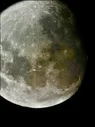
The moon and jupiter are close enough to capture @ 400mm (about 7 degrees separation), I "helpfully" magnified jupiter pasted it on to better see the detail, one exposed to see the lunar and planetary details, and another exposed to show the 4 galilean moons:

Night photo of the Moon in its gibbous phase at upper left and a blurred, magnified Jupiter with banded clouds at lower right, against a black sky with a tiny star below Jupiter.


Night sky photo with a bright moon at upper left and Jupiter at right, with small dots of its moons arranged in a line near it.
 
  • Like
Likes   Reactions: DennisN, Astronuc, AlexB23 and 3 others
Not many clear nights lately, but I managed to get a reasonable image in the region of IC 434 (Horsehead Nebula in Orion):

Wide-field astrophotograph of a star field with bright blue stars and a reddish-brown nebula with dark dust lanes at left, with a faint pink nebula below it.


Nikon D810 + Nikkor 400/2.8, shot @ f/4 on Losmandy GM-8, 10s subs 25h total integration time, stacking and post processing with AstroPixelProcessor.

This region of the sky has remained very challenging for me to image, so I'm pretty happy how this has been evolving.

There's TONS of deep sky objects in this field of view, including M78 in the top left corner (with all the stacking artifacts). I'll show a 200% crop of IC 426, a molecular cloud:

Deep-sky astrophotograph of a faint, diffuse nebula with a dim grey-blue cloud surrounded by many bright stars, some with purple and cyan halos.

I'm pleasantly surprised that my equipment is able to scavenge enough photons to reconstruct a molecular cloud, for sure- it's barely above the noise floor. Plus, the shape resembles a dancing mushroom from the film "Fantasia" :)
 
  • Like
  • Agree
  • Love
Likes   Reactions: davenn, DennisN, Astronuc and 5 others
Jupiter 2026-02-14 06:41.4 UT.

Color image of Jupiter showing pale cream and blue-grey cloud bands, with a reddish-brown belt across the upper and lower middle and the Great Red Spot at lower right.


After several weeks and many nights of bad seeing, clouds, terabytes of wasted data, and whatnot, I finally was able to acquire this image. The seeing wasn't great, but it was the best I've had in all my recent attempts (which isn't saying much). This is likely my last attempt at Jupiter for this apparition.

Equipment:
Celestron C14 EdgeHD telescope.
SkyWatcher EQ8-R Pro mount.
TeleVue 2X Powermate.
Astronomik RGB filters with ZWO filter wheel.
ZWO ASI290MM monochrome camera.

Acquisition:
Location: San Diego, California.
Atmospheric seeing was only mildly weird and pissed-off.
10 ms subframe exposure time (all colors).
Three separate 1-minute videos taken for each color, alternating RGBRGBRGB (9 minutes total).
Dark frames also acquired.

Processing:
Each video processed with Autostakkert! to create unsharpened image (9 images total)
o Best 70% of frames kept.
o No normalization.
o 3x Drizzle.
o No sharpening.
o Dark, calibration frames used.
Initial sharpening in PixInsight.
o "Convolution" processes to mitigate drizzle artifacts.
o "MultiscaleLinearTransform" for the heavy lifting of sharpening.
o "Pixelmath" to multiply by a circular mask to eliminate stacking artifacts at frame edges.
Derotation of frames using WinJUPOS (takes 9 sharpened frames and produces, 3 sharpened, derotated frames; one frame for each color).
Channel combination also done using WinJUPOS to create a single, sharpened, derotated, RGB color image.
Second round of sharpening/editing using PixInsight.
o "CurvesTransformation" for relative color corrections/adjustments.
o "UnsharpMask" for a bit more sharpening.
o RC Astro NoiseXTerminator plugin for noise reduction.
o DynamicCrop process for cropping.
Final, minor adjustments; resizing; and JPEG conversion performed in Adobe Lightroom.

Learned readers are correct to question my aggressive drizzle strategy (3x). After all, the data is already oversampled and the drizzle algorithm produces diminishing returns for oversampled data. It was more about producing a larger image than it was about eking out any extra detail. I've had luck in past years using this method compared to simple upsampling. But I concede the difference might be negligible.
 
Last edited:
  • Like
  • Love
  • Agree
Likes   Reactions: Stavros Kiri, DennisN, Astronuc and 7 others
Hello, this Saturday was clear sky although before full moon.. I attach some images from Bohmerwald
-Jupiter, Orion neb. center, Moon and sunspots..

Lot of succes 👍 :nb)
 
Attachments
  • Small, dim, bluish-white disc of a planet against a black background, seen through a telescope or camera.
    Jupiter1B.webp
    1.7 KB · Views: 31
  • Dark night-sky photo of Jupiter as a bright white disc with three small faint moons visible nearby against a black background.
    Jupiter2.webp
    2.3 KB · Views: 34
  • Photograph of the Moon, a gibbous phase with the terminator on the right, showing dark maria and bright cratered highlands across the disc against a black sky.
    Měsíc1B.webp
    28 KB · Views: 36
  • Dark night sky photo with a bright hazy glow and several small bright point-like spots, including a cluster of three in a row and a single bright spot lower down.
    Orion5B.webp
    36.8 KB · Views: 32
  • Greyscale photo showing a faint grey background with a small dark spot near the lower right and several tiny specks, likely a telescope image of a solar or lunar feature.
    Sunspot1B.webp
    2.9 KB · Views: 31
  • Blurry grey microscope-style view of a pale background with scattered dark specks, faint streaks and a few small dark spots, with a black border along the bottom edge.
    Sunspots3B.webp
    11.6 KB · Views: 19
  • Like
Likes   Reactions: davenn, DennisN, collinsmark and 1 other person
Anyone get the Blood moon?
 
Hi, here is my best Jupiter up to now+orion trapezium from Bohmerwald this Saturday (eyepiece camera Bresser +Newton 1000/200 mm)
:wideeyed::smile:
 
Attachments
  • Dark night-sky photo with a few bright white star-like points and a faint greenish glow, likely an astrophotograph of the Orion Trapezium region taken through a telescope eyepiece camera.
    TrapeziumOrionAA.webp
    40.1 KB · Views: 35
  • Small telescope photo of Jupiter as a pale yellow disc with faint horizontal cloud bands, against a black background, with a tiny speck of a companion star to its lower right.
    JupiterAA.webp
    1.9 KB · Views: 30
  • Like
Likes   Reactions: DennisN, davenn and collinsmark
Had a few clear nights during the past week, here's M44 (Beehive cluster/Praesepe):

Wide-field telescope image of the Beehive cluster (M44) against a dense starfield, with bright blue and orange-tinted stars grouped near the centre.


Definitely happy with the outcome, especially the jewel-toned stars. Astrometry.net picked up 6 galaxies, but there are another half-dozen that it missed (for example, the imaginatively named Z 89-66, 2MFGC 6800 and Z 89-56)

Nikon D810 + Nikkor 800/5.6 (shot @ f/8) on Losmandy GM-8, 9h total integration time (10s subs). Stacking etc. in AstroPixel Processor.
 
  • Like
Likes   Reactions: davenn, DennisN, AlexB23 and 1 other person
Took this a few weeks ago, forgot to share. I've forgotten the camera settings (400mm @f/4 lens, tho...):

Night photo of the Moon in the upper left, a bright partly lit disc with visible craters, and a smaller, blurred, banded Jupiter with reddish and greenish fringes in the lower right, against a black sky.


Jupiter (visible as a tiny dot in the lower right) was at closest approach to the moon; this is a single shot @ 400mm. The surprising thing (to me) is that both the moon and jupiter are properly exposed, indicating they have the same brightness (not to be confused with irradiance). I (digitally) magnified the tiny dot and pasted it to show that even at this comparatively low magnification, surface features are still visible (and aberrated.... thanks, sky!).
 
  • Like
Likes   Reactions: DennisN, AlexB23, Borg and 1 other person
THis thursday was again clear without moon- I took again Orion Trapeizum and Jupiter.. (unfortunately Andromeda get to low quite soon evening).
lot of succes 👍 :smile:
 
Attachments
  • Small greenish-yellow disc with faint horizontal banding against a black background, a telescope view of the planet Jupiter.
    JUPP15.webp
    1.4 KB · Views: 31
  • Dim, blurry night-sky photo of a faint nebulous glow with several bright star points scattered across a dark field, likely the Orion Nebula region.
    OO1.webp
    34.6 KB · Views: 31
  • Dark night-sky photo with a few small bright star points and a faint diffuse glow of nebulosity at the upper right, likely the Orion region.
    OO3.webp
    10.8 KB · Views: 30
  • Dark night sky photo with a few small bright points of light clustered near the centre, a faint glow around them, and scattered faint stars elsewhere.
    OO2.webp
    2.9 KB · Views: 26
  • Dark night-sky photo with a small yellowish disc showing faint horizontal banding, likely the planet Jupiter, against black background.
    JUPP13.webp
    1.4 KB · Views: 32
  • Like
Likes   Reactions: AlexB23 and DennisN
Artemis II has now launched and is on the way to the Moon:

NASA's Artemis II Moon Mission Lifts Off


NASA said:
At 6:35 p.m. EDT (2235 UTC) on April 1, 2026, four astronauts lifted off on Artemis II for an approximately 10-day mission around the Moon.

NASA astronauts Reid Wiseman, Victor Glover, Christina Koch, and CSA (Canadian Space Agency) astronaut Jeremy Hansen launched on a test flight to bring humans closer to living on the Moon and Mars.

Credit: NASA

By pure coincidence I shot the Moon on April 1:

Telescopic photograph of the nearly full Moon against a black background, showing dark maria and bright highland craters in grayscale.


Gear: Sony A6500 + Tokina 400mm f/5.6 + 2x teleconverter.

The quality would have been better if I used my telescope, but I wanted to try this setup using a 2x teleconverter, yielding a focal length of 800mm.
 
  • Like
Likes   Reactions: pinball1970, Andy Resnick, collinsmark and 3 others
An older image of the Jellyfish Nebula (07.02.2024), taken with Asi 533 Mc pro, on Apo TecnoSky 70/420 and iOptron SkyHunter mount (guided); NINA for everything.
120 seconds exposure each frame, total integration time one hour.
Initial processing with PixInsight, trial version and then recently re-edited with SetiAstroSuite.
Ploiești, Romania, bortle 7.

Astronomical photo of a red and orange emission nebula with wispy filaments and a rounded, bubble-like shape, set against a dense starfield of white and blue stars.
 
  • Like
  • Love
Likes   Reactions: Stavros Kiri, davenn, DennisN and 3 others
Clear nights have been scarce lately, but tonight I was able to image Jupiter and the Galilean moons:

Astronomical photo of Jupiter as a pale disc with faint banding, on a dark star field; several small points of light, including Galilean moons, appear in the surrounding background.


This is a 200% crop from a single shot (14-bit RAW) that I saved as 2 jpgs, one tone-mapped to make the moons visible (so the planet was overexposed) and the other tone-mapped to reveal the planet (and the moons were lost in the dark background). Then I just cut-n-pasted one onto the other. I was surprised that 14 bits is sufficient to encode for the disparity in magnitude (about 7, spanning -2 to 5)... that works out to a brightness ratio of 1:600, so 14 bits can easily resolve that. Cool!

Image taken with Nikon D810 + Nikkor 800/5.6 (shot @ f/8), 1/100 s ISO 200.
 
  • Like
Likes   Reactions: davenn, AlexB23, neilparker62 and 4 others
Andy Resnick said:
Clear nights have been scarce lately, but tonight I was able to image Jupiter and the Galilean moons:

View attachment 371454

This is a 200% crop from a single shot (14-bit RAW) that I saved as 2 jpgs, one tone-mapped to make the moons visible (so the planet was overexposed) and the other tone-mapped to reveal the planet (and the moons were lost in the dark background). Then I just cut-n-pasted one onto the other. I was surprised that 14 bits is sufficient to encode for the disparity in magnitude (about 7, spanning -2 to 5)... that works out to a brightness ratio of 1:600, so 14 bits can easily resolve that. Cool!

Image taken with Nikon D810 + Nikkor 800/5.6 (shot @ f/8), 1/100 s ISO 200.
Great pic - just so as we have an idea of distances (and earth comparision) , can you perhaps add a rough scale to your pic ?
 
Astronomy gear for those who are very, very dedicated... :biggrin:

AstroHaven Trailer


Page said:
Astro Haven Enterprises (AHE) introduces a mobile platform for telescopes and optical instruments that includes an AHE composite clam shell dome. The AHE Optics Trailer lowers the telescope or optical instrument to the ground isolating it from the trailer and dome. The trailer features air suspension for off-road and with an AHE "X" dome can collapse to 8 feet wide for travel on public roads.
 
  • Like
Likes   Reactions: davenn, AlexB23, collinsmark and 1 other person
neilparker62 said:
Great pic - just so as we have an idea of distances (and earth comparision) , can you perhaps add a rough scale to your pic ?

Thanks, but I don't understand...? Jupiter's diameter is 143000 km, if that's what you mean.
 
Not quite done, but good enough for now:

Wide-field astrophotograph of a dark sky dense with faint stars and distant galaxies, stitched from multiple panels with visible seams and uneven background.


This panorama of the Virgo cluster is (approximately) 3 x 4 fields using my 400mm lens covering (about) 15 x 10 degrees of sky. Markarian's chain and associated 'loop' of Messier objects fit nicely in a single field of view:

Wide-field astrophotograph of a sparse starfield with several faint elliptical and edge-on spiral galaxies scattered across a dark background, part of the Virgo cluster.


It's taken a while but noise levels are finally becoming tolerable, even at 1:1 (Pinwheel galaxy):

Long-exposure astrophotograph of a face-on spiral galaxy with bright core and curved arms, surrounded by scattered stars on a dark background, with a bright star at upper left.


Deets: Nikon D810 + Nikkor 400/2.8 shot @ f/4 on Losmandy GM-8, 15s subs. All image processing (stacking and stitching) done with Astro Pixel Processor. Each stack has about 4000s integration time, and 40 (!!!) stacks were required to really smooth out the background.
 
  • Like
Likes   Reactions: davenn, Razvan Mihai, AlexB23 and 2 others
No sooner did I share the Virgo panorama than we just had 10 consecutive nights of clear skies. I used most of those to complete the panorama (post-processing is ongoing). I had 2 days to spare, which I used to try imaging NGC 4565- this is a 1:1 crop at 800mm focal length:

Long-exposure astrophotograph of the edge-on spiral galaxy NGC 4565, a thin diagonal streak of faint light running from upper left to lower right with a bright central bulge, on a dark starfield.


(Nikkon D810 + 800/5.6 Nikkor @ f/8, etc. etc.) There's only 4688s total integration time, so it's still quite noisy. But the object is quite large (in subtended angle)- much larger than I expected. It's also in a relatively star-free location of the sky- in the full frame, the two brightest stars only have magnitude 8.7 (the two bright stars above are magnitude 14!). There are numerous galaxies in the field of view, but I haven't yet accumulated enough observation time to pull them out of the background.
 
  • Like
Likes   Reactions: AlexB23, neilparker62, collinsmark and 2 others
Andy Resnick said:
Thanks, but I don't understand...? Jupiter's diameter is 143000 km, if that's what you mean.
Ok thanks - that gives an idea of its relative size. About 11 times Earth diameter. And Earth's diameter (12742km) in turn is a bit more than twice that of Jupiter's largest moon Ganymede (5268km).
 
Final image, ready for printing, of the Virgo Cluster. The image area is approximately 14 degrees on a side:

Wide-field astronomical mosaic of a dense starfield with scattered faint galaxies and reddish dust clouds on a black background; the image has irregular, stepped edges where tiles meet.


At 1:1, it looks like this-

Dark star field with several galaxies: a bright elliptical galaxy at lower right, an edge-on spiral at upper right, and two small elongated galaxies at upper left.


The image, if square format, is 16,900 pixels on a side. Assuming your display is about 300 pixels per inch, the full image at this display format would be 4.5 feet (0.3 m) across. If printed more like a poster (80 dpi), the image would be nearly 18 feet on a side.
 
  • Like
  • Love
Likes   Reactions: collinsmark, timmdeeg, Borg and 1 other person
Andy Resnick said:
Final image, ready for printing, of the Virgo Cluster. The image area is approximately 14 degrees on a side:
So many galaxies! Hard to imagine the scale involved. Could some of the "stars" we are seeing also be galaxies. Maybe just smaller or alternatively further away ? Can a star be distinguished from what might just be a more distant galaxy ?