YoshiBeans
- 8
- 0
Hi guys!
My question is about the heat sinks (cold side) used in some dehumidifiers. It appears that thick, well spaced fins are used, as opposed to a larger number of thin fins, which I would expect to provide better heat transfer.
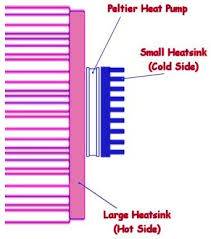
Am I right in assuming that this is to allow space for water droplets to form and fall without bridging the gap between fins?
Or is it because the extra surface area would be conterproductive as it would mean a larger quantity of air would need to be reduced to the dew point before the heat transfer becomes useful? If so, would the multiple thin fins be more efficient in the hyperthetical case of 100% humidity?
Any insight would be appreciated.
Thanks in advance.
Johann
My question is about the heat sinks (cold side) used in some dehumidifiers. It appears that thick, well spaced fins are used, as opposed to a larger number of thin fins, which I would expect to provide better heat transfer.
Am I right in assuming that this is to allow space for water droplets to form and fall without bridging the gap between fins?
Or is it because the extra surface area would be conterproductive as it would mean a larger quantity of air would need to be reduced to the dew point before the heat transfer becomes useful? If so, would the multiple thin fins be more efficient in the hyperthetical case of 100% humidity?
Any insight would be appreciated.
Thanks in advance.
Johann
Last edited: