thegreengineer
- 54
- 3
So, recently I started learning about electronic components and then I started learning about semiconductors. The one which I've been having some real trouble to understand its function is the transistor.
So I bought an electronics textbook called El ABC de La Electrónica (The ABC of Electronics in Spanish) to check how it actually works; as well to learn more about electronics.
My doubt focuses on a couple of drawings of how a NPN transistor (BJT type) works:
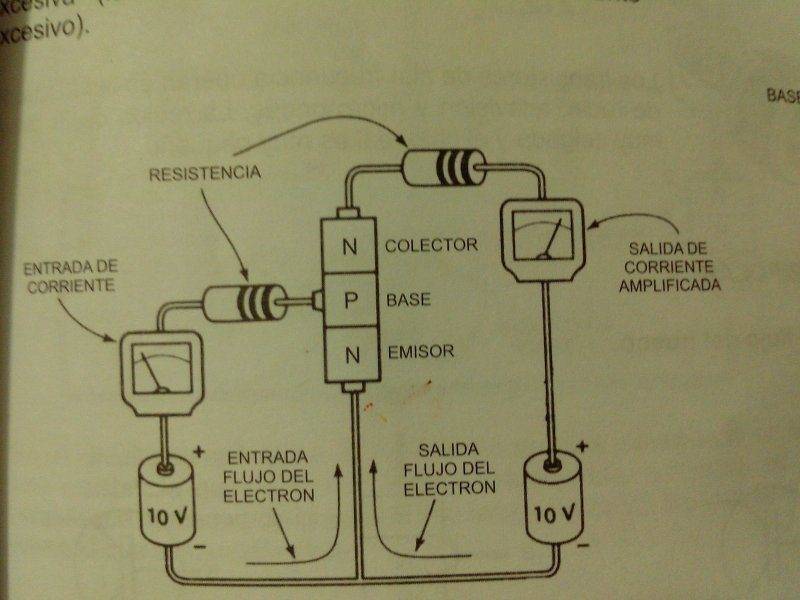
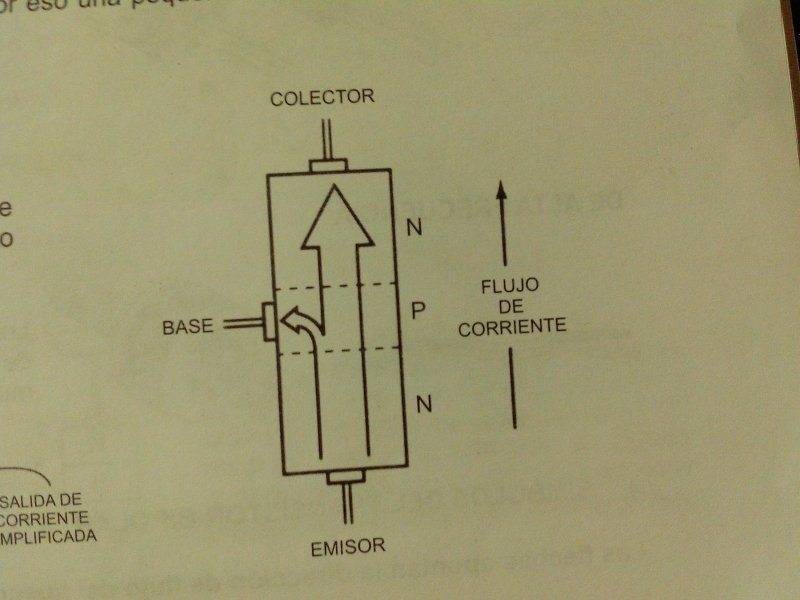
This drawing basically represents the how electric current would travel across the transistor if this were connected to two 10 V batteries, however I got confused on this because how does current flow from the emitter (emisor) to the base and at the same time how does it flow from the emitter to the collector? Also the text says that two resistors were used to prevent the transistor from overheating but the current is flowing first to the transistor and then to the resistor according to what the drawing says; or should it be in the other way otherwise? I need to solve this doubt because I really want to learn electronics and if I don't learn how to properly use the transistor then I won't be able to make proper circuits.
Sorry for the Spanish text, but I'm from Mexico and really this is the closest thing I've seen that helps me even that I still don't solve entirely my doubts.
Thanks.
So I bought an electronics textbook called El ABC de La Electrónica (The ABC of Electronics in Spanish) to check how it actually works; as well to learn more about electronics.
My doubt focuses on a couple of drawings of how a NPN transistor (BJT type) works:
This drawing basically represents the how electric current would travel across the transistor if this were connected to two 10 V batteries, however I got confused on this because how does current flow from the emitter (emisor) to the base and at the same time how does it flow from the emitter to the collector? Also the text says that two resistors were used to prevent the transistor from overheating but the current is flowing first to the transistor and then to the resistor according to what the drawing says; or should it be in the other way otherwise? I need to solve this doubt because I really want to learn electronics and if I don't learn how to properly use the transistor then I won't be able to make proper circuits.
Sorry for the Spanish text, but I'm from Mexico and really this is the closest thing I've seen that helps me even that I still don't solve entirely my doubts.
Thanks.