Discussion Overview
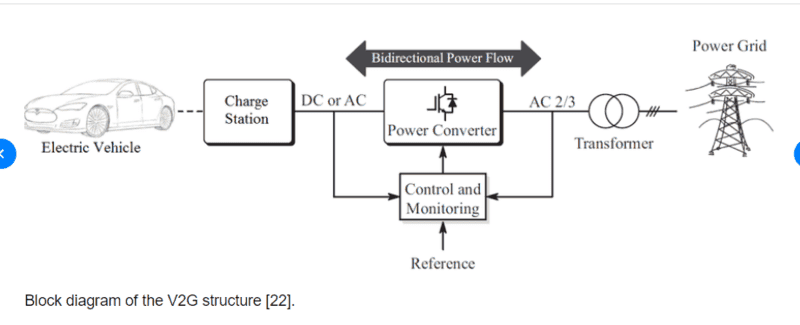
The discussion revolves around the potential for electric vehicles (EVs) to deliver energy back to the grid, exploring the concept of vehicle-to-grid (V2G) technology. Participants examine the theoretical and practical implications of this energy exchange, including economic incentives, technical challenges, and the impact on battery life and grid stability.
Discussion Character
- Exploratory
- Debate/contested
- Technical explanation
- Conceptual clarification
Main Points Raised
- Some participants propose that EVs can provide energy back to the grid during peak demand periods, potentially earning money for owners while stabilizing the grid.
- Others argue that the practicality of this system is uncertain, particularly regarding the timing of charging and discharging in relation to grid demand and renewable energy output.
- A participant mentions that while EVs could theoretically assist in grid frequency regulation by pausing charging during low frequency, the economic value of such a service may be low due to existing solutions.
- Concerns are raised about the impact of frequent charge/discharge cycles on battery life and the environmental implications of battery production and recycling.
- Some participants express skepticism about the incentives for EV owners to participate in grid stabilization, suggesting that aggregators may not provide fair compensation for the services rendered.
- There is a discussion about the potential for EVs to serve as emergency backup power sources for homes, similar to battery storage systems like the Powerwall.
- Participants note that government schemes related to energy pricing and incentives may disproportionately benefit homeowners and overlook underprivileged groups.
Areas of Agreement / Disagreement
Participants express a range of views on the feasibility and desirability of using EVs for grid support, with no consensus reached on the effectiveness or fairness of such systems. Disagreements persist regarding the economic incentives and practical implementation of V2G technology.
Contextual Notes
Participants highlight limitations in the current understanding of grid dynamics, the role of EVs in energy markets, and the potential environmental costs associated with battery usage. There are also unresolved questions about the technical feasibility of monitoring and regulating energy flow from EVs.