Constant of thermal conductivity and heat flow in a given time

Click For Summary
SUMMARY

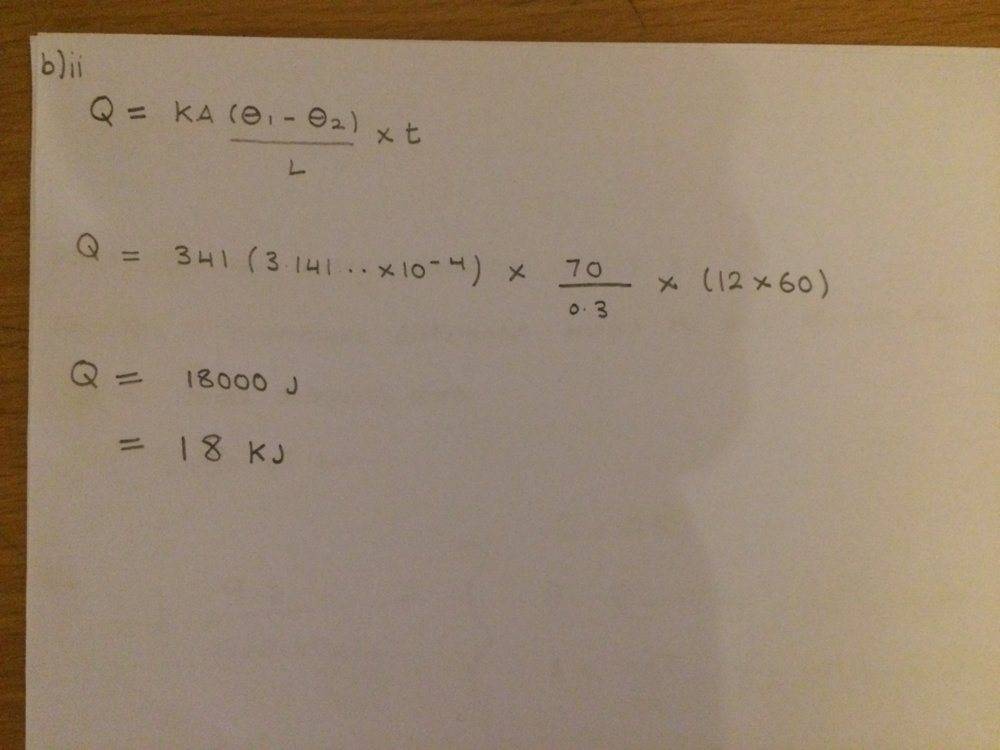
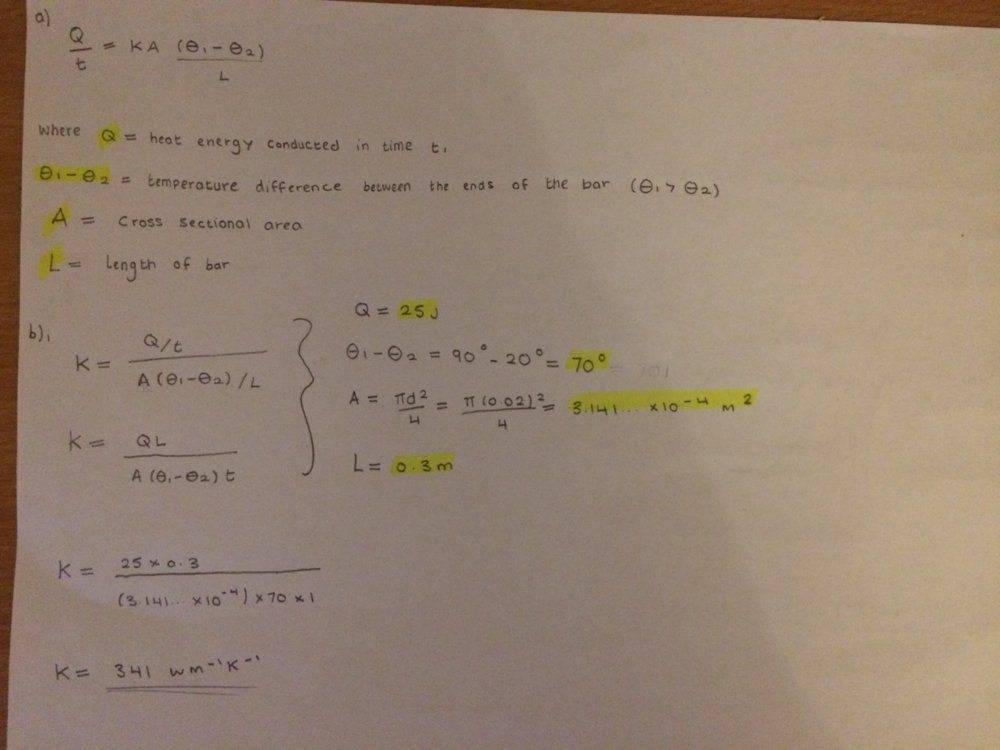
The discussion focuses on calculating thermal conductivity and heat flow over a specified time period. The participants confirm that the heat flow rate is 25 J/s, leading to a total heat flow of 18,000 joules over 12 minutes. The calculations are validated through both direct and detailed methods, ensuring accuracy in determining the constant of thermal conductivity (K). The consensus emphasizes the importance of clarity in presenting calculations to avoid confusion.

PREREQUISITES
  • Understanding of thermal conductivity concepts
  • Familiarity with heat flow calculations
  • Basic knowledge of joules and energy units
  • Ability to perform time conversions (seconds to minutes)
NEXT STEPS
  • Research the principles of thermal conductivity and its applications
  • Learn about the calculation methods for heat transfer in physics
  • Explore the significance of energy units in thermodynamics
  • Study the relationship between heat flow rates and time intervals
USEFUL FOR

Students in physics, engineers working with thermal systems, and anyone involved in energy transfer calculations will benefit from this discussion.
Bolter
Messages
262
Reaction score
31
Homework Statement
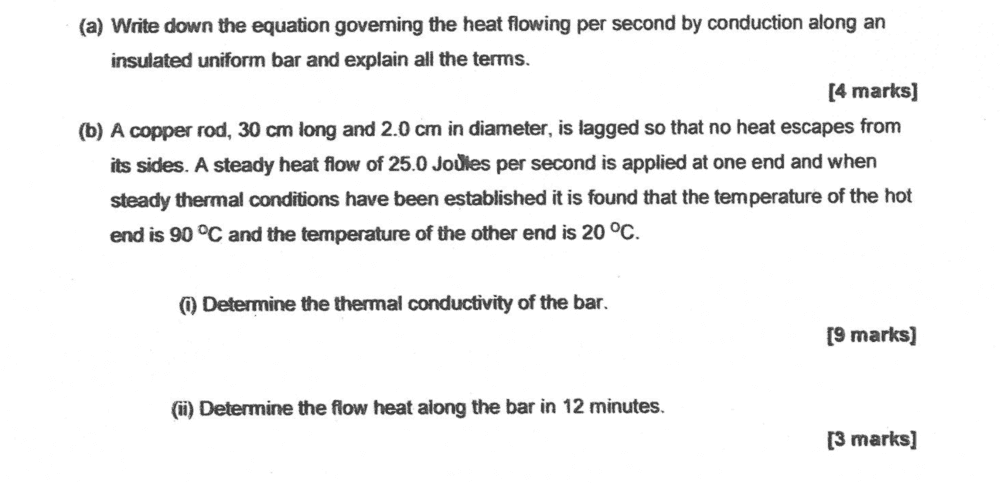
Working out constant of thermal conductivity and heat flow in a given time
Relevant Equations
Q/t = KA(T1 – T2)/L
Here is the Q below

Screenshot 2019-12-21 at 13.43.05.png


I want to see if my values for part b) is okay?

This is what I have tried:

IMG_3529.JPG


IMG_3530.JPG


Any help would be nice! Thanks
 
Physics news on Phys.org
It all looks great. I’m confused why they would even ask part b. You worked it out from your part a answer, and perhaps that is what they had in mind. However, you could have answered it trivially. They tell you the flow is 25 J/s. The net flow is just that times 12 minutes.
 
  • Like
Likes   Reactions: Bolter
Cutter Ketch said:
It all looks great. I’m confused why they would even ask part b. You worked it out from your part a answer, and perhaps that is what they had in mind. However, you could have answered it trivially. They tell you the flow is 25 J/s. The net flow is just that times 12 minutes.

I actually did do it the shorter way which was that 25 joules was given off each second. So total heat flow in 12 mins is '25 * 12 * 60 = 18,000 joules'. Just went for the longer way to double check that my value of K was correct. Should have made it more clearer though nonetheless in my working by showing that.
 

Similar threads

  • · Replies 2 ·
Replies
2
Views
1K
  • · Replies 10 ·
Replies
10
Views
2K
Replies
8
Views
2K
Replies
1
Views
2K
  • · Replies 12 ·
Replies
12
Views
2K
Replies
6
Views
934
Replies
1
Views
1K
Replies
1
Views
1K
  • · Replies 4 ·
Replies
4
Views
2K
  • · Replies 7 ·
Replies
7
Views
4K