Electronics Designing a buck converter with feedback and a regulated output

Click For Summary
SUMMARY

The discussion centers on designing a buck converter using the LM2576 module, which can handle a maximum current of 3 A, while the user requires at least 15 A. The conversation highlights the use of the IRFB3607 MOSFET in a different buck converter design, indicating that the MOSFET may be a separate component from the controller IC. The feedback mechanism's role is clarified, emphasizing that the feedback pin's specific voltage threshold regulates the output voltage, which can fluctuate based on load changes. Additionally, the importance of using online SMPS design tools from manufacturers like Texas Instruments and Analog Devices is noted for reliable designs.

PREREQUISITES
  • Understanding of buck converter topology
  • Familiarity with LM2576 datasheet specifications
  • Knowledge of MOSFET operation, specifically IRFB3607
  • Basic principles of feedback control in power electronics
NEXT STEPS
  • Research the specifications and applications of the IRFB3607 MOSFET
  • Learn about feedback control mechanisms in buck converters
  • Explore online SMPS design tools from Texas Instruments and Analog Devices
  • Investigate current control ICs that regulate both current and voltage
USEFUL FOR

Electrical engineers, power electronics designers, and hobbyists interested in building or optimizing buck converters for higher current applications.

JC2000
Messages
186
Reaction score
16
TL;DR
I am trying to design a buck converter that meets the following criteria :
Maximum output voltage = 12 V
Output Current = 15 A
Maximum input voltage = 24 V
I had a bunch of questions regarding the feedback component as well as the feedback mechanism itself.
Screenshot 2020-12-14 at 6.35.31 PM.png


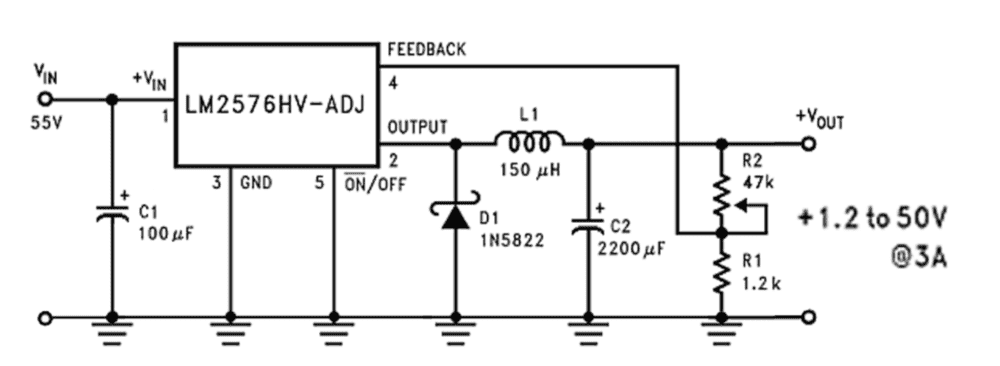
1. I am using the attached schematic as reference for my design. As per the LM2576 module data sheet, it can handle a maximum current of 3 A whereas I need the IC to handle at least 15 A. After digging around a little this was one buck converter that seems to be able to handle 15 A. However, the video says that this buck converter uses the IRFB3607 MOSFET. Does this mean that unlike the schematic above, in the case of the module in the video, the MOSFET that acts as a switch is a separate component from the controller IC? If so, what is the IC being used, what search parameters should I use to find such ICs?
Screenshot 2020-12-14 at 6.53.23 PM.png

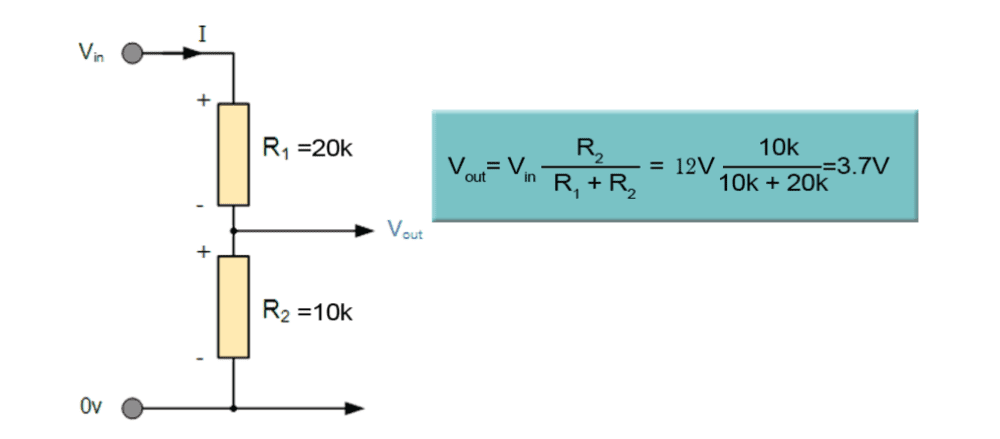
2. Coming to the regulated output voltage, my understanding is as follows... since I decide ##V_{in}##, if I want a specific ##V_{out}##, the equation above would give me the required ratio of resistances. Essentially, I need to have a potentiometer which must be manually adjusted to get the desired output voltage. If my understanding correct so far, why is the feedback wire NOT connected to the ##V_{out}## node in the first schematic? Or is it that there is a mistake in the first schematic and the point between ##R_1## and ## R_2## is the actual ##V_{out}##? In fact, I am unable to pin down the exact role of the feedback pin. Under what circumstances would the output voltage fluctuate (would it fluctuate if the load were to suddenly draw more current or if its resistance changed for some reason)?

3. In the buck converter module from the video, there is a current control potentiometer as well. Is this essentially a variable resistor in series with ##V_{out}##?
 
Physics news on Phys.org
JC2000 said:
2. Coming to the regulated output voltage, my understanding is as follows... since I decide , if I want a specific , the equation above would give me the required ratio of resistances.
No, it's not that way. The feedback pin has an IC specific input voltage threshold: if the signal there is lower then the chip will try to push out more voltage: if the signal is higher, it will fall back.
Since the feedback pin has a specific threshold, you divide the output voltage so to have that threshold at the required output voltage. If the output voltage falls short, the feedback gets lower and the IC will push harder.

So the schematics is correct.

Since the IC works based on the output voltage only, the input voltage can vary within a certain range without affecting the output voltage.

JC2000 said:
. In the buck converter module from the video, there is a current control potentiometer as well. Is this essentially a variable resistor in series with ?
Usually no. There is a low R in series (around 0.1Ohm or even lower) what provides a signal proportional to the current to the control chip. The control IC compares that signal with a voltage set by that potentiometer to determine if the current is above or below the limit.

Do you need the design process, or the finished design? There are several online SMPS design tools available from manufacturers. You may get a more reliable design that way :wink:
 
  • Like
Likes berkeman and JC2000
Rive said:
Usually no. There is a low R in series (around 0.1Ohm or even lower) what provides a signal proportional to the current to the control chip. The control IC compares that signal with a voltage set by that potentiometer to determine if the current is above or below the limit.

Do you need the design process, or the finished design? There are several online SMPS design tools available from manufacturers. You may get a more reliable design that way :wink:

Thank you very much! That clears up a lot of things! Regarding the current control mechanism, is there another control IC that I need to look have on my module or are their ICs that regulate both current and voltage?

As for the exact working of the current control system, essentially the signal provided to the control chip would be the voltage at the end of the series resistor and the control IC would compare it to a preset voltage from a different potentiometer right?

I had no idea there were design tools specifically for SMPS! Could you please share their links?

Thanks!
 
Texas Instruments
Analog Devices
OnSemi
There are more I'm sure. Almost every manufacturer has one.
Kind of a cheating since you will not know how it works, but on the other hand you will get a working, reliable design.

JC2000 said:
essentially the signal provided to the control chip would be the voltage at the end of the series resistor and the control IC would compare it to a preset voltage from a different potentiometer right?
No. The voltage drop on the series resistor is what get compared, and it's not directly but through some more electronics since that voltage drop is better kept at low while the voltage on the potentiometer better has some range.

Ps.: just check on the datasheet of your IC, will you?
 
  • Informative
  • Like
Likes berkeman and JC2000
Hey folks! So I’m kinda losing my mind over my hedgie’s setup lately. No matter what I do, the enclosure keeps getting super humid and it’s starting to smell funky. I clean it, switch bedding, crack the window, the whole nine yards… but it still ends up damp and I’m worried it’s gonna mess with my little dude’s health. I’m starting to feel like I’m doing something wrong even though I’m trying so hard. Has anyone dealt with this before? Any tips, hacks, gear recs… literally anything would...

Similar threads

  • · Replies 14 ·
Replies
14
Views
2K
  • · Replies 10 ·
Replies
10
Views
3K
  • · Replies 32 ·
2
Replies
32
Views
5K
  • · Replies 13 ·
Replies
13
Views
3K
  • · Replies 14 ·
Replies
14
Views
2K
  • · Replies 13 ·
Replies
13
Views
2K
  • · Replies 14 ·
Replies
14
Views
7K
  • · Replies 2 ·
Replies
2
Views
2K
Replies
4
Views
3K
  • · Replies 10 ·
Replies
10
Views
6K