kuchun
- 11
- 1
I want to know the BJT implementation of flip flop with the help of proper circuit diagram..
I want to know the BJT implementation of RS flip flop...Thanks for ur replyPhrak said:There are RS (set-reset) flip flops, D flip flops, JK flip flops, and maybe a few others that have no useful function or advantage over those already given.
Which one did you have in mind?
As BJT technology has waned over the past couple two or three decades, given over to MOS technology, you may have trouble finding an online BJT equivalent circuit for a flip flop of any sort.
Thanx for your reply...it was really helpful for me...Can u suggest me some good books on digital electronics, I am at beginner level..vk6kro said:If you go to Google and set it to IMAGES, you can get lots of flip flop circuits.
The common one used as a divide-by-2 is the bistable flip flop.
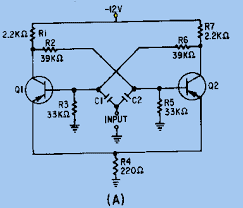
As you can see, it uses a lot of components and also requires careful adjustment of the bias resistors. After that, it is quite reliable. I know of one that was made in 1972 and is still operating.
These days you would certainly use an integrated circuit.
vk6kro said:The common one used as a divide-by-2 is the bistable flip flop.