SUMMARY
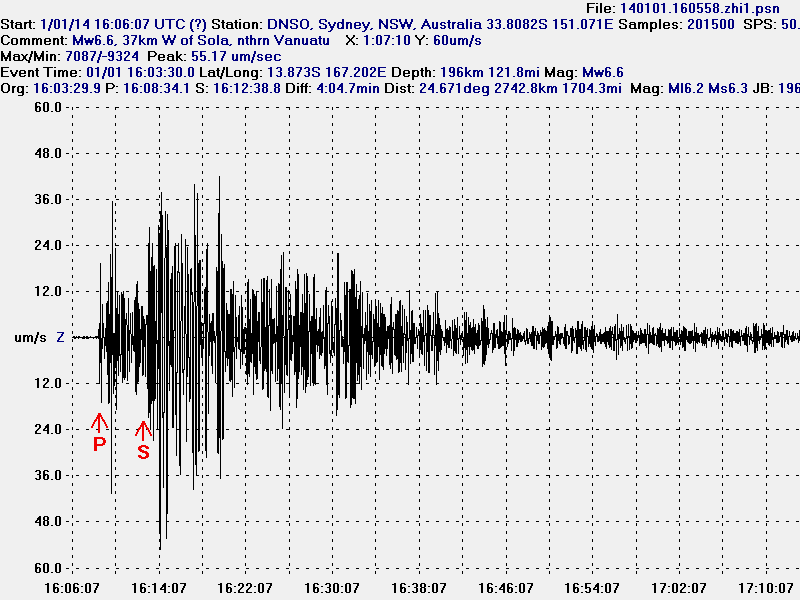
The first significant earthquake of 2014 was recorded as a Mw 6.6 event in the northern Vanuatu Islands at a depth of 196 km. This quake is notable as it is the only event above M6.0 since the year's start, with a historical average of one M8+ event per year over the last 120 years. The discussion highlights the use of the USGS WWSSN data and the Winquake analysis program for seismogram interpretation. Additionally, it clarifies that while triangulation is the standard method for locating earthquakes, a single seismometer can provide a rough estimate of an earthquake's epicenter using p-wave and s-wave data.
PREREQUISITES
- Understanding of seismic wave types (P-waves and S-waves)
- Familiarity with seismogram analysis using Winquake
- Knowledge of the USGS WWSSN (World Wide Standard Seismic Network)
- Basic concepts of earthquake depth and epicenter location
NEXT STEPS
- Research the functionality of the Winquake analysis program
- Study the principles of triangulation in earthquake location
- Explore the methods for estimating epicenters using single seismometers
- Investigate the historical data of M8+ earthquakes over the last century
USEFUL FOR
Seismologists, earthquake researchers, and students studying geophysics or seismology will benefit from this discussion, particularly those interested in earthquake analysis and interpretation techniques.