Discussion Overview
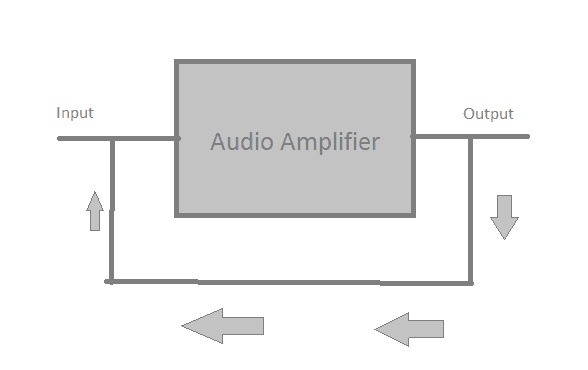
The discussion centers around the functioning of positive feedback amplifiers, specifically addressing how they operate without entering infinite cycles of amplification, the number of cycles they perform, and the implications of using positive versus negative feedback in amplifiers. Participants explore theoretical concepts, practical applications, and historical context related to feedback mechanisms in electronic circuits.
Discussion Character
- Exploratory
- Technical explanation
- Debate/contested
- Historical
Main Points Raised
- Some participants question how a positive feedback loop does not result in infinite cycles of amplification and seek clarification on what "quitting the loop" means.
- There is a suggestion that disconnecting and reconnecting the feedback line could influence the signal path, prompting further inquiry.
- Some participants assert that amplifiers with only positive feedback are inherently unstable, leading to saturation or oscillation, while others challenge this view, suggesting that certain conditions can allow for stability.
- Historical references are made to the use of positive feedback in early radio receivers, specifically the regenerative receiver, which utilized positive feedback to enhance sensitivity and selectivity.
- Participants discuss the practical implications of positive feedback in circuits, noting that while it can enhance performance, it also risks causing oscillation if not carefully controlled.
- Some mention the role of positive feedback in applications like oscillators and active filters, highlighting its utility in specific contexts.
Areas of Agreement / Disagreement
Participants express differing views on the stability of positive feedback amplifiers, with some asserting they are always unstable while others argue that stability can be achieved under certain conditions. The discussion remains unresolved regarding the precise nature of feedback effects and their implications.
Contextual Notes
Limitations include varying definitions of stability in feedback systems, the dependence on circuit configurations, and the lack of consensus on the conditions under which positive feedback can be beneficial or detrimental.
Who May Find This Useful
Readers interested in electronics, amplifier design, feedback systems, and the historical development of radio technology may find this discussion relevant.