How does a 'open surface' of a closed loop look like?

  • Context: Undergrad 
  • Thread starter Thread starter serverxeon
  • Start date Start date
  • Tags Tags
    Closed Loop Surface
Click For Summary
SUMMARY

The discussion centers on the visualization of the 'open surface' of a closed loop solenoid in the context of electricity and magnetism, referencing Walter Lewin's lecture. The term "helicoid" is identified as the correct terminology for describing this surface, distinguishing it from a Riemann surface, which is used to visualize branches of functions. Participants clarify that a Riemann surface does not apply to the solenoid's open surface, emphasizing the importance of precise terminology in mathematical contexts.

PREREQUISITES
  • Understanding of solenoids in electromagnetism
  • Familiarity with the concept of helicoids
  • Basic knowledge of Riemann surfaces in complex analysis
  • Exposure to Walter Lewin's lectures on physics
NEXT STEPS
  • Research the properties and applications of helicoids in physics
  • Explore Riemann surfaces and their significance in complex analysis
  • Study the principles of electromagnetism related to solenoids
  • Watch Walter Lewin's lectures for deeper insights into electricity and magnetism
USEFUL FOR

Students and educators in physics, mathematicians interested in complex analysis, and anyone seeking to understand the geometric properties of surfaces in electromagnetism.

serverxeon
Messages
100
Reaction score
0
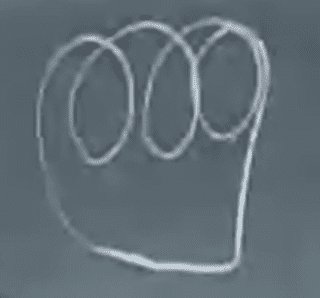
im on the topic of electricity and magnetism, and came across walter lewin's lecture.

i cannot visualise how the 'open surface' of this solenoid will look like
b7f9ye.png


is the open surface a riemann surface? or something else?

[PLAIN]http://wiki-images.enotes.com/thumb/b/b5/Riemann_sqrt.jpg/180px-Riemann_sqrt.jpg

thanks
 
Last edited by a moderator:
Physics news on Phys.org
I believe the correct terminology is helicoid.

A Riemann surface is something else entirely. I'm not a mathematician, but as I understand it, a Riemann surface is just a way to visualize different branches of a function and how they are related to each other.
 

Similar threads

  • · Replies 16 ·
Replies
16
Views
2K
  • · Replies 4 ·
Replies
4
Views
3K
  • · Replies 26 ·
Replies
26
Views
6K
  • · Replies 2 ·
Replies
2
Views
2K
  • · Replies 1 ·
Replies
1
Views
5K
  • · Replies 9 ·
Replies
9
Views
3K
  • · Replies 21 ·
Replies
21
Views
6K
  • · Replies 9 ·
Replies
9
Views
4K
  • · Replies 35 ·
2
Replies
35
Views
11K
  • · Replies 2 ·
Replies
2
Views
1K