swissgirl1999 Refer
- 19
- 5
- TL;DR
- About the symmetry of magnetism, its unstable repulsion and magnetic torque, an experimental approach.
If I take two rectangular neodymium magnet like these (N35, 20 × 10 × 10 mm ),
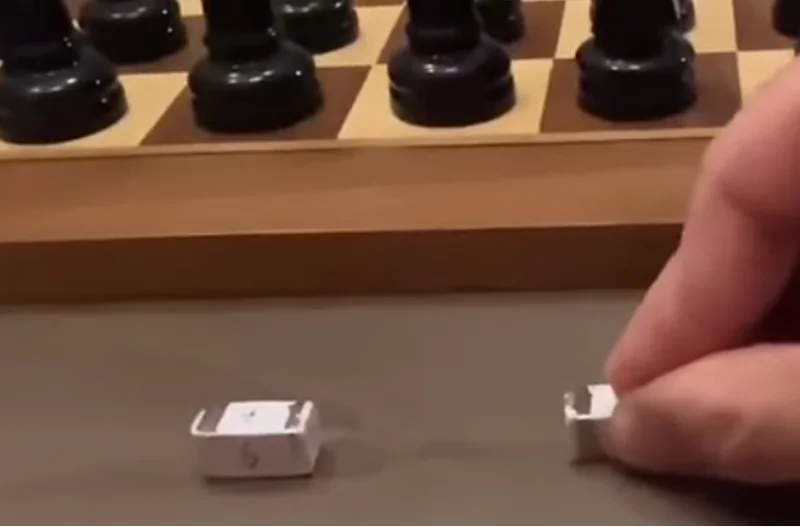
map the faces 1 and 2, and on the body 3, 4, 5 6, and test all 64 possible combinations (switching 1 and 2 and rotating 3, 4, 5 and 6 ) , what would be the outcome (attraction-repulsion ratio) ? Why?
If in that configuration the outcome is repulsion, then rotating the magnet , changing face 1 and 2, will it continue to repel, or will it attract? Why?
Finally, if in that configuration the outcome is repulsion , then rotating the magnet through its body (3, 4,5 or 6, tilting it sideways) will keep repelling, or will it attract ? Why?
I’ve been experimenting with different shaped magnets coming to the conclusion that the intensity of torque is directly related with the three-dimensional degree of freedom, so my question is: where in electromagnetism literature could someone find the response to this tabletop experiment?
I mean, given that all the factors necessary to make those predictions (i.e. , material , shape, size of the magnets, etc.) are known, which equations and calculations are used for that?
map the faces 1 and 2, and on the body 3, 4, 5 6, and test all 64 possible combinations (switching 1 and 2 and rotating 3, 4, 5 and 6 ) , what would be the outcome (attraction-repulsion ratio) ? Why?
If in that configuration the outcome is repulsion, then rotating the magnet , changing face 1 and 2, will it continue to repel, or will it attract? Why?
Finally, if in that configuration the outcome is repulsion , then rotating the magnet through its body (3, 4,5 or 6, tilting it sideways) will keep repelling, or will it attract ? Why?
I’ve been experimenting with different shaped magnets coming to the conclusion that the intensity of torque is directly related with the three-dimensional degree of freedom, so my question is: where in electromagnetism literature could someone find the response to this tabletop experiment?
I mean, given that all the factors necessary to make those predictions (i.e. , material , shape, size of the magnets, etc.) are known, which equations and calculations are used for that?