How does the geometry of magnetic bodies influence torque?

swissgirl1999 Refer
Messages
20
Reaction score
5
TL;DR
About the symmetry of magnetism, its unstable repulsion and magnetic torque, an experimental approach.
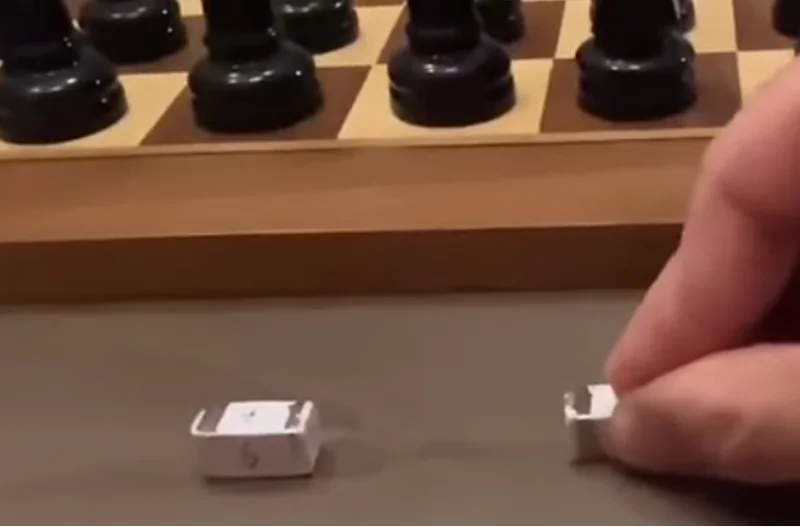
If I take two rectangular neodymium magnet like these (N35, 20 × 10 × 10 mm ),
9b35e72b-449b-4b97-84b4-786c8a8fd67a-1_all_37908.webp

map the faces 1 and 2, and on the body 3, 4, 5 6, and test all 64 possible combinations (switching 1 and 2 and rotating 3, 4, 5 and 6 ) , what would be the outcome (attraction-repulsion ratio) ? Why?

If in that configuration the outcome is repulsion, then rotating the magnet , changing face 1 and 2, will it continue to repel, or will it attract? Why?

Finally, if in that configuration the outcome is repulsion , then rotating the magnet through its body (3, 4,5 or 6, tilting it sideways) will keep repelling, or will it attract ? Why?

I’ve been experimenting with different shaped magnets coming to the conclusion that the intensity of torque is directly related with the three-dimensional degree of freedom, so my question is: where in electromagnetism literature could someone find the response to this tabletop experiment?

I mean, given that all the factors necessary to make those predictions (i.e. , material , shape, size of the magnets, etc.) are known, which equations and calculations are used for that?
 
Physics news on Phys.org
I think the things in the image are actually plastic cases containing magnets, rather than just magnets. Your results will depend on how the magnets are aligned compared to the case walls and whether they have freedom to move within the cases. I suspect you will need to find these things out (or extract the actual magnets) before you can get interpretable results.

Googling "calculate force between magnets" will give you some answers about the maths. Even the Wikipedia page has the basics. The formulae given there are for pointlike magnets. If that's not accurate enough for you, you'll likely need to do some integration, probably numerically.
 
  • Like
Likes   Reactions: Dale
@Ibix gave the dipole-dipole formulas. Try them out.

However, if you find that the equations do not work, that does not imply that your experiment has violated textbook electromagnetism. It just means that your magnets are not simple dipoles.
 
  • Like
Likes   Reactions: weirdoguy and Ibix
Dale said:
It just means that your magnets are not simple dipoles.
Indeed. I suspect the finite size of the magnets is relevant here. That's when the integration comes in.

It's worth noting that even with simple dipoles you can get moderately complex behaviour under rotation if the magnets aren't aligned with the rotation axis. And you'll get different-each-time behaviour if they have some freedom to move in their cases.

With a bit of care you could use iron filings (or more modern alternatives, which are probably less messy) to see if the field from the magnets is more or less axisymmetric. And then shake the case vigorously and repeat the filings experiment to see if the magnets are loose.

Pro tip: do not allow iron filings to come into contact with a magnet, or you will have a hairy magnet forevermore.
 
  • Haha
  • Like
Likes   Reactions: Dale and berkeman
According to Sir Karl Popper, a theory is only truly scientific if it can be proven wrong by observation.

With that in mind, “Googling 'calculate force between magnets' will give you some answers about the maths.” — I asked for three predictions in an obvious setup, you dodged them all while ridiculing its simplicity with “Google it”...

We’re not talking about black holes in distant galaxies, these are two standard industrial N35 magnets.

I'd very much appreciate the predictions and its explanations.

After reading your answers, I had to re-read my question because it did not seem to be somewhat related to my questions.

See the last two questions:

“Will it keep repelling or will it attract?” — Indeed, there can be only two answers: or they keep repelling or they change to attraction.

If the math for those 64 possible configurations is way too complicated, you may give the theoretical predictions for the last two only — I imagine that the theory could answer it, couldn't it?

I’m putting the symmetry of magnetism (Maxwell) and the instability of magnetic repulsion (Earnshaw) at test in real life with known magnets on a table — and I’m assuming that testing theories against reality is scientifically accurate, right? As far as I know, questioning dogmas may be forbidden in religion but not in science.
 
swissgirl1999 Refer said:
I asked for three predictions in an obvious setup
And @Ibix pointed you to the math to get the answers.

If you need help working through the math, let us know. Show your work and let us know where you get stuck. You are, after all, an independent researcher. So independently working on some research is what you do. And luckily this part is just math and theory, so your limited experimental facilities are not a restriction here.

swissgirl1999 Refer said:
while ridiculing its simplicity
Nothing that either @Ibix or I said was ridiculing either you or your question. It is important for students and researchers alike to do their own math as much as possible. We help but don’t just “do your homework” for you.
 
Last edited:
  • Like
Likes   Reactions: russ_watters
For at least 4 reasons the OP is no longer with us, so this thread is closed.
 

Similar threads

  • · Replies 6 ·
Replies
6
Views
1K
  • · Replies 22 ·
Replies
22
Views
5K
  • · Replies 22 ·
Replies
22
Views
8K
  • · Replies 8 ·
Replies
8
Views
7K
  • · Replies 3 ·
Replies
3
Views
2K
  • · Replies 5 ·
Replies
5
Views
2K
  • · Replies 6 ·
Replies
6
Views
5K
  • · Replies 2 ·
Replies
2
Views
2K
  • · Replies 3 ·
Replies
3
Views
2K
  • · Replies 1 ·
Replies
1
Views
13K