How Efficient Is Split-Return Coil Design for Quenching in Induction Heating?

Click For Summary

Discussion Overview

The discussion centers on the efficiency of a split-return coil design for induction heating, specifically in the context of heating and quenching a steel sample. Participants explore the implications of the coil's magnetic field configuration and cooling strategies on the heating process.

Discussion Character

  • Technical explanation
  • Debate/contested

Main Points Raised

  • One participant seeks feedback on the split-return rectangular copper pipe coil design and its ability to heat a steel sample to 600C and quench it to 30C within specified timeframes.
  • Another participant notes that the magnetic fields from the three parallel conductors may create two opposite poles, suggesting that there could be a cancellation area under the central feed conductors, potentially leading to reduced eddy current heating in that region.
  • A different participant reiterates the concern about magnetic field cancellation, indicating that the current in the center leg would be significantly higher than in the return legs, which could affect heating efficiency.
  • There is mention of using a flux concentrator around the center leg to mitigate the effects of magnetic field cancellation, with uncertainty about its effectiveness in this context.

Areas of Agreement / Disagreement

Participants express varying views on the coil design's effectiveness and the implications of magnetic field interactions. There is no consensus on the optimal cooling strategy or the impact of the flux concentrator.

Contextual Notes

Participants have not fully resolved the implications of the coil's magnetic field configuration on heating efficiency, nor the effectiveness of the proposed cooling methods. Assumptions regarding the uniformity of conductor thickness and the specific design parameters of the coil are not fully clarified.

ABrown123
Messages
2
Reaction score
0
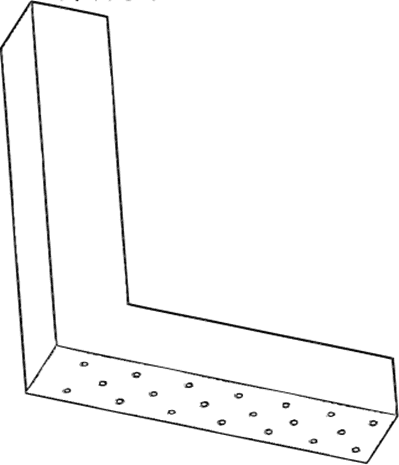
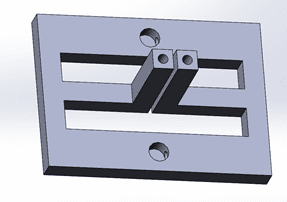
I am designing an induction heating rig to heat a strip on the surface of a steel sample with repeated quenching, through holes in the heating surface of the coil (shown in the third image). The rig should heat the sample to around 600C in 20 seconds, and quench to 30C in 20 seconds.

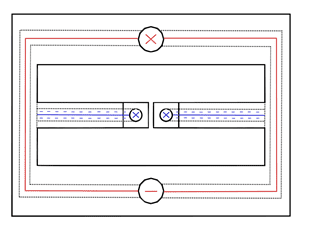
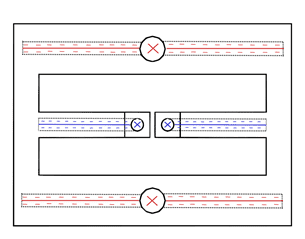
Firstly, could anyone comment on the current coil design (split-return rectangular copper pipe)
Secondly, there are two options for cooling, as shown in the image, one which quenches the sample from the centre leg and one which does so via the centre and return legs. Would the coil get too hot if it was only cooled during the quench cycle (half of the time) as in the second image?Thanks in advance
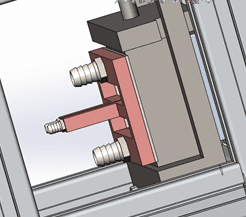
upload_2017-1-31_15-15-53.png
upload_2017-1-31_15-16-2.png
upload_2017-1-31_15-16-12.png
upload_2017-1-31_15-16-23.png
upload_2017-1-31_15-16-34.png
 
Engineering news on Phys.org
ABrown123 said:
Firstly, could anyone comment on the current coil design (split-return rectangular copper pipe)
It looks to me like the magnetic fields of the three parallel conductors will produce two opposite poles. There must be an area between the poles, under the central feed conductors, where those three fields cancel. There will be little eddy current heating just where you want it.
 
Baluncore said:
It looks to me like the magnetic fields of the three parallel conductors will produce two opposite poles. There must be an area between the loops, under the central feed conductors, where those three fields cancel. There will be little eddy current heating just where you want it.

From what i understand, in the centre leg the current would be twice that and the power 4 times that of the return legs if they are the same thickness, even more if the return legs are thicker (in this design theyre twice as thick). I will also be using a flux concentrator focused around the centre leg. Hopefully this would suffice to prevent this flux interaction cancelling out below the centre legs?
 
ABrown123 said:
I will also be using a flux concentrator focused around the centre leg. Hopefully this would suffice to prevent this flux interaction cancelling out below the centre legs?
You have a south pole on one side and a north pole on the other. There must be a line or zone between them where the opposite fields cancel.
 

Similar threads

  • · Replies 8 ·
Replies
8
Views
2K
Replies
7
Views
8K
  • · Replies 51 ·
2
Replies
51
Views
5K
  • · Replies 4 ·
Replies
4
Views
3K
  • · Replies 3 ·
Replies
3
Views
2K
Replies
5
Views
4K
Replies
1
Views
4K
  • · Replies 2 ·
Replies
2
Views
2K
  • · Replies 1 ·
Replies
1
Views
3K
  • · Replies 9 ·
Replies
9
Views
2K