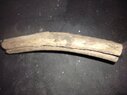
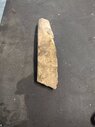
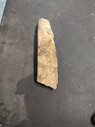
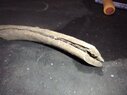
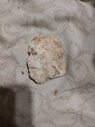
Identify these rocks

25 replies · 4K views · last reply
Kstarlove1728
Messages
11
Reaction score
4
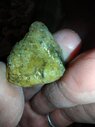
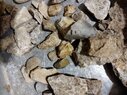
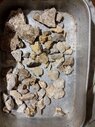
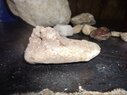
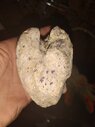
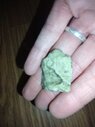
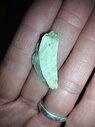
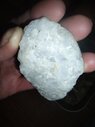
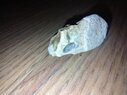
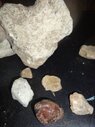
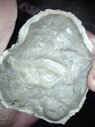
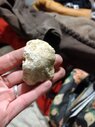
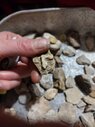
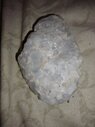
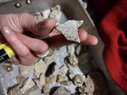
I am so curious as to what I actually have found any input welcome please and thank you
 
Attachments
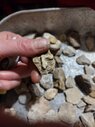
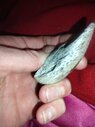
  • Close-up photo of a rough, irregular rock held between two fingers, with a yellowish-tan surface and greenish-grey mottling and white streaks.
    IMG_20220304_135827478.jpg
    36.4 KB · Views: 228
  • Photo of a scatter of small rock fragments on a grey metal surface, mostly pale beige and cream chips with some tan, yellowish and grey angular pieces.
    IMG_20220304_134533981.jpg
    106.9 KB · Views: 198
  • Photo of many small pale tan and grey rock fragments with rough, chalky-looking surfaces and some smoother pieces, scattered in a metal tray.
    IMG_20220304_134501205_HDR.jpg
    67.3 KB · Views: 207
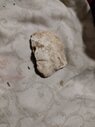
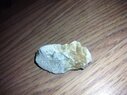
  • Small pale grey-white rock with a rough, weathered surface and some brownish staining, resting on a light patterned fabric.
    IMG_20220303_212349700.jpg
    28.1 KB · Views: 207
  • A hand holding a small pale tan rock with an irregular, pitted surface, above a metal tray of similar light-coloured rocks and pebbles.
    IMG_20220304_134719408_HDR.jpg
    33.6 KB · Views: 210
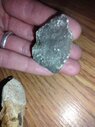
  • Close-up of a hand holding an irregular grey-white rock fragment with pale mineral veining and darker speckled patches, with a second rock piece partly visible behind it.
    IMG_20220304_135539763.jpg
    38.7 KB · Views: 217
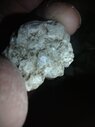
  • Hand holding a rough, pale grey-white rock with a crystalline, granular surface and small yellowish patches, wearing a ring on the finger.
    IMG_20220304_135642403.jpg
    22.7 KB · Views: 202
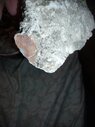
  • Close-up photo of a rough, pale grey and white rock with a small reddish-brown patch on its left side, held against a dark fabric background.
    IMG_20220304_135702540.jpg
    35.1 KB · Views: 215
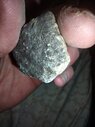
  • Close-up photo of a hand holding a rough, dark grey rock with a pitted, weathered surface and pale whitish patches along one edge.
    IMG_20220304_135730499.jpg
    39.9 KB · Views: 206
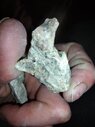
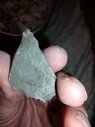
  • Hand holding a pale grey, translucent rock fragment with a triangular outline, a sharp point at the top and a flat, slightly glassy surface, against a dark background.
    IMG_20220304_135737852.jpg
    33 KB · Views: 208
  • Like
Likes   Reactions: Delta2
Welcome to PF.

The more information you give us, the better the chance that we can help. Where did you find them? What area of what country in what kind of surroundings?
 
berkeman said:
Welcome to PF.

The more information you give us, the better the chance that we can help. Where did you find them? What area of what country in what kind of surroundings?
I am in North America. Texas. City of san Antonio. I found all of this plus so much more in my back yard while digging up a place for a garden and now that I'm paying attention my whole entire property is LITTERALY covered in all kinds of different rocks and gems I believe of such as posted. I am very curious and would love to investigate and find out more about them. I have more stuff if you would like more images. Let me know thank you so much!
 
  • Like
Likes   Reactions: berkeman and dlgoff
The San Antonio area contains limestone and many gravels and slope deposits that could originate from far upstream. Since most of the stones have a deep weathered crust they have been near the surface for a long time, but not in an active stream that would knock off the oxide jacket.

The first is green and it looks like it is the only wet sample. It could be a serpentine or igneous rock. Since it has rounded corners I think we can rule out green flux from a metal smelter or refinery that would be crushed for road base.

Fine grained stones with a thick weathered outer layer are very hard to identify without a clean fracture surface, a hardness scratch test, and a drop of acid to test for carbonate or limestone.

Get a copy of your local geology map from the USGS. Then you can look for the rock type in your location. My guess is you are on the valley floor with “Quaternary gravels”.
 
  • Informative
Likes   Reactions: Klystron and berkeman
berkeman said:
So is that obsidian, or were arrowheads made out of different material in different parts of the continent?
From https://www.nature-watch.com/images/Arrowhead Article.pdf

Most arrowheads were made from various stones such as flints, obsidian, and chert; however, wooden and metallic ones have also been found.
 
  • Informative
Likes   Reactions: berkeman
I used to find obsidian pieces near my high school home in the Napa Valley, but I don't think I ever found a real arrowhead. That must be a pretty special moment to find a piece of history like that. :smile:
 
  • Like
Likes   Reactions: Kstarlove1728 and dlgoff
berkeman said:
I used to find obsidian pieces near my high school home in the Napa Valley, but I don't think I ever found a real arrowhead. That must be a pretty special moment to find a piece of history like that. :smile:
Most of mine were found by my Grandfather at his farm in Arkansas. I have lots that I should add to my board:
Photo of a clear plastic box of chipped pale and brown stone flakes, with three larger chipped stone points or blades lying on carpet below it.
 
berkeman said:
So is that obsidian, or were arrowheads made out of different material in different parts of the continent?:smile:
I'm not sure and it's possible I guess but this is stuff from about 6 inches to 10 inches under the soil slot from only 3 or 4 inches I have not even dug farther than a foot but it's from all different areas and I only have about an acre so it's LITTERALY everywhere everything varys so I'm not sure what kind of rock but I'm doing research and it's definitely flint maby pre paleolithic what do you think? It's all weird some looks like gold ore and others have gems I think inside the actual rock and my tree was hit by what I thought was a lightning strike twice in the same spot in the past 7 years. But more studies show a meteor shower around 2019 so I'm thinking some fall off debris from that but twice hit? I'm questioning everything now I'll put some more pics of stuff. I have 5 gallon buckets full of various stuff it's so so cool 😎 thanks guys I appreciate it so much
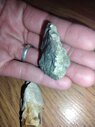
 
berkeman said:
I used to find obsidian pieces near my high school home in the Napa Valley, but I don't think I ever found a real arrowhead. That must be a pretty special moment to find a piece of history like that. :smile:
I have so much it's unreal! I want to just keep digging. I actually found a bone I'll show you maby you can tell me how old or what species it is close to?
 
Baluncore said:
The San Antonio area contains limestone and many gravels and slope deposits that could originate from far upstream. Since most of the stones have a deep weathered crust they have been near the surface for a long time, but not in an active stream that would knock off the oxide jacket.

The first is green and it looks like it is the only wet sample. It could be a serpentine or igneous rock. Since it has rounded corners I think we can rule out green flux from a metal smelter or refinery that would be crushed for road base.

Fine grained stones with a thick weathered outer layer are very hard to identify without a clean fracture surface, a hardness scratch test, and a drop of acid to test for carbonate or limestone.

Get a copy of your local geology map from the USGS. Then you can look for the rock type in your location. My guess is you are on the valley floor with “Quaternary gravels”.
Oh and it's wet because I washed it. We are near a creek but it's about 2 Miles and I'm in a really suburban area so that's even more confusing. How exactly do I do such test? And I can break any of them open for you I have more pics so just tell me what to do and I will do my best. Thank you all so much
 
Some more stuff maby this helps I'll do one more set hopefully that's going to be helpful
 
Attachments
  • A dark grey, irregularly shaped rock with flecks of pale white and yellowish material held in an open palm, with a silver ring on a finger; a pale, crumbly rock sits on a wooden table at the lower left.
    IMG_20220305_000949337.jpg
    43.1 KB · Views: 203
  • A grey, rough-surfaced rock with a pointed top held in an open palm, wearing a silver ring; a pale, chalky, porous object sits on a wooden table below.
    IMG_20220305_000951702.jpg
    37.6 KB · Views: 220
  • Photo of a hand holding a rock with a greyish-green, mottled matrix and a rounded orange-brown patch on its surface.
    IMG_20220305_001046683.jpg
    30.1 KB · Views: 202
  • Close-up photo of a fingers holding a rough, irregular rock with white and pale grey crystalline patches and dark brownish-grey streaks against a dark background.
    IMG_20220305_003817933.jpg
    21.8 KB · Views: 200
  • Close-up of a small pale grey-white rock with a rough, weathered surface and a cavity containing a dark grey oval inclusion, resting on a wooden table.
    IMG_20220305_000926413_BURST001.jpg
    53.9 KB · Views: 184
  • Photo of a small rock with a pale grey, rough, granular surface on one side and a smoother tan to cream fractured surface on the other, resting on a wooden table.
    IMG_20220305_000922446.jpg
    66 KB · Views: 196
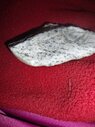
  • Photo of a rock specimen with a flat cut face showing a speckled light grey and white crystalline texture with dark mineral grains, resting on a red fleece blanket.
    IMG_20220305_000743300.jpg
    56.7 KB · Views: 207
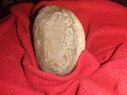
  • Close-up photo of a rounded, oval rock with a rough, pitted grey-brown surface, resting on folded red fleece fabric.
    IMG_20220305_000539554.jpg
    70.9 KB · Views: 202
  • Close-up photo of a hand holding a smooth, elongated grey stone with speckled white and dark inclusions and a thin dark line along its surface, against a red fabric background.
    IMG_20220305_000803767.jpg
    34.6 KB · Views: 205
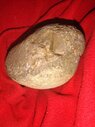
  • Rounded, pitted grey rock with a rough granular surface and a smooth, flat-faced indentation near the top, resting on red fleece fabric.
    IMG_20220305_000532649.jpg
    48.4 KB · Views: 209
Cool stuff
 
Attachments
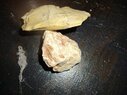
  • Two rock specimens on a dark wooden surface: a flat, pale yellowish slab with layered, chalky texture on top, and a rounded, whitish-tan rock with reddish-brown patches below it, plus a small wisp of grey fibre to the left.
    IMG_20220305_002459568.jpg
    84.4 KB · Views: 198
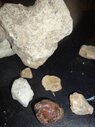
  • Photo of several rocks on a dark surface: a large pale grey-white rough-textured rock at top, with smaller tan, white and reddish-brown stones scattered around it.
    IMG_20220305_002607862.jpg
    42.5 KB · Views: 216
  • Close-up of a pale, cream-coloured rock with a rough, crumbly surface and a tapered end, resting on a dark table with other stones behind it.
    IMG_20220305_002438272.jpg
    70.5 KB · Views: 212
  • A heart-shaped, pale grey-white rock held in a hand, with a cleft at the top and scattered small purple speckles across its rough, pitted surface.
    IMG_20220305_002237879.jpg
    30.3 KB · Views: 208
  • A hand with a silver ring on the middle finger holds a rough, pale green rock with a pitted, granular surface, resting on a wooden floor.
    IMG_20220305_001248029.jpg
    29.7 KB · Views: 218
  • Small pale greenish-grey rock fragment with a flat, chipped edge, held on a palm next to a silver ring.
    IMG_20220305_001223755.jpg
    35.9 KB · Views: 235
  • A hand holding a rough, irregular white rock with a granular, crystalline surface and small glassy facets, against a dark background.
    IMG_20220305_000838815.jpg
    25.6 KB · Views: 200
berkeman said:
So is that obsidian, or were arrowheads made out of different material in different parts of the continent?
I wouldn't think, so as I believe that obsidian is usually black, but I could be wrong on this.
Most arrowheads were made from various stones such as flints, obsidian, and chert; however, wooden and metallic ones have also been found.
Obsidian was also used in places where it could be found or was traded for. It can be flaked into extremely sharp edges. California used to have many volcanoes, and still has a couple of newer ones (Shasta and Lassen) in the north part of the state. Some of the former volcanoes could have erupted lava that cooled quickly to form obsidian. It's also present in many parts of the Northwest - Washington, Oregon, and other states. I wouldn't think there would be a lot of obsidian in Texas, but New Mexico had a number of volcanoes or vents in the past, as did Arizona.
 
  • Like
Likes   Reactions: berkeman and BillTre
Kstarlove1728 said:
Cool stuff
The samples have been weathered heavily near the surface, or are the product of groundwater circulation during weathering. You must download the USGS geology map that covers your site to identify the type of erosion and so the original source.
...8272.jpg foreground, looks like a calcareous concretion that formed in soil during weathering.
...8815.jpg could be a lump of calcite or quartz. Test it with an acid or try to scratch it with steel.
...9568.jpg yellowish in background, does it feel soft and slimy like soapstone, if so it is talc, a weathering product.
 
  • Like
Likes   Reactions: Kstarlove1728
http://www.thefossilforum.com/index.php?/topic/52308-a-comprehensive-guide-to-the-cretaceous-strata-of-the-greater-san-antonio-area-how-to-read-the-rocks/
 
Baluncore said:
The samples have been weathered heavily near the surface, or are the product of groundwater circulation during weathering. You must download the USGS geology map that covers your site to identify the type of erosion and so the original source.
...8272.jpg foreground, looks like a calcareous concretion that formed in soil during weathering.
...8815.jpg could be a lump of calcite or quartz. Test it with an acid or try to scratch it with steel.
...9568.jpg yellowish in background, does it feel soft and slimy like soapstone, if so it is talc, a weathering product.
It's not soft it's rather hard and durable I am thinking a lot is quartz but some has like gemstones stuck inside whatever material it is it's odd idk but cool nonetheless thanks so much for all the help
 
Some more
 
Attachments
  • Photo of a small pale grey rock with a rough, weathered surface and dark grey inclusions in its cavities, lying on a wooden table.
    IMG_20220305_000926413_BURST001.jpg
    53.9 KB · Views: 212
  • Photo of several rocks on a dark surface: a large pale grey-white rock at top, smaller pale and tan fragments, and a glossy reddish-brown rounded stone at bottom centre.
    IMG_20220305_002607862.jpg
    44.6 KB · Views: 204
  • Hand holding a rounded, broken rock nodule with a pale, rough outer rind enclosing a grey, smoothly textured interior with faint pale mineral patches.
    IMG_20220305_002634850.jpg
    37.1 KB · Views: 220
  • Photo of a curved, weathered pale tan fragment lying on a dark surface, with a long crack running along its length and a split along its upper edge.
    IMG_20220305_175009771.jpg
    54.2 KB · Views: 207
  • Elongated, flat fragment of pale tan rock with a rough, weathered surface and a broken, angular edge, lying on a dark grey surface.
    IMG_20220305_174949017.jpg
    49.3 KB · Views: 189
  • Elongated tan-brown rock fragment lying on a dark grey surface, tapering at the top with a rough, weathered, pitted texture and a broken edge.
    IMG_20220305_174949017.jpg
    49.3 KB · Views: 203
  • Photo of a curved, pale grey weathered object lying on a dark surface, with a long split along its length and a cracked, flaking end.
    IMG_20220305_175019381.jpg
    54 KB · Views: 228
Does anyone else think this looks like rock art? Too neat if nothing at all still looks wicked I think
 
Attachments
  • A hand holding a pale, rough-textured stone with a pitted, weathered surface and an irregular, roughly oval outline, against a background of fabric clothing.
    IMG_20220303_212354330.jpg
    35.5 KB · Views: 208
  • A hand holding a small, rough, pale tan rock with a raised, roughly carved-looking pattern on its face, above a metal tray of similar pale stones.
    IMG_20220304_134719408_HDR.jpg
    31.9 KB · Views: 195
  • Photo of a rough, pale grey-white rock with a granular, crystalline surface, resting on a beige fabric background.
    IMG_20220304_135340183.jpg
    31.9 KB · Views: 207
  • Dirty fingers holding a small pale, chalky rock fragment above a metal tray of similar pale and tan rock chips and pebbles, with a yellow lighter at the left edge and a red sleeve at the right.
    IMG_20220304_134737664_HDR.jpg
    51 KB · Views: 212
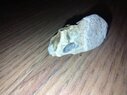
  • Small pale, weathered stone fragment resting on a light patterned fabric, its surface roughly textured and stained with brownish grime, with a rough profile suggesting a face in side view.
    IMG_20220303_212343934.jpg
    37.1 KB · Views: 242
9381.jpg smells like a scaphopod. https://en.wikipedia.org/wiki/Tusk_shell

But it is impossible to correctly identify rocks and fossils from photographs of dry weathered specimens. Context is everything. Unfortunately, the camera does not record the chemistry, size, density, or 3D shape.

What you are finding is just the beginning. Many of the stones you are selecting could be chemically resistant silicified fossils that remain in the soil, after the calcareous rock is dissolved by rainwater.

I guess you are in Cretaceous rocks. Take a look at the history of that geological period, and how it is divided and named; https://en.wikipedia.org/wiki/Cretaceous

Your next move should be to identify the name of the sedimentary formation you are sampling. To do that, find your location on the “Geologic atlas of Texas, San Antonio sheet” and identify the name of the geological formation from the code and index.

I gave you a link to an experts list on the fossilforum in my post #20.
http://www.thefossilforum.com/index...eater-san-antonio-area-how-to-read-the-rocks/
You must look at that link to identify what sort of shells you are finding from the included photographs of the specific fossils found in that formation. Each post in that thread covers fossils from a different formation, which may have taken between one and ten million years to lay down in the shallow Cretaceous sea.

Keep an open mind, as any geologic map may sometimes get it wrong or not have sufficient detail. The geological formations were originally mapped by rock type, using characteristic indicator fossils present to identify the formation and the geological time period of deposition.
 
  • Informative
  • Like
Likes   Reactions: Klystron and Kstarlove1728
Kstarlove1728 said:
I'm in a really suburban area
You might look into the construction history of your area; it is possible your yard is all fill material trucked in from a gravel pit. Not that that makes the rocks any less interesting, just that they may have been re-located.
 
  • Like
Likes   Reactions: Kstarlove1728
gmax137 said:
You might look into the construction history of your area; it is possible your yard is all fill material trucked in from a gravel pit.
Visit the gravel quarries in your area, or just look at the side of the roads to get an idea of what to expect. Slope deposits suggest you should walk uphill to find the source. For stream deposits walk up the river following the pebble type that interests you to the headwater or "reef". For glacial deposits start looking 100 miles north of the border.

A good practical geology exam should always includes a subtle piece of roofing tile or concrete. It is the students ability to describe it that is being assessed, with bonus points to those who identify it as anthropocene.

… 7879.jpg (in post #17) looks like a typical Pelecypod fossil found in the Texan Cretaceous. Look it up in the fossilforum thread. You may be able to identify it as a common species and give it a name.

Study this wikipedia link carefully as it includes much of what you will find.
https://en.wikipedia.org/wiki/Bivalvia

At this stage you are a beginner to the game of fossil hunting. Once you “get your eye in” you will know what to look for, and so start to see fossils all over the place. Get down on your knees and study very carefully, the devil is in the detail.

Don't expect perfect condition in fossils found in soil, they have been waiting 100 million years, you should have got there earlier. Look for hard rock outcrops or site excavations. Get a white hardhat, it makes you look like the chief engineer and will protect your head.