Inductance of a double circuit line -- struggling with return the path

Click For Summary

Discussion Overview

The discussion revolves around understanding the inductance of a double circuit transmission line, specifically focusing on the geometric mean distances for self and mutual inductance, and the configuration of conductors in parallel. Participants are exploring the implications of current flow in a three-phase system and the labeling conventions used in the context of transmission lines.

Discussion Character

  • Exploratory
  • Technical explanation
  • Debate/contested

Main Points Raised

  • One participant questions the interpretation of the formula for inductance and the concept of self and mutual geometric mean distances.
  • Another participant expresses confusion over how the conductors are arranged in parallel and the nature of current flow between them.
  • A later reply suggests that the top conductors carry current in one direction while the bottom conductors carry current in the opposite direction, but this interpretation is not universally accepted.
  • Participants discuss the labeling of conductors (e.g., a-a' and b-b') and whether they represent parallel conductors or carry currents in opposite directions.
  • There is mention of the potential for ambiguity in the descriptions provided in the text, leading to suggestions for addressing this with instructors.

Areas of Agreement / Disagreement

Participants do not appear to reach a consensus on the interpretation of the conductor arrangements and current flow. Multiple competing views remain regarding the configuration and labeling of the conductors.

Contextual Notes

There are unresolved questions about the definitions of self and mutual inductance in this context, as well as the implications of the conductor arrangements on current flow. The discussion reflects a need for clarity in the descriptions provided in the source material.

jaus tail
Messages
613
Reaction score
48
So for inductance of transmission line book says formula
H = 2 * 10 -7 Loge { [Ds]/[Dm] }
I'm struggling to understand self and mutual geometric mean distance.
Here is one solved example

upload_2017-12-26_11-3-26.png

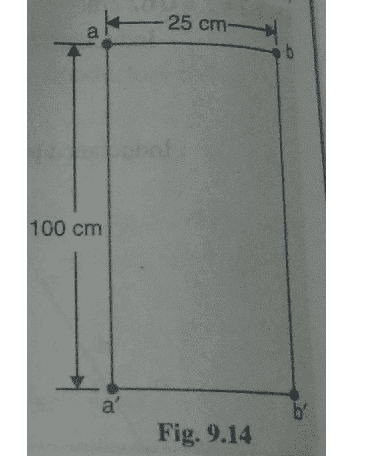
and for this they've drawn
upload_2017-12-26_11-3-56.png

And they say that let a a' form one connection and let b b' form other connection.
I'm struggling to understand how are they in parallel.
Current will go from a and return from a' or return from b?
How can b and b' be return path? As per question two upper and two lower conductors are in parallel so it means a and b are in parallel. So current in a and current in b have to be same.

And in three phase there are conductors r - r', y - y', b - b' So does this mean r and r' are in parallel or is it like current goes from r and returns from r' at one instant.
 

Attachments

  • upload_2017-12-26_11-3-26.png
    upload_2017-12-26_11-3-26.png
    32.2 KB · Views: 905
  • upload_2017-12-26_11-3-56.png
    upload_2017-12-26_11-3-56.png
    25 KB · Views: 868
Engineering news on Phys.org
This 3-phase double circuit.
upload_2017-12-26_11-9-32.png

I don't understand what does a -a' mean. Are they in parallel or do they carry currents in opposite direction?
And here is double circuit another example.
upload_2017-12-26_11-12-1.png
 

Attachments

  • upload_2017-12-26_11-9-32.png
    upload_2017-12-26_11-9-32.png
    33.4 KB · Views: 438
  • upload_2017-12-26_11-11-38.png
    upload_2017-12-26_11-11-38.png
    42.8 KB · Views: 518
  • 200511-95e475213e0075d391536a95a4b5a0cb.png
    200511-95e475213e0075d391536a95a4b5a0cb.png
    1.5 KB · Views: 452
  • upload_2017-12-26_11-12-1.png
    upload_2017-12-26_11-12-1.png
    42.3 KB · Views: 428
From the text description I get.

In the first image. You are looking at the ends of four wires. They extend into the page. It seems the current requirement is greater than is convenient for a single conductor to carry. To handle the extra current, two conductors are used, wired electrically in parallel. A set of two conductors would be A&B (call that pair the 'supply' side). For the 'return' side the set of two conductors is A'&B'.

That is certainly not the way I would prefer to label them, it makes it too confusing... perhaps that is the 'standard' way of labeling them, but it seems strange.

p.s. If you are graded as 'wrong', you may have to point out the ambiguous description to your instructor. Print this out if needed to show him.
 
Thanks. So according to you the top conductors carry current I and bottom conductors carry -I at a given instant of time?
 

Similar threads

  • · Replies 4 ·
Replies
4
Views
3K
  • · Replies 17 ·
Replies
17
Views
4K
  • · Replies 1 ·
Replies
1
Views
689
  • · Replies 6 ·
Replies
6
Views
2K
  • · Replies 51 ·
2
Replies
51
Views
5K
Replies
2
Views
2K
Replies
7
Views
8K
Replies
12
Views
2K
  • · Replies 12 ·
Replies
12
Views
5K
  • · Replies 9 ·
Replies
9
Views
2K