Is 'Airwolf' possible with our current technology? (Supersonic Helicopter)

Click For Summary
SUMMARY

The forum discussion centers on the feasibility of creating a supersonic helicopter akin to the fictional 'Airwolf,' which is capable of reaching speeds over Mach 1. Participants highlight the limitations of traditional helicopter designs, particularly retreating blade stall and the need for structural modifications, such as adding wings and a thrust source. Suggestions include using advanced materials like carbon fiber and Kevlar, as well as incorporating technologies like ducted fan jets and AI for stability. Ultimately, while the concept is intriguing, the consensus is that a true supersonic helicopter would likely resemble a fixed-wing aircraft more than a traditional helicopter.

PREREQUISITES
  • Understanding of helicopter aerodynamics, specifically retreating blade stall.
  • Familiarity with supersonic flight principles and challenges.
  • Knowledge of advanced materials such as carbon fiber and Kevlar.
  • Awareness of existing VTOL and STOL aircraft technologies, including tiltrotor designs.
NEXT STEPS
  • Research the principles of retreating blade stall in helicopter design.
  • Explore the capabilities and limitations of the F-35B as a supersonic VTOL aircraft.
  • Investigate the CarterCopter and its approach to transitioning from vertical to horizontal flight.
  • Learn about the use of AI in stabilizing advanced aircraft designs.
USEFUL FOR

Aerospace engineers, aviation enthusiasts, and anyone interested in the future of helicopter technology and supersonic flight innovations.

Dominic Santini
Messages
4
Reaction score
1
images?q=tbn:ANd9GcSezrxsMS7UHhk050myxJlcZt-qepx3JpYiBcw2E3sajxKSCi8C.jpg
Airwolf (from the T.V show Airwolf) is a Mach 1+ helicopter capable of reaching speeds up to Mach 2. For it's time, it's weapons system was pretty farfetched (had fourteen weapons systems overall, including chaffe and flares) at it's time.

I'm well aware of the limits of regular helicopters' speed limits, due to their blades being able to only take so much resistance before breaking off. Under normal circumstances, this would make a Mach 1+ helicopter like Airwolf laughable at best. HOWEVER, it is suggested that Airwolf actually TURNS OFF it's rotors before entering this 'turbo' mode. Given that the rotors don't immediately stop moving, would this help make Airwolf more feasible?
 
Physics news on Phys.org
I suppose if you could turn off the rotor, fold and stow the blades you might make something work. You would need to add wings, a horizontal tail and a source of forward thrust as their functions are all provided by the rotor on a helicopter.

Funny things happen when your aircraft goes supersonic, look at all the stability issues they had in the early days of supersonic flight. I suspect that by the time you have overcome all the problem the resulting airframe won't look much like a helicopter any more.

There have been numerous attempts to make aircraft that transition from vertical take off to horizontal flight and all have their own problems and solutions...

https://en.wikipedia.org/wiki/Tiltrotor
https://en.wikipedia.org/wiki/Tiltwing
https://en.wikipedia.org/wiki/Convertiplane
https://en.wikipedia.org/wiki/Tail-sitter
https://en.wikipedia.org/wiki/Ryan_XV-5_Vertifan
 
  • Like
Likes   Reactions: trurle
Well, the best we could possibly do for it would make it a rudimentary plane with very little surface control. It'd be functional; just wouldn't be as effective at dogfighting as planes would be. So, then the problem would be that we need to fill the time gap between folding the helicopter blades (it isn't going to be speedy-- the faster the rotors need to be, the bigger it also needs to get compensatingly so) with something to counter-act gravity with. I estimate that there may be three or four minutes of getting the rotors to cease rotation, and then another minute to fold it inwards. Perhaps less.
 
I don't see the need for Mach 2 helicopter even if it were possible.
 
Hey, why not? It'd probably be able to outmaneuver, outfly and outgun most other things in the air. I imagine it'd be great for making speedy deliveries (for civilian use), and would be one step forward in the direction of 'future' transportation methods if it were made readily accessible to the everyday lowman.
 
I doubt the sonic transitions could be done in horizontal flight because of rotor disc balance and fuselage stability.

To go supersonic, gain sufficient height, reduce power, increase rotor pitch and tail down to stop rotation. Then start to fall, now nose first, back-flipped? As speed increases furl the rotors behind a raised heat shield. Use thrust motor plus free-fall to go supersonic. Avoid hitting the ground.

To recover from supersonic mode, enter a steep vertical loop without power. In a stall at the top, unfurl the rotor blades and return to helicopter mode through auto-rotation.
 
Dominic Santini said:
I'm well aware of the limits of regular helicopters' speed limits, due to their blades being able to only take so much resistance before breaking off.
The blades breaking off, is not really the problem...

Helicopter top speed is limited by retreating blade stall...
Retreating blade stall is the primary limiting factor of a helicopter's airspeed, and the reason even the fastest helicopters can only fly slightly faster than 200 knots (about 370 km/h).

Also, take a look at dissymmetry of lift...

http://avstop.com/ac/basichelicopterhandbook/ch2.html#15
http://avstop.com/ac/basichelicopterhandbook/index.html
 
  • Like
Likes   Reactions: FactChecker, DaveE, Klystron and 2 others
Right. I suppose my dreams of flying a replica of Airwolf at mach 1+ is nothing but a pipedream. Thanks though! I learned a lot from this.
 
  • Like
Likes   Reactions: berkeman
With a $Billion and state of the art technology' we could build an Airwolf style heli. Carbon fiber with Kevlar to reduce weight and protect. The lifting body concept can be used. Ducted fan jets would reduce or eliminate a fall problem. An on-board supercomputer with A I could handle any instability problems. The Russian backward wing aircraft is proof of the concept. A supersonic lifting body has a proof of concept with stubby wings, better for control surfaces Add SMALL winglets on the tail rotor to go hypersonic. While the jets stabilize the aircraft, the rotors could be stowed before the jets make it a lifting body.. Creating and stowing munitions become the problem.
 
  • #10
the_punnisher said:
With a $Billion and state of the art technology' we could build an Airwolf style heli. Carbon fiber with Kevlar to reduce weight and protect. The lifting body concept can be used. Ducted fan jets would reduce or eliminate a fall problem. An on-board supercomputer with A I could handle any instability problems. The Russian backward wing aircraft is proof of the concept. A supersonic lifting body has a proof of concept with stubby wings, better for control surfaces Add SMALL winglets on the tail rotor to go hypersonic. While the jets stabilize the aircraft, the rotors could be stowed before the jets make it a lifting body.. Creating and stowing munitions become the problem.

No offense, but I am reasonably sure that you don't know anything about supersonic or hypersonic flight, helicopters, or the challenges involved in designing such vehicles.
 
Last edited:
  • Like
Likes   Reactions: DaveE, Klystron, Vanadium 50 and 3 others
  • #11
Harrier
 
  • #12
F-35?
 
  • Like
Likes   Reactions: trurle and Klystron
  • #13
Harrier isn't supersonic but close. I didn't mention F-35 as it is too controversial and may turn out to be a bag of worms.
 
  • #14
Bruce Murray said:
I didn't mention F-35 as it is too controversial and may turn out to be a bag of worms.

It certainly looks like it is here to stay.worms and all.
 
  • #15
After all the money they spent; no doubt. The Bomark Missile was useless and hung around for a while.
 
  • #16
Whether combining multi-role mission requirements into a single fuselage (F-22, F-35*) proves to be practical, the concept of supersonic helicopter is obviated by numerous VSTOL and related successful ducted fan, tilt-rotor, and related designs examined by @CWatters in post #2.

If the OP permits, the helicopter movie Blue Thunder uses at least two intriguing plot devices:
  1. nearly silent "whisper mode" while hovering (despite the jet engines);
  2. performing an inside loop at maximum forward speed.
Can a chopper loop?
 
Last edited:
  • #17
boneh3ad said:
No offense, but I am reasonably sure that you don't know anything about supersonic or hypersonic flight, helicopters, or the challenges involved in designing such vehicles.
what he said (very small).jpg
 

Attachments

  • what he said (very small).jpg
    what he said (very small).jpg
    3.2 KB · Views: 2,855
  • #18
Bruce Murray said:
Harrier isn't supersonic but close. I didn't mention F-35 as it is too controversial and may turn out to be a bag of worms.

It has been a program with ballooning costs and beset by technical challenges, but the recent additional orders of the airframe by other countries who could buy anything else if they wanted to is a pretty strong indication that it has overcome most of the concerns.
 
  • Like
Likes   Reactions: FactChecker and Klystron
  • #19
Klystron said:
Can a chopper loop?

 
  • Like
Likes   Reactions: berkeman, DrClaude and Klystron
  • #20
Dominic Santini said:
Airwolf (from the T.V show Airwolf) is a Mach 1+ helicopter capable of reaching speeds up to Mach 2. For it's time, it's weapons system was pretty farfetched (had fourteen weapons systems overall, including chaffe and flares) at it's time.

I'm well aware of the limits of regular helicopters' speed limits, due to their blades being able to only take so much resistance before breaking off. Under normal circumstances, this would make a Mach 1+ helicopter like Airwolf laughable at best. HOWEVER, it is suggested that Airwolf actually TURNS OFF it's rotors before entering this 'turbo' mode. Given that the rotors don't immediately stop moving, would this help make Airwolf more feasible?
F-35B is de-facto supersonic helicopter with rotor built inside the fuselage.
F-35B has lifting rotor, but the rotor location and attitude control methods are all different from classical helicopter.
As Dominic Santini properly said, at supersonic speeds classical helicopter layout is a huge handicap, and real-world rotor-wielding yet high speed aircraft would not look helicopter-like.

Theoretically, retreating blade stall is not a fatal problem for counter-rotating dual rotors high-speed helicopters, but other problems (poor pitch stability, high drag and need for variable rotor geometry) of supersonic helicopters are still result in not very practical designs.
 
Last edited:
  • Like
Likes   Reactions: Klystron
  • #21
Conventional helicopters are speed limited because the advancing rotor blade tip approaches supersonic speed while the retreating blade stalls. One attempt toward solving this problem is to add a wing to the fuselage, then slowing the rotor. As speed increases, lift is transferred from the rotor to the wing. This was done by Jay Carter: http://www.cartercopters.com/. He has been working on the concept for over 20 years, and has flown some prototypes: https://en.wikipedia.org/wiki/CarterCopter. It has never been commercialized.
 
  • #22
Aaronvan said:
I don't see the need for Mach 2 helicopter even if it were possible.

You could hover at Mach 2. o0)
 
  • Like
Likes   Reactions: russ_watters
  • #23

Attachments

  • upload_2019-1-8_8-53-20.png
    upload_2019-1-8_8-53-20.png
    157.6 KB · Views: 2,588
  • #24
berkeman said:
Wow, what are all those buttons for in the lower right of the instrument panel?

5th picture down here: https://newatlas.com/go/2504/#p4014

View attachment 236978

Great pics! My guess are contact circuit breakers. Notice the wire bundle running under the control panel.
 
  • #25
trurle said:
F-35B is de-facto supersonic helicopter with rotor built inside the fuselage.

That's a misleading statement in the context of this thread (which is admittedly silly). The F-35 can "hover" for short periods, particularly for a vertical landing. It is not designed to hover long-term while maintaining maneuverability, as is a helicopter. It's about as close as you can reasonably expect to get to a supersonic helicopter. It can "hover" and it can fly supersonic. It certainly won't be filling any traditional helicopter roles, though, no matter what Live Free or Die Hard says.
 
  • Like
Likes   Reactions: trurle
  • #26
Retreating blade stall can be overcomed by the dual rotos design(Sikorsky calls it "Advancing Blade Concept"). Essentially it's two rotors on the same axis and rotate in opposite direction, so each side of the chop has one rotor advancing and one retreating. I don't know how fast this design can go, but it potentially has the capability to send a chopper to at least mach 0.5-0.8, if a few rocket propellers are used (like the idea of Airwolf).

There are many advantage of a chopper over the VTOL/STOL planes. It can definitely lift more stuffs, and is much more fuel efficient. If there's a chopper that can fly close to mach 1, it would be really useful.
 
  • #27
On one thing I think we all agree: a helicopter unconstrained by physics would be neat.
 
Last edited:
  • Like
Likes   Reactions: Klystron and jrmichler
  • #28
"Harrier isn't supersonic but close."
It could have been: I used to know the guy who led the team that solved the supersonic Pegasus' problems.
Just in time for the entire project to be canceled on political grounds...
FWIW, even decades later, the details were still NDA...

IIRC, the fastest helicopter remains a jet-assisted experimental Bell design, dating back to the 1960s.
The fastest current design appears to be the Airbus X-3.
YMMV.
 
  • #29
Dominic Santini said:
Airwolf (from the T.V show Airwolf) is a Mach 1+ helicopter capable of reaching speeds up to Mach 2. For it's time, it's weapons system was pretty farfetched (had fourteen weapons systems overall, including chaffe and flares) at it's time.

I'm well aware of the limits of regular helicopters' speed limits, due to their blades being able to only take so much resistance before breaking off. Under normal circumstances, this would make a Mach 1+ helicopter like Airwolf laughable at best. HOWEVER, it is suggested that Airwolf actually TURNS OFF it's rotors before entering this 'turbo' mode. Given that the rotors don't immediately stop moving, would this help make Airwolf more feasible?
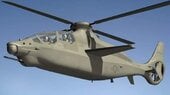
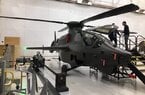
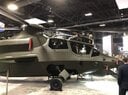
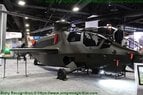
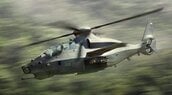
Technically we already have a supersonic helicopter (and airwolf) it's called The Bell 360 invictus... was made after the rah-66 Comanche. Here is some real airwolfs. Its not in the field yet but they exspect it to be by 2024.
 

Attachments

  • bell-invictus2 2-9-21.jpg
    bell-invictus2 2-9-21.jpg
    13.9 KB · Views: 229
  • bell-invictus11 2-9-21.jpg
    bell-invictus11 2-9-21.jpg
    61.1 KB · Views: 274
  • bell-invictus10 2-9-21.jpg
    bell-invictus10 2-9-21.jpg
    62.5 KB · Views: 279
  • bell-invictus9 2-9-21.jpg
    bell-invictus9 2-9-21.jpg
    71.1 KB · Views: 246
  • bell-invictus8 2-9-21.jpg
    bell-invictus8 2-9-21.jpg
    72.5 KB · Views: 190
  • bell-invictus7 2-9-21.jpg
    bell-invictus7 2-9-21.jpg
    54.2 KB · Views: 231
  • bell-invictus6 2-9-21.jpg
    bell-invictus6 2-9-21.jpg
    11.1 KB · Views: 242
  • bell-invictus5 2-9-21.jpg
    bell-invictus5 2-9-21.jpg
    64.8 KB · Views: 260
  • bell-invictus4 2-9-21.jpg
    bell-invictus4 2-9-21.jpg
    63.1 KB · Views: 339
  • bell-invictus3 2-9-21.jpg
    bell-invictus3 2-9-21.jpg
    37.1 KB · Views: 407
  • #30
NCIS1996 said:
Technically we already have a supersonic helicopter (and airwolf) it's called The Bell 360 invictus... was made after the rah-66 Comanche. Here is some real airwolfs. Its not in the field yet but they exspect it to be by 2024.
330 km/h is a far cry from supersonic.
 
  • Informative
Likes   Reactions: berkeman

Similar threads

  • · Replies 4 ·
Replies
4
Views
5K