Discussion Overview
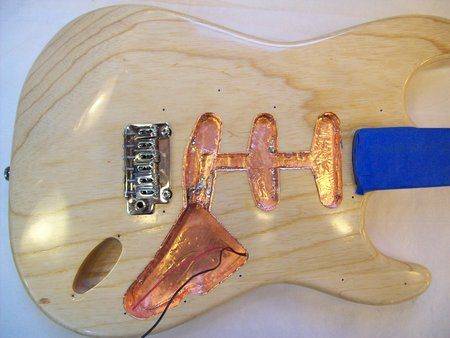
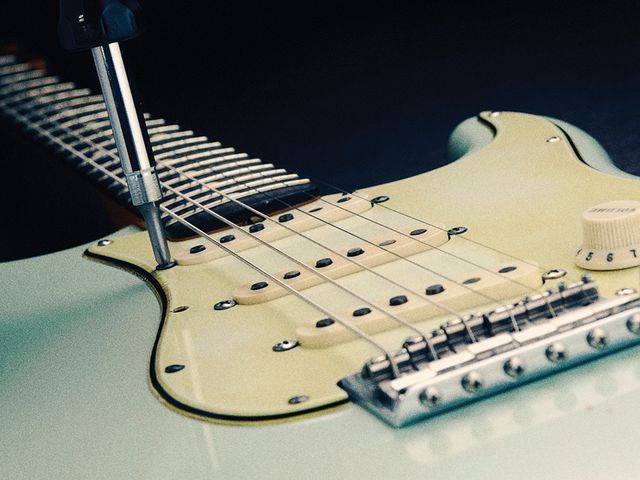
The discussion revolves around the effectiveness of guitar shielding, specifically the use of conductive foil in guitar cavities and pickguards to reduce electromagnetic interference. Participants explore the theoretical underpinnings, practical implications, and personal experiences related to shielding techniques in electric guitars.
Discussion Character
- Debate/contested
- Technical explanation
- Exploratory
Main Points Raised
- Some participants question the effectiveness of shielding, noting that parts of the pickup remain exposed and may still pick up interference.
- Others argue that while shielding may not eliminate all interference, it can significantly reduce the level of noise picked up by the pickup and associated electronics.
- One participant suggests that the shielding effect may be more about rerouting wiring or grounding connections rather than the foil itself.
- There are claims that many guitar manufacturers do use shielding techniques, such as metallic paint, but the effectiveness varies across different models.
- Some participants express skepticism about the overall benefits of shielding, citing personal experiences where it did not lead to noticeable improvements in hum reduction.
- A few participants propose alternative pickup technologies, such as optical or RF-based systems, as potential solutions to the hum problem.
- One participant shares extensive personal experimentation with copper shielding, concluding that it does not significantly reduce hum from pickups but can help with wiring-related noise.
Areas of Agreement / Disagreement
Participants do not reach a consensus on the effectiveness of guitar shielding. While some acknowledge its potential benefits, others challenge its practicality and effectiveness, leading to multiple competing views on the topic.
Contextual Notes
Participants mention various factors that could influence the effectiveness of shielding, including the frequency spectrum of interference, the physical characteristics of the shielding material, and the design of the guitar itself. There is also mention of the limitations of using thin materials for shielding at audio frequencies.