HowlerMonkey
- 368
- 17
<Crackpot link deleted>
Anyone have details or an opinion rooted in science?
Last edited by a moderator:
OPPD said:
- The FCS plant’s reactor has been in cold shut down for a planned refueling outage since April 9. It will remain in that condition until the river recedes.
- The reactor and spent-fuel pool are in a normal, stable condition and are both protected; there has been no release of radioactivity and none is expected.
HowlerMonkey said: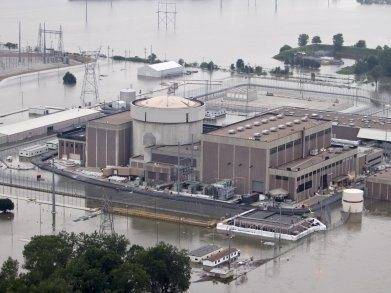
<Crackpot link deleted>
Anyone have details or an opinion rooted in science?
BLK said:Thanks for that info. Living in the area we saw all the stories on the news. Good to know they were just blown way out of proportion. Now if only the rest of the population were smart enough to see through the media's scare tactics.
NUCENG said:Strip out the one-sided opinion, misinformation, Fear Mongering,and untraceable claims and you are left with "AP" and the date.
SteveElbows said:You push that point much too far in my opinion. As articles about nuclear issues go, that one isn't so bad, and even if there are some mistakes in it there is still much left worth thinking about.
Ageing reactors are a real issue, and is correct to look at this with some concern, and not to dismiss all but the most technical of talk on such matters as ill-informed fear-mongering.
There is always a balance to be struck between risk and reward, and ageing equipment may change this balance. Its very important that regulations are not being relaxed in order to maintain a balance on paper that does not reflect the full reality of the situation.
By all means deride and mock the most hysterical anti-nuclear nonsense, but take this too far and you'll actually end up adding to the lack of public trust. Public ignorance and media hysteria are reasons to open up more and dedicate even more energy towards maximum transparency and understanding.
NUCENG, would you clarify further what you mean by Japan being "so far behind on risk analysis"? Because I don't get it. Risk analysis for Japan is not something one can be "far behind on". History records quakes and tsunami. For Fuku, it would, at this stage, appear to have been a clear deliberate glossing over of risk instead, don't you think?NUCENG said:... but if Japan had not been so far behind on risk analysis they might have identified risks of tsunamis and flooding.
Also...is there still a controversy regarding Fuku in the "apparently" lax regulation in Japan? How so? I thought the lax regulation was now proven rather definitive. You know, with TEPCO, the Japanese gov. and regulators all looking out for one another....on the controversy of Fukushima and apparently lax regulation in Japan.
Nuclear plant reliability and capacity factors are at record levels in the US. If everything was leaking and rusting and falling apart, how could that be?
Rumor: Because of a fire at Fort Calhoun Nuclear Station on June 7, the plant’s spent-fuel pool was in danger of boiling and releasing radioactivity.
There was no such imminent danger with the Fort Calhoun Station spent-fuel pool.
Due to a fire in an electrical switchgear room at FCS on the morning of June 7, the plant temporarily lost power to a pump that cools the spent-fuel pool.
The fire-suppression system in that switchgear room operated as designed, extinguishing the fire quickly.
Orcas George said:I'm curious if you see this as evidence of reliability:
If "reliability" means "no TMI or Fukushima incidents for the last few years" then I would question whether you guys are using the term in the same way as us other folk.
Danuta said:NUCENG, would you clarify further what you mean by Japan being "so far behind on risk analysis"? Because I don't get it. Risk analysis for Japan is not something one can be "far behind on". History records quakes and tsunami. For Fuku, it would, at this stage, appear to have been a clear deliberate glossing over of risk instead, don't you think?
Also...is there still a controversy regarding Fuku in the "apparently" lax regulation in Japan? How so? I thought the lax regulation was now proven rather definitive. You know, with TEPCO, the Japanese gov. and regulators all looking out for one another.
NUCENG said:As I undertand it NISA and the rest of the regulatory bodys in Japan heave endorsed a goal of moving to risk based regulation. Plants have done some analysis but apparently have not completed an IPEEE Individual Plant Examination of External Events like seismic, tsunami, fire, severe weather, etc. This would have been one more opportunity for TEPCO to see that the initiator of an earthquake and tsunami could lead to what happened.
As to lax regulation being proven, I at least think they came well short of being rigorous and independent regulators.
Astronuc said:I know several people who work at the plant. They are very dedicated to their work, their families and their community.
The utility is expecting a peak river elevation of up to 1008.5 feet above sea level and has taken action to protect the switchyard and other capital assets from a greater flood.
Astronuc said:The article cited in the OP is pure crackpottery (link to article was deleted per PF Guidelines).
http://www.oppd.com/AboutUs/22_007105
Astronuc said:The plant is actually designed with greater flooding (1014 feet above mean sea level (MSL)) based on an upstream dam burst and additional rain locally.
Astronuc said:The utility is expecting a peak river elevation of up to 1008.5 feet above sea level and has taken action to protect the switchyard and other capital assets from a greater flood.
NPPs have mandatory restrictions based on safe operation of the plant as well as environmental restrictions. These are found in the plant FSAR or updated FSAR.swl said:I understand that it would probably cost them millions of dollars, but do any of you know of any reason they should shut down the Cooper NPP until water levels are more normal? It seems like it would be better to have a great portion of the decay heat removed prior to serious flooding problems.
It’s said there’s a good 5 to 10 feet of additional margin, but the conspiracy folks may have a point that the dams upstream could suffer a catastrophic failure which could roll over the berms like the tsunami did at Fukushima.
http://www.asianweek.com/2011/06/17/debunking-gundersen-alex-jones-of-fukushima/
Astronuc said:This is a nice little expose on the misrepresentation of the situation at Fort Calhoun.
Fort Calhoun - a flood of rumours from an unreliable source
http://world-nuclear.org/wna_buzz/fort_calhoun_fact_and_fiction.html
NUCENG cited the NOTAM in post #3.
Astronuc said:This is a nice little expose on the misrepresentation of the situation at Fort Calhoun.
Fort Calhoun - a flood of rumours from an unreliable source
http://world-nuclear.org/wna_buzz/fort_calhoun_fact_and_fiction.html
NUCENG cited the NOTAM in post #3.
Yes - that is the expose.swl said:The link you posted is broken, or inaccessible from my part of Japan.
Could you have been referring to this "expose"?
http://world-nuclear.org/blogtalkingpoints.aspx?id=30222&blogid=3402&terms=Fort%20Calhoun"
Rational post.SteveElbows said:You push that point much too far in my opinion. As articles about nuclear issues go, that one isn't so bad, and even if there are some mistakes in it there is still much left worth thinking about.
Ageing reactors are a real issue, and is correct to look at this with some concern, and not to dismiss all but the most technical of talk on such matters as ill-informed fear-mongering.
There is always a balance to be struck between risk and reward, and ageing equipment may change this balance. Its very important that regulations are not being relaxed in order to maintain a balance on paper that does not reflect the full reality of the situation.
By all means deride and mock the most hysterical anti-nuclear nonsense, but take this too far and you'll actually end up adding to the lack of public trust. Public ignorance and media hysteria are reasons to open up more and dedicate even more energy towards maximum transparency and understanding.
desertlabs said:Rational post.
OPPD planned to extend the barrier to 1,014 feet by stacking sandbags on top of some steel floodgates that protected the auxiliary building, and to use more sandbags to safeguard the water intake structure and its essential cooling water pumps.
The NRC inspectors rejected that strategy. "The sandbagging activity would be insufficient," the NRC concluded in a July 15, 2010, letter to OPPD. The half-inch cross section on the top of the floodgates was too small to support a 5-foot stack of sandbags hit by swirling floodwaters, the agency said.

SmalltownNuke said:While the plant may look scary on the news, always check the facts before trusting a journalist or a facetious plant operator when it comes to anything nuclear related.
swl said:While the plant may look scary on the news, always check the facts before trusting a journalist or a facetious plant operator when it comes to anything nuclear related.
Bold text mine.
Furthermore, it would be good operating practice to validate the efficacy of the flood control systems while the plant is shut down, rather than operating at 100% output.