Math Challenge - November 2019

Click For Summary
SUMMARY

The Math Challenge - November 2019 forum discussion covers various mathematical problems and their solutions, including trigonometric identities, probability theory, and calculus. Notable contributions include the proof of the identity involving sine functions by @tnich, the exploration of exponential growth rates by @PeroK, and the application of Jensen's theorem in the context of weighted means by @Antarres. The discussion also highlights the importance of rigorous proofs and the application of established mathematical theorems.

PREREQUISITES
  • Understanding of trigonometric identities and properties
  • Familiarity with probability theory and random variables
  • Knowledge of calculus, particularly integration techniques
  • Basic concepts of convex functions and Jensen's theorem
NEXT STEPS
  • Study the proof of the sine product identity in detail
  • Learn about the implications of Jensen's theorem in various mathematical contexts
  • Explore advanced integration techniques in calculus, including the use of Fourier series
  • Investigate the principles of probability theory related to random variables and convergence
USEFUL FOR

Mathematicians, students studying advanced mathematics, educators teaching calculus and probability, and anyone interested in solving complex mathematical problems.

fresh_42
Staff Emeritus
Science Advisor
Homework Helper
Insights Author
2025 Award
Messages
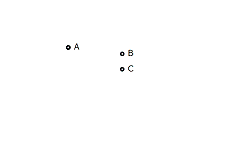
20,815
Reaction score
28,447
Questions

1.
(solved by @tnich ) Show that ##\sin\dfrac{\pi}{m} \sin\dfrac{2\pi}{m}\sin\dfrac{3\pi}{m}\cdots \sin\dfrac{(m - 1)\pi}{m} = \dfrac{m}{2^{m - 1}}## for ##m## = ##2, 3, \dots##(@QuantumQuest)

2. (solved by @PeroK ) Show that when a quantity grows or decays exponentially, the rate of increase over a fixed time interval is constant (i.e. it depends only on the time interval and not on the time at which the interval begins). (@QuantumQuest)

3. (solved by @Antarres ) We define the weighted Hölder-mean as
$$
M_w^p :=\left(\sum_{k=1}^n w_kx_k^p\right)^{\frac{1}{p}} , \,M_w^0:=\lim_{p \to 0}M_w^p = \prod_{k=1}^n x_k^{w_k}
$$
for positive, real numbers ##x_1,\ldots ,x_n > 0## and a weight ##w=(w_1,\ldots,w_n)## with ##w_1+\ldots +w_n=1\, , \,w_k>0## and a ##p \in \mathbb{R}-\{\,0\,\}.##
Prove ##M_w^r \leq M_w^s## whenever ##r<s\,.##
Hint: Use Jensen's theorem for convex functions (see October 2019 / 8a). (@fresh_42)

4. Let ##q## be a rational number such that ##\sin(\pi q )## is rational. Show that ##2\sin(\pi q)## is an integer. (@Infrared)

5. (solved by @Fred Wright and @tnich ) Evaluate ##\displaystyle{\int_0^{2\pi}} e^{\cos(\theta)}\cos(\sin(\theta))d\theta.## (@Infrared)

6. Let ##\{X_n\}_{n=1}^\infty## be a sequence of independent random variables on a probability space ##(\Omega, \mathcal{F}, \mathbb{P})##.

(1) Show that ##\mathbb{P}\left(\sum_{n=1}^\infty X_n \mathrm{\ converges \ in \ \mathbb{R}} \right) \in \{0,1\}##

(2) If in addition ##\mathbb{E}[X_n^2] < \infty, \mathbb{E}[X_n] = 0## for all ##n \geq 1## and ##\sum_{n=1}^\infty \operatorname{Var}(X_n) < \infty##, show that the above probability is ##1##.
(@Math_QED)

7. Consider the real ##n##-dimensional projective space ##\mathbb{R}P^{n+1}## which is ##\left(\mathbb{R}^{n+1}\setminus \{(0,\dots, 0)\}\right)/\sim## where ##\sim## is the equivalence relation given by
$$(x_1, \dots, x_{n+1}) \sim (y_1, \dots, y_{n+1}) \iff \exists \lambda \neq 0: (x_1, \dots, x_{n+1}) = \lambda(y_1, \dots, y_{n+1})$$
Give ##\mathbb{R}P^{n+1}## the quotient topology. Show that this topological space is Hausdorff and second countable.
(@Math_QED)

8. Let ##D## be a division ring. Consider the matrix ring ##R = M_n(D)## of ##n \times n##-matrices with coefficients in ##D##. View ##R## as a (left) ##R##-module in the natural way. Prove that up to isomorphism, ##R## has a unique simple ##R##-submodule.
Hint: Composition series and the Jordan-Hölder theorem. (@Math_QED)

9. (solved by @PeroK ) Show that ##\exp(y) \leq 1+y+y^2/2## for ##y < 0##. Since this is elementary, you cannot use any other inequalities without proof.
(@Math_QED)

10. (solved by @PeroK ) If ##f## has the real Fourier representation $$f(x)=\dfrac{a_0}{2}+\sum_{k=1}^\infty (a_k\cos kx + b_k\sin kx)$$ prove
$$
\dfrac{1}{\pi} \int_{-\pi}^{\pi}|f(x)|^2\,dx = \dfrac{a_0^2}{2}+\sum_{k=1}^{\infty}\left(a_k^2+b_k^2\right)
$$
(@fresh_42)

1572565883019.png
High Schoolers only

11.
(solved by @Not anonymous ) A kid throws small balls upwards. It throws each ball when the previous thrown one is at the maximum height of its course. What is the height that balls reach if the kid throws two of them per second?

12. (solved by @etotheipi ) Which rain drops fall faster, small or big ones and why?

13. (solved by @Not anonymous ) A radio station at point ##A## transmits a signal which is received by the receivers ##B## and ##C##. A listener located at ##B## is listening to the signal via his receiver and after one second hears the signal via receiver ##C## which has a strong loudspeaker. What is the distance between ##B## and ##C##?
1572568219627.png


14. (solved by @Not anonymous and by @PeroK ) Mr. Smith on a full up flight with 50 passengers on a CRJ 100 had lost his boarding pass. The flight attendant tells him to sit anywhere. All other passengers sit on their booked seats, unless it is already occupied, in which case they randomly choose another seat just like Mr. Smith did. What are the chances that the last passenger gets the seat printed on his boarding pass?

15. (solved by @Not anonymous ) On the first flight day of a little island hopper there was no wind during the return flight. How does the total flight duration from outward and return flight change if, instead, a strong headwind blows on the way to the neighboring island - and on the way back, an equally strong tailwind?
 
Last edited:
Physics news on Phys.org
$$\sin\frac{\pi}{m} \sin\frac{2\pi}{m}\sin\frac{3\pi}{m}\cdots \sin\frac{(m - 1)\pi}{m}\\
=\prod_{k=1}^{m-1}\sin\frac{k\pi}{m}\\
=\prod_{k=1}^{m-1}\frac{exp\big(\frac{ik\pi}{m}\big)-exp\big(\frac{-ik\pi}{m}\big)}{2i}\\
=\prod_{k=1}^{m-1}\frac {exp\big(\frac{ik\pi}{m}\big)}{2i}\prod_{k=1}^{m-1}1-exp\big(\frac{-i2k\pi}{m}\big)\\
=\frac {exp\big(\sum_{k=1}^{m-1}\frac{ik\pi}{m}\big)}{(2i)^{m-1}}\prod_{k=1}^{m-1}1-exp\big(\frac{-i2k\pi}{m}\big)\\
=\frac {exp\big(\frac{i(m-1)\pi}{2}\big)}{(2i)^{m-1}}\prod_{k=1}^{m-1}1-exp\big(\frac{-i2k\pi}{m}\big)\\
=\frac {i^{m-1}}{(2i)^{m-1}}\prod_{k=1}^{m-1}1-exp\big(\frac{-i2k\pi}{m}\big)\\
=\frac {1}{2^{m-1}}\prod_{k=1}^{m-1}1-exp\big(\frac{-i2k\pi}{m}\big)$$
When multiplied out
$$\prod_{k=1}^{m-1}1-exp\big(\frac{-i2k\pi}{m}\big)
=1 + \sum_{n=1}^{m-1}P_n$$
where ##P_n## is the sum of all products ##\prod_{j=1}^n \big[-exp\big(\frac{-i2k_j\pi}{m}\big)\big]## in which the values of ##k_j## are all distinct. Note that these products only include terms for ##k## from ##1## to ##m-1##; none of them include ##-exp\big(\frac{-i0\pi}{m}\big)=-1##. The rest is a proof by induction on ##n## to show that ##P_n=1## for ##n## from ##1## to ##m-1## and therefore ##1 + \sum_{n=1}^{m-1}P_n=m##.
For ##n=1##
$$P_1 = \sum_{j=1}^{m-1}-exp\big(\frac{-i2k\pi}{m}\big)\\
= 1+ \sum_{j=0}^{m-1}-exp\big(\frac{-i2k\pi}{m}\big)\\
=1$$
The last step follows from the symmetry of summing complex numbers evenly spaced on a circle about the origin.
Due to symmetry ##P_{n+1} - exp\big(\frac{-i0\pi}{m}\big) P_n## is also also equal to zero. Now given the induction hypotheses that ##P_n=1##,
$$P_{n+1} =1$$
 
  • Like
Likes   Reactions: QuantumQuest and PeroK
I'll assume that ##e > 1##, by whatever definition we are using, hence ##e^{-y} < 1## for ##y > 0##, and ##1 - e^{-y} > 0## for ##y > 0##. Then:

##-1 + y + e^{-y} > 0## for ##y > 0##

Just check the value at ##y=0## and differentiate.

Then, by the same process:

##1-y+ \frac 1 2 y^2 -e^{-y} > 0## for ##y > 0##

Which is equivalent to the stated inequality.
 
Last edited:
Assume a quantity changes exponentially over time:

##Q(t) = Q_0 \exp(at)##, where ##a \ne 0##

Then:

##Q(t + \Delta t) - Q(t) = Q(t)[\exp(a \Delta t )- 1]##

And, the rate of increase or decrease:

##\frac{Q(t + \Delta t) - Q(t)}{Q(t)}##

Depends only on ##\Delta t##.

Seemed a bit easy if I've interpreted that correctly.
 
  • Like
Likes   Reactions: QuantumQuest
tnich said:
$$\sin\frac{\pi}{m} \sin\frac{2\pi}{m}\sin\frac{3\pi}{m}\cdots \sin\frac{(m - 1)\pi}{m}\\
=\prod_{k=1}^{m-1}\sin\frac{k\pi}{m}\\
=\prod_{k=1}^{m-1}\frac{exp\big(\frac{ik\pi}{m}\big)-exp\big(\frac{-ik\pi}{m}\big)}{2i}\\
=\prod_{k=1}^{m-1}\frac {exp\big(\frac{ik\pi}{m}\big)}{2i}\prod_{k=1}^{m-1}1-exp\big(\frac{-i2k\pi}{m}\big)\\
=\frac {exp\big(\sum_{k=1}^{m-1}\frac{ik\pi}{m}\big)}{(2i)^{m-1}}\prod_{k=1}^{m-1}1-exp\big(\frac{-i2k\pi}{m}\big)\\
=\frac {exp\big(\frac{i(m-1)\pi}{2}\big)}{(2i)^{m-1}}\prod_{k=1}^{m-1}1-exp\big(\frac{-i2k\pi}{m}\big)\\
=\frac {i^{m-1}}{(2i)^{m-1}}\prod_{k=1}^{m-1}1-exp\big(\frac{-i2k\pi}{m}\big)\\
=\frac {1}{2^{m-1}}\prod_{k=1}^{m-1}1-exp\big(\frac{-i2k\pi}{m}\big)$$
When multiplied out
$$\prod_{k=1}^{m-1}1-exp\big(\frac{-i2k\pi}{m}\big)
=1 + \sum_{n=1}^{m-1}P_n$$
where ##P_n## is the sum of all products ##\prod_{j=1}^n \big[-exp\big(\frac{-i2k_j\pi}{m}\big)\big]## in which the values of ##k_j## are all distinct. Note that these products only include terms for ##k## from ##1## to ##m-1##; none of them include ##-exp\big(\frac{-i0\pi}{m}\big)=-1##. The rest is a proof by induction on ##n## to show that ##P_n=1## for ##n## from ##1## to ##m-1## and therefore ##1 + \sum_{n=1}^{m-1}P_n=m##.
For ##n=1##
$$P_1 = \sum_{j=1}^{m-1}-exp\big(\frac{-i2k\pi}{m}\big)\\
= 1+ \sum_{j=0}^{m-1}-exp\big(\frac{-i2k\pi}{m}\big)\\
=1$$
The last step follows from the symmetry of summing complex numbers evenly spaced on a circle about the origin.
Due to symmetry ##P_{n+1} - exp\big(\frac{-i0\pi}{m}\big) P_n## is also also equal to zero. Now given the induction hypotheses that ##P_n=1##,
$$P_{n+1} =1$$

The last equality comes more easily directly from looking at the mth roots of unity:

##(1+ z + \dots + z^{m-1}) = \Pi (z - \exp(i2\pi k/m))##

And setting ##z =1## and reindexing the roots to go clockwise.
 
  • Like
Likes   Reactions: QuantumQuest
PeroK said:
The last equality comes more easily directly from looking at the mth roots of unity:

##(1+ z + \dots + z^{m-1}) = \Pi (z - \exp(i2\pi k/m))##

And setting ##z =1## and reindexing the roots to go clockwise.
Yes, I woke up thinking of that this morning. I do like the symmetry argument, though.
 
First, we have:

##2(\sin kx \cos mx)= \sin(k +m)x + \sin(k-m)x##

If ##k \ne m##, the product is an odd function, hence the integral is zero. And also when ##k = m##.

Also, the integral of ##\sin kx## and ##\cos kx## vanish over the interval.

And, the integral of ##\cos^2 x## and ##\sin^2 x## over the interval equal ##\pi##. To see this, note for example that:

##2\cos^2 kx = \cos 2kx + 1##

This implies that the integral over the interval vanishes for all cross terms (##a_0, \cos kx, \sin mx## are mutually orthogonal functions).

This leaves only the square terms in these functions:

##\int_{-\pi}^{\pi} |f(x)|^2 dx = 2\pi(a_0^2/4) + \pi \sum (a_k^2 + b_k^2)##
 
PeroK said:
First, we have:

##2(\sin kx \cos mx)= \sin(k +m)x + \sin(k-m)x##

If ##k \ne m##, the product is an odd function, hence the integral is zero. And also when ##k = m##.

Also, the integral of ##\sin kx## and ##\cos kx## vanish over the interval.

And, the integral of ##\cos^2 x## and ##\sin^2 x## over the interval equal ##\pi##. To see this, note for example that:

##2\cos^2 kx = \cos 2kx + 1##

This implies that the integral over the interval vanishes for all cross terms (##a_0, \cos kx, \sin mx## are mutually orthogonal functions).

This leaves only the square terms in these functions:

##\int_{-\pi}^{\pi} |f(x)|^2 dx = 2\pi(a_0^2/4) + \pi \sum (a_k^2 + b_k^2)##
Yes.

The identity is called Parseval Equation. An alternative proof can be given by using Euler's identity, in case anyone will give it a try.
 
PeroK said:
I'll assume that ##e > 1##, by whatever definition we are using, hence ##e^{-y} < 1## for ##y > 0##, and ##1 - e^{-y} > 0## for ##y > 0##. Then:

##-1 + y + e^{-y} > 0## for ##y > 0##

Just check the value at ##y=0## and differentiate.

Then, by the same process:

##1-y+ \frac 1 2 y^2 -e^{-y} > 0## for ##y > 0##

Which is equivalent to the stated inequality.

since the exponential function applied to the left half of the real line is intimately tied in with probability, and coin tossing in particular, I'll offer a simple probabilistic proof of this analytic result. I tried not to skip steps so it isn't particularly short, but my sense is a lot of the below stuff comes up semi-regularly in the probability forum.

The proof as of now is incomplete because it relies on Bonferonni's Inequalities, which is a refinement of inclusion-exclusion. I plan on dropping in a reasonably nice proof of Bonferonni in the near future to complete this.

The only machinery needed is (1) knowledge of simple probability spaces (i.e. with finitely many points in the sample space) and (2) basic knowledge of limits of sequences.

Bonferonni Inequalities to be dropped in a bit later.

consider Bernouli Trials / iid coin tosses, where each toss has probability of success (heads) given by ## 0 \lt p \lt 1##. We toss the coin ##n## times. The exact values of p and n may be chosen later.

letting ##A_k## denote the event of a heads on the ##k##th toss, the probability of at least one heads in n tosses is given by

##Pr\Big(\text{at least one success}\Big) = Pr\Big(A_1 \cup A_2 \cup ... \cup A_n\Big)##

applying Bonferonni inequlities (a black box at this stage, I know) gives

##E\Big[e_1\big(\mathbf z\big)\Big] - E\Big[e_2\big(\mathbf z\big)\Big] ##
##= \Big\{\sum_{k=1}^n Pr\Big(A_k\Big)\Big\} - \sum_{k=1}^n \sum_{j\gt k} Pr\big(A_k \cap A_j\big)##
##\leq Pr\Big(A_1 \cup A_2 \cup ... \cup A_n\Big) ##
##\leq \sum_{k=1}^n Pr\Big(A_k\Big) ##
##= E\Big[e_1\big(\mathbf z\big)\Big]##

where
##\mathbf z := \begin{bmatrix}
\mathbb I_{A_1} \\
\mathbb I_{A_2}\\
\vdots \\
\mathbb I_{A_n}
\end{bmatrix}##

note: this vector of indicator random variables and the associated elementary symmetric polynomials aren't needed here but I find them a lot easier to follow notationally so I put them in for optional clarity.

now consider the complementary event of no heads in n tosses, which is given by
##1 - Pr\Big(\text{at least one success}\Big) = 1 - Pr\Big(A_1 \cup A_2 \cup ... \cup A_n\Big) = Pr\Big(A_1^C \cap A_2^C \cap ... \cap A_n^C\Big) ##

Taking our above bonferonni inequality, negating it and adding one, we can then say
## 1 - \sum_{k=1}^n Pr\Big(A_k\Big)##
##\leq 1- Pr\Big(A_1 \cup A_2 \cup ... \cup A_n\Big) ##
##=Pr\Big(A_1^C \cap A_2^C \cap ... \cap A_n^C\Big)##
##\leq 1-\Big\{\sum_{k=1}^n Pr\Big(A_k\Big)\Big\} + \sum_{k=1}^n \sum_{j\gt k} Pr\big(A_k \cap A_j\big)##

now we specialize to the fact that our coin tossing has iid trials and input that information into the above inequalties, getting
## 1 - n \cdot p##
##\leq Pr\Big(A_1^C \cap A_2^C \cap ... \cap A_n^C\Big)##
## = \Big(1 -p\Big)^n##
## = \Big(1 +(-p)\Big)^n##
##\leq 1-n\cdot p + \binom{n}{2}\cdot p^2##
##= 1-n\cdot p + \frac{n(n-1)}{2}\cdot p^2##
##\leq 1-n\cdot p + \frac{n^2}{2}\cdot p^2##

now for any ##x \in (-\infty, 0)##, we may select ##p:= \frac{- x}{n} = \frac{\vert x \vert }{n} \in (0,1)## for all sufficiently large ##n##, giving us

## 1 - n \cdot \frac{- x}{n}##
##= 1 + x##
##\leq \Big(1 +(-\frac{-x}{n}\Big)^n##
##\leq \Big(1 +\frac{x}{n}\Big)^n##
##\leq 1 - n \cdot \frac{- x}{n} + \frac{n^2}{2}\cdot \big(\frac{- x}{n}\big)^2##
##\leq 1 + x + \frac{1}{2}\cdot x^2 ##

so we have the pointwise bound that we wanted, and can now treat it as an analytic problem, pass limits and get
## 1 + x ##
##\leq \lim_{n\to \infty} \Big(1 +\frac{x}{n}\Big)^n##
##= e^x ##
##\leq 1 + x + \frac{1}{2} x^2 ##
again for all ##x \in (-\infty, 0)##

- - - -
the one major weakness with this approach is we have
##0 \lt b_n = \Big(1 +\frac{x}{n}\Big)^n = \Big(1 -\frac{\vert x\vert}{n}\Big)^n \lt \Big(1 -\frac{\vert x\vert}{n+1}\Big)^{n+1} =b_{n+1} ##
again for sufficiently large n, aka all ##n \gt \vert x\vert##
(the strictness of the inequality holds, by e.g. taking (n+1)th roots of each side and applying ##\text{GM} \leq \text{AM}##)

so we have a monotone increasing sequence that is bounded above, etc. which tells us that the lower bound
##1 +x \lt b_{n+1} \lt L = e^x##
is strict.

But the weakness is that since we are passing limits it is not clear that the upper bound of
## b_{n+1} \lt L = e^x \leq 1 + x + \frac{1}{2} x^2##
is strict. So in general if we want sharpness, passing limits isn't particularly desirable when constructing an inequality. That said, I still quite like the underlying interpretation here.
 
  • #10
PeroK said:
I'll assume that ##e > 1##, by whatever definition we are using, hence ##e^{-y} < 1## for ##y > 0##, and ##1 - e^{-y} > 0## for ##y > 0##. Then:

##-1 + y + e^{-y} > 0## for ##y > 0##

Just check the value at ##y=0## and differentiate.

Then, by the same process:

##1-y+ \frac 1 2 y^2 -e^{-y} > 0## for ##y > 0##

Which is equivalent to the stated inequality.

The idea is certainly correct, but it might benefit less advanced readers if you flesh out the details of the following sentence:

"Just check the value at ##y=0## and differentiate."
 
  • #11
Math_QED said:
The idea is certainly correct, but it might benefit less advanced readers if you flesh out the details of the following sentence:

"Just check the value at ##y=0## and differentiate."

The key is that:

If ##f(0) = 0## and ##f'(x) > 0## for ##x > 0## then ##f(x) > 0## for ##x> 0##.

To see this, assume not and apply the mean value theorem.
 
  • Like
Likes   Reactions: member 587159
  • #12
PeroK said:
The key is that:

If ##f(0) = 0## and ##f'(x) > 0## for ##x > 0## then ##f(x) > 0## for ##x> 0##.

To see this, assume not and apply the mean value theorem.

Fair enough. Good job. There is no need for a proof by contradiction though.

By the mean value theorem, there is ##\xi > 0## such that ##f(x)-f(0) = (x-0)f'(\xi) \implies f(x) > 0##
 
  • #13
The force of viscous drag given by Stokes law is F = 6\pi\eta r v, and at terminal velocity this equals weight. Assuming the drop is spherical, $$v = \frac{mg}{6\pi\eta r} = \frac{\frac{4}{3} \pi r^{3} \rho g}{6\pi\eta r} = \frac{2 \rho g r^{2}}{9\eta}$$ which implies that v \propto r^{2}, so a larger drop will fall faster.
 
  • Like
Likes   Reactions: QuantumQuest
  • #14
Q5
$$\int_0^{2\pi}e^{cos(\theta)}cos(sin(\theta))d\theta=\int_0^{2\pi}\frac {1}{2}[e^{cos(\theta)+isin(\theta) }+e^{cos(\theta)-isin(\theta) }]d\theta$$The integral formula for the modified Bessel function of the first kind:$$\int_0^{2\pi}e^{xcos(\theta)+ysin(\theta) } d\theta=2\pi I_0(\sqrt {x^2 + y^2})$$##x=1## and ##y=i## therefore:
$$\int_0^{2\pi}\frac {1}{2}[e^{cos(\theta)+isin(\theta) }+e^{cos(\theta)-isin(\theta) }]d\theta=\pi I_0(\sqrt {1 + i^2} ) + \pi I_0(\sqrt {1 +(-i)^2} )= 2\pi I_0(0)$$ The expansion for ##I_0## :$$I_0(x)=\sum_{m=0}^{\infty}\frac {1}{m!\Gamma (m+1)}(\frac {x}{2})^{2m}$$With ##x=0## only the first term in the expansion survives and$$I_0(0)= \frac {1}{0!\Gamma(1)}=\frac {1}{0!0!}=1$$Thus$$\int_0^{2\pi}e^{cos(\theta)}cos(sin(\theta))d\theta=2\pi$$
 
  • Like
Likes   Reactions: PeroK and Infrared
  • #15
@Fred Wright This looks right!

The question can be done without using special functions, so I'll still accept other solutions.
 
  • #16
$$\int_0^{2\pi}e^{\cos\theta}\cos(\sin\theta) d\theta\\
=\int_0^{2\pi}\frac {e^{\cos\theta+i\sin\theta}+e^{\cos\theta-i\sin\theta}} 2 d\theta\\
=\int_0^{2\pi}\frac {e^{e^{i\theta}}}2d\theta+\int_0^{2\pi}\frac {e^{e^{-i\theta}}} 2d\theta$$
Letting ##\phi = -\theta## in the second integral gives
$$\int_0^{2\pi}\frac {e^{e^{i\theta}}}2d\theta-\int_0^{-2\pi}\frac {e^{e^{i\phi}}} 2d\phi\\
=\int_0^{2\pi}\frac {e^{e^{i\theta}}}2d\theta+\int_{-2\pi}^0\frac {e^{e^{i\phi}}} 2d\phi\\
=\int_0^{2\pi}\frac {e^{e^{i\theta}}}2d\theta+\int_0^{2\pi}\frac {e^{e^{i\phi}}} 2d\phi\\
=\int_0^{2\pi}e^{e^{i\theta}}d\theta$$
Letting ##z=e^{i\theta}## we can convert to a contour integral on the unit circle,
$$\oint \frac {e^z}{iz}dz$$
The residue of ##\frac {e^z}i## at ##z=0## is ##-i##, so the value of the contour integral is ##2\pi i (-i)=2\pi##.
 
  • Like
Likes   Reactions: PeroK and Infrared
  • #17
@tnich Nice, this was my intended solution. You can save a few steps by noting that the integrand in your third line is the real part of ##e^{e^{i\theta}}##, so that you don't have to do the following change of variables.
 
  • #18
fresh_42 said:
15. On the first flight day of a little island hopper there was no wind during the return flight. How does the total flight duration from outward and return flight change if, instead, a strong headwind blows on the way to the neighboring island - and on the way back, an equally strong tailwind?

Answer: Compared to the situation where there were no winds, the duration will be longer when there are equally strong headwinds and tailwinds during the outward and return flights.

I assume that the "original" speed of the airplane, i.e. the speed had there been no wind, is the same during onward and return flights and that the pilots do not change the plane's speed to negate the effect of headwind and tailwind. Let ##v## be the original speed. Let ##x## be the increase/decrease in speed caused by tailwind/headwind. Let ##d## be the distance between the 2 islands.

Total duration of flights when there were no winds = ##t_1 = \frac {2d} {v}##
Total duration of flights when there is headwind of speed ##x## during one flight and tailwind of same speed during the other flight = ##t_2 = \frac {d} {(v-x)} + \frac {d} {(v+x)} = \frac {2dv} {v^2 - x^2} ##

$$ t_2 - t_1 = 2d \times \frac {x^2} {v (v^2 - x^2)}$$

The above time difference value must be a positive value since ##d##, ##v## and ##x## are positive and since ##x## must be less than ##v## (otherwise the plane would be moving backward and will not be able to reach the destination), the denominator is also positive. That means ##t_2 \gt t_1##
 
  • Like
Likes   Reactions: fresh_42
  • #19
fresh_42 said:
11. A kid throws small balls upwards. It throws each ball when the previous thrown one is at the maximum height of its course. What is the height that balls reach if the kid throws two of them per second?

I assume that the kid throws every ball with the same speed. Without that assumption, there would be innumerable valid solution - the kid could alternate between 2 speeds for the throw for odd and even numbered throws and achieve a rate of 2 balls per seconds. But with the same speed assumption, every ball must be reaching its maximum height 0.5 seconds after its throw.

Gravitational acceleration ##g = 9.8 \ m / s^2##. When ball reaches maximum height, its speed becomes 0. If initial speed of ball is ##s## and speed becomes 0 after 0.5 seconds due to deceleration ##g##, ##0 = s - 0.5 \times g \Rightarrow s = 4.9 \ m /s##

Maximum height reached by ball ##D## = Distance traveled by ball in 0.5 seconds from the time of throw. Using the equation for distance as a function of velocity ##v## and time ##t##, and knowing that velocity of the ball ##t## seconds after its throw is ##v = (s - g t)## we get

$$
D = \int_0^{0.5} v \, dt = \int_0^{0.5} (s - gt) \, dt =\left. st - \frac {gt^2} {2} \right|_0^{0.5} =
0.5 s - \frac {9.8 \times {0.5}^2} {2} = 1.225 \ m
$$

So answer is 1.225 meters
 
  • Like
Likes   Reactions: QuantumQuest
  • #20
I can't prove this one, but I can give a counter-example. For ##q=\frac 1 6##, ##\sin \pi q=\frac 1 2## and both are rational, but ##2q=\frac 1 3##, which is not an integer. What am I missing?
 
  • Like
Likes   Reactions: PeroK and Infrared
  • #21
@tnich Ack, sorry! The conclusion should be that ##2\sin(\pi q)## is an integer.
 
Last edited:
  • Like
Likes   Reactions: tnich
  • #22
Infrared said:
@tnich Ack, sorry! The conclusion should be that ##2\sin(\pi q)## is an integer.
Corrected.
 
  • Like
Likes   Reactions: Infrared
  • #23
13. A radio station at point A transmits a signal which is received by the receivers B and C. A listener located at B is listening to the signal via his receiver and after one second hears the signal via receiver C which has a strong loudspeaker. What is the distance between B and C?

Answer: The distance between B and C would be approximately equal to the distance traveled by sound in air in 1 second, i.e. around 340 m.

To prove this, let us denote by ##d_1##, ##d_2## and ##d_3## the distances between A & B, A & C, and B & C respectively. Let ##T_0## be the time instant at which radio signal was emitted from A, ##T_1## be the time instant at which it was received at A and ##T_2## be the instant at which the retransmitted (as sound) signal from C is heard at B. Let ##v_l## and ##v_s## be the speed of radio waves (which is same as speed of light) and speed of sound respectively. I assume that the signal is emitted at sound from C instantaneously on receiving the signal from A, i.e. there is no time lag between signal reception and sound emission at C. It is given that ##T_2 - T_1 = 1##

$$
T_1 = T_0 + \frac {d_1} {v_l} \\

T_2 = T_0 + \frac {d_2} {v_l} + \frac {d_3} {v_s} \\

T_2 - T_1 = 1 \Rightarrow \frac {d_2} {v_l} + \frac {d_3} {v_s} - \frac {d_1} {v_l} = 1 \\
\Rightarrow d_3 = v_s + v_s \frac {d_1 - d_2} {v_l}
$$

By triangle inequality, ##d_2 \le d_1 + d_3 \Rightarrow 0 \le d_2 \le d_1 + d_3## (lower bound is 0 as d_2 is a length)

If ##d_2 = 0##, substituting in the earlier equation gives ##d_3 = v_s + v_s \frac {d_1} {v_l}##, but this is also case where points A and C coincide, so distance between B & C = distance between B & A ##\Rightarrow d_3 = v_s + v_s \frac {d_3} {v_l} \Rightarrow d_3 = \frac {v_s} {1 - \frac {v_s} {v_l}}##

If on the other hand, ##d_2 = d_1 + d_3##, the earlier equation becomes
$$
d_3 = v_s + v_s \frac {- d_3} {v_l} \Rightarrow d_3 = \frac {v_s} {1 + \frac {v_s} {v_l}}
$$

Therefore ##d_3 \in (\frac {v_s} {1 + \frac {v_s} {v_l}}, \frac {v_s} {1 - \frac {v_s} {v_l}}) ##

Since speed of sound is very small compared to speed of radio waves ##\frac {v_s} {v_l} \approx 0 \Rightarrow## denominators of both lower and upper bounds are almost equal to 1, so the value ##d_3 \approx v_s \approx 340 \ m##
 
  • Like
Likes   Reactions: QuantumQuest
  • #24
Yet another way to solve problem 5
$$I(\theta)=\int_0^{2\pi}e^{cos(\theta )}cos(sin(\theta ))d\theta =\int_0^{2\pi}\frac {1}{2}(e^{cos(\theta) + isin(\theta)} + e^{cos(\theta) - isin(\theta)})d\theta
\\ =\int_0^{2\pi}d\theta \sum_{m=0}^{\infty}[\frac {(cos(\theta)+ isin(\theta))^m +(cos(\theta)- isin(\theta))^m}{2m!}]$$ I observe that$$cos(m\theta)=\frac {(e^{i\theta} )^m + (e^{-i\theta} )^m}{2}
\\ = \frac{(cos(\theta)+ isin(\theta))^m +(cos(\theta)- isin(\theta))^m}{2}$$therefor,$$I(\theta)=\int_0^{2\pi} \sum_{m=0}^{\infty}\frac{cos(m\theta)}{m!}d\theta
\\ = \int_0^{2\pi}d\theta (1 + \frac{cos(\theta)}{1!} + \frac{cos(2\theta)}{2!} + ...)$$ Integration of ##cos(m\theta)##, with m an integer greater than 0, over a period of ##2\pi##, yields zero, so only the first term survives in the expansion and thus$$I(\theta)=2\pi$$
 
Last edited:
  • Like
Likes   Reactions: PeroK
  • #25
Fred Wright said:
$$I(\theta)=\int_0^{2\pi} \sum_{m=0}^{\infty}cos(m\theta) d\theta
\\$$

Unfortunately, the sum under your integral sign doesn't converge (for any ##\theta##). I think you lost your factorial term.
 
  • #26
Infrared said:
Unfortunately, the sum under your integral sign doesn't converge (for any ##\theta##). I think you lost your factorial term.
The sum should have been$$I(\theta)=\int_0^{2\pi} \sum_{m=0}^{\infty}\frac{cos(m\theta)}{m!}d\theta$$I was to hasty with typing latex. I think that sum converges.
 
  • #27
StoneTemplePython said:
The proof as of now is incomplete because it relies on Bonferonni's Inequalities, which is a refinement of inclusion-exclusion. I plan on dropping in a reasonably nice proof of Bonferonni in the near future to complete this.

It is too late, I know, but it belatedly occurs to me that I should have just ditched this Bonferonni stuff and instead mimicked the proof for the Bernouli Inequality.

for ##a \in (-1,0)##

claim:
##\big(1-\vert a \vert\big)^n \leq 1 - n\vert a \vert + \binom{n}{2}a^2##
for natural number ##n \geq 2##

Base Case:
##n=2##
##\big(1-\vert a \vert\big)^2 = 1-2\vert a \vert + \vert a \vert^2 \leq 1 - 2\vert a \vert + \binom{2}{2}a^2##
(i.e. met with equality)

Inductive Case:
suppose holds for ##n-1##, need to show this implies it holds for n
##\big(1 + a \big)^n ##
##\big(1-\vert a \vert\big)^n ##
##=\big(1-\vert a \vert\big) \cdot \big(1-\vert a \vert\big)^{n-1} ##
##\leq \big(1-\vert a \vert\big)\big(1 - (n-1)\vert a \vert + \binom{n-1}{2}\vert a\vert ^2\big)## (inductive hypothesis, note ##\big(1-\vert a \vert\big)\gt 0##)
##= \big(1 - (n-1)\vert a \vert + \binom{n-1}{2}a^2\big) + \big(-\vert a \vert + (n-1) \vert a \vert^2 -\binom{n-1}{2}\vert a\vert^3\big)##
##= 1 - n\vert a \vert + \big\{\binom{n-1}{2}a^2 + (n-1) a^2\big\} -\binom{n-1}{2}\vert a\vert^3##
##= 1 - n\vert a \vert + \big\{\frac{(n-1)(n-2)}{2}a^2 + \frac{2n-2}{2} a^2\big\} -\binom{n-1}{2}\vert a\vert^3##
##= 1 - n\vert a \vert + \big\{\frac{n^2-3n + 2}{2}a^2 + \frac{2n-2}{2} a^2\big\} -\binom{n-1}{2}\vert a\vert^3##
##= 1 - n\vert a \vert + \big\{\frac{n^2-n}{2}a^2 \big\} -\binom{n-1}{2}\vert a\vert^3##
##= 1 - n\vert a \vert + \binom{n}{2}a^2 -\binom{n-1}{2}\vert a\vert^3##
##\leq 1 - n\vert a \vert + \binom{n}{2}a^2##
##= 1 + n\cdot a + \binom{n}{2}a^2##

now for any
##x \in (-\infty, 0)##
we can select
##a:= \frac{x}{n}##
for all large enough ##n## (i.e. ##n \gt \vert x \vert## )

giving
## \big(1 + \frac{x}{n} \big)^n ##
##=\big(1 + a \big)^n ##
##\leq 1 + n\cdot a + \binom{n}{2}a^2 ##
##= 1 + n\cdot \frac{x}{n} + \binom{n}{2}\frac{x^2}{n^2} ##
##\leq 1 + x + \frac{n^2}{2}\frac{x^2}{n^2} ##
## = 1 + x + \frac{x^2}{2} ##

now passing limits gives the result, i.e.

##e^{x} = \lim_{n\to \infty} \big(1 + \frac{x}{n} \big)^n \leq 1 + x + \frac{x^2}{2} ##
for ##x \in (-\infty, 0)##
 
  • #28
Not anonymous said:
I assume that the kid throws every ball with the same speed. Without that assumption, there would be innumerable valid solution - the kid could alternate between 2 speeds for the throw for odd and even numbered throws and achieve a rate of 2 balls per seconds. But with the same speed assumption, every ball must be reaching its maximum height 0.5 seconds after its throw.

Gravitational acceleration ##g = 9.8 \ m / s^2##. When ball reaches maximum height, its speed becomes 0. If initial speed of ball is ##s## and speed becomes 0 after 0.5 seconds due to deceleration ##g##, ##0 = s - 0.5 \times g \Rightarrow s = 4.9 \ m /s##

Maximum height reached by ball ##D## = Distance traveled by ball in 0.5 seconds from the time of throw. Using the equation for distance as a function of velocity ##v## and time ##t##, and knowing that velocity of the ball ##t## seconds after its throw is ##v = (s - g t)## we get

$$
D = \int_0^{0.5} v \, dt = \int_0^{0.5} (s - gt) \, dt =\left. st - \frac {gt^2} {2} \right|_0^{0.5} =
0.5 s - \frac {9.8 \times {0.5}^2} {2} = 1.225 \ m
$$

So answer is 1.225 meters

Well done. Just one comment: letter ##s## is usually for distance, so I think that it's best to denote initial velocity as ##\upsilon_0## just to avoid potential looking back and forth from readers.
 
  • #29
Not anonymous said:
13. A radio station at point A transmits a signal which is received by the receivers B and C. A listener located at B is listening to the signal via his receiver and after one second hears the signal via receiver C which has a strong loudspeaker. What is the distance between B and C?

Answer: The distance between B and C would be approximately equal to the distance traveled by sound in air in 1 second, i.e. around 340 m.

To prove this, let us denote by ##d_1##, ##d_2## and ##d_3## the distances between A & B, A & C, and B & C respectively. Let ##T_0## be the time instant at which radio signal was emitted from A, ##T_1## be the time instant at which it was received at A and ##T_2## be the instant at which the retransmitted (as sound) signal from C is heard at B. Let ##v_l## and ##v_s## be the speed of radio waves (which is same as speed of light) and speed of sound respectively. I assume that the signal is emitted at sound from C instantaneously on receiving the signal from A, i.e. there is no time lag between signal reception and sound emission at C. It is given that ##T_2 - T_1 = 1##

$$
T_1 = T_0 + \frac {d_1} {v_l} \\

T_2 = T_0 + \frac {d_2} {v_l} + \frac {d_3} {v_s} \\

T_2 - T_1 = 1 \Rightarrow \frac {d_2} {v_l} + \frac {d_3} {v_s} - \frac {d_1} {v_l} = 1 \\
\Rightarrow d_3 = v_s + v_s \frac {d_1 - d_2} {v_l}
$$

By triangle inequality, ##d_2 \le d_1 + d_3 \Rightarrow 0 \le d_2 \le d_1 + d_3## (lower bound is 0 as d_2 is a length)

If ##d_2 = 0##, substituting in the earlier equation gives ##d_3 = v_s + v_s \frac {d_1} {v_l}##, but this is also case where points A and C coincide, so distance between B & C = distance between B & A ##\Rightarrow d_3 = v_s + v_s \frac {d_3} {v_l} \Rightarrow d_3 = \frac {v_s} {1 - \frac {v_s} {v_l}}##

If on the other hand, ##d_2 = d_1 + d_3##, the earlier equation becomes
$$
d_3 = v_s + v_s \frac {- d_3} {v_l} \Rightarrow d_3 = \frac {v_s} {1 + \frac {v_s} {v_l}}
$$

Therefore ##d_3 \in (\frac {v_s} {1 + \frac {v_s} {v_l}}, \frac {v_s} {1 - \frac {v_s} {v_l}}) ##

Since speed of sound is very small compared to speed of radio waves ##\frac {v_s} {v_l} \approx 0 \Rightarrow## denominators of both lower and upper bounds are almost equal to 1, so the value ##d_3 \approx v_s \approx 340 \ m##

Well done. I want to point out here that what is asked from the potential solver of the question is, essentially, to recognize that he / she has to use the speed of sound in order to find the distance asked. So, an answer along these lines:

Because radio waves have speed ##\approx 300,000 \frac{km}{sec}##, the signal is received almost simultaneously by ##B## and ##C## although they are at different distances from ##A##. But sound travels from ##C## to ##B## at ##\approx 330 \frac{m}{sec}## (##0^o C##) or ##\approx 340 \frac{m}{sec}## (##20^o C##). So, taking the second speed (as more general), distance from ##B## to ##C## is ##BC \approx 340 \times 1 \enspace m = 340 \enspace m##

would be sufficient.
 
Last edited:
  • #30
@Fred Wright Looks good now, but in order to interchange the sum and integral at the end, you should establish uniform convergence (or else use some other criterion). Fortunately this is easy in this case (e.g. use Weierstrass M-test)
 

Similar threads

  • · Replies 42 ·
2
Replies
42
Views
11K
  • · Replies 61 ·
3
Replies
61
Views
12K
  • · Replies 100 ·
4
Replies
100
Views
12K
  • · Replies 86 ·
3
Replies
86
Views
14K
  • · Replies 61 ·
3
Replies
61
Views
13K
  • · Replies 48 ·
2
Replies
48
Views
12K
  • · Replies 93 ·
4
Replies
93
Views
15K
  • · Replies 60 ·
3
Replies
60
Views
12K
  • · Replies 67 ·
3
Replies
67
Views
11K
  • · Replies 39 ·
2
Replies
39
Views
13K