SUMMARY
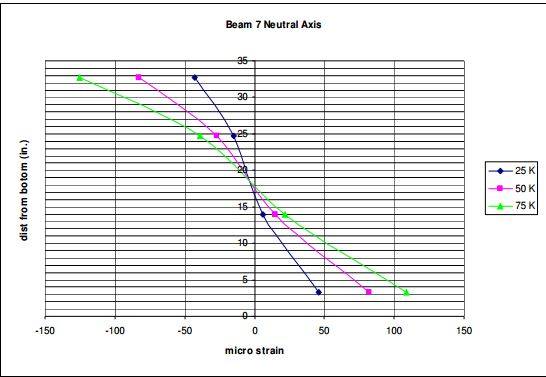
The discussion focuses on calculating the distance from the bottom of a girder using strain data from four different strain gauges, measured in pounds (lb), and the corresponding neutral axis for each gauge. The neutral axis is defined as the line within a beam where the material experiences no tension or compression during bending. Understanding these concepts is crucial for accurately interpreting strain gauge data and applying it to structural analysis.
PREREQUISITES
- Understanding of strain gauge principles and measurements
- Familiarity with structural engineering concepts, specifically neutral axis theory
- Basic knowledge of data analysis techniques for strain data
- Proficiency in using software tools for plotting data, such as MATLAB or Python
NEXT STEPS
- Research how to calculate distances using strain gauge data in structural applications
- Learn about the mathematical principles behind the neutral axis in beam theory
- Explore data visualization techniques for plotting strain data effectively
- Investigate the conversion of strain measurements from pounds to other units if necessary
USEFUL FOR
Structural engineers, civil engineering students, and professionals involved in materials testing and analysis will benefit from this discussion.