SUMMARY
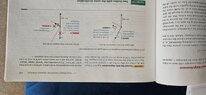
The discussion centers on the interpretation of Newton's Second Law, expressed as F=ma, and the caution against treating mass times acceleration as a force. Participants reference Sears & Zemansky's "University Physics, 12th edition," which emphasizes that acceleration is the result of a net force acting on a mass, rather than a force itself. The conversation highlights the distinction between the net force (F) and the product of mass (m) and acceleration (a), clarifying that while they are mathematically equal, they represent different physical concepts. The importance of understanding the context of forces and acceleration in physics is underscored.
PREREQUISITES
- Understanding of Newton's Laws of Motion
- Familiarity with vector quantities in physics
- Knowledge of momentum and its relation to force
- Basic proficiency in algebra and mathematical expressions
NEXT STEPS
- Study the implications of Newton's Second Law in various inertial frames
- Explore the concept of momentum and its conservation laws
- Investigate the role of fictitious forces in non-inertial reference frames
- Review vector calculus as it applies to physics problems
USEFUL FOR
Physics students, educators, and anyone interested in deepening their understanding of classical mechanics and the nuances of force and acceleration in physical systems.