Nuclear meltdown in 2015 on antineutrino map?

  • Context: Graduate 
  • Thread starter Thread starter TimeSkip
  • Start date Start date
  • Tags Tags
    2015 Map Nuclear
Click For Summary
SUMMARY

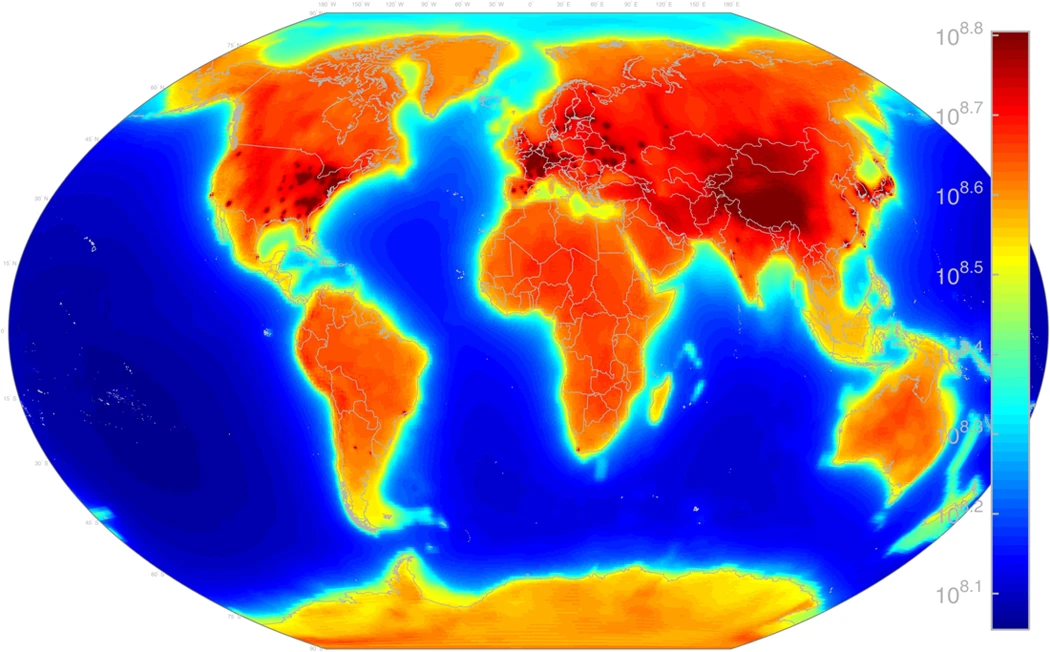
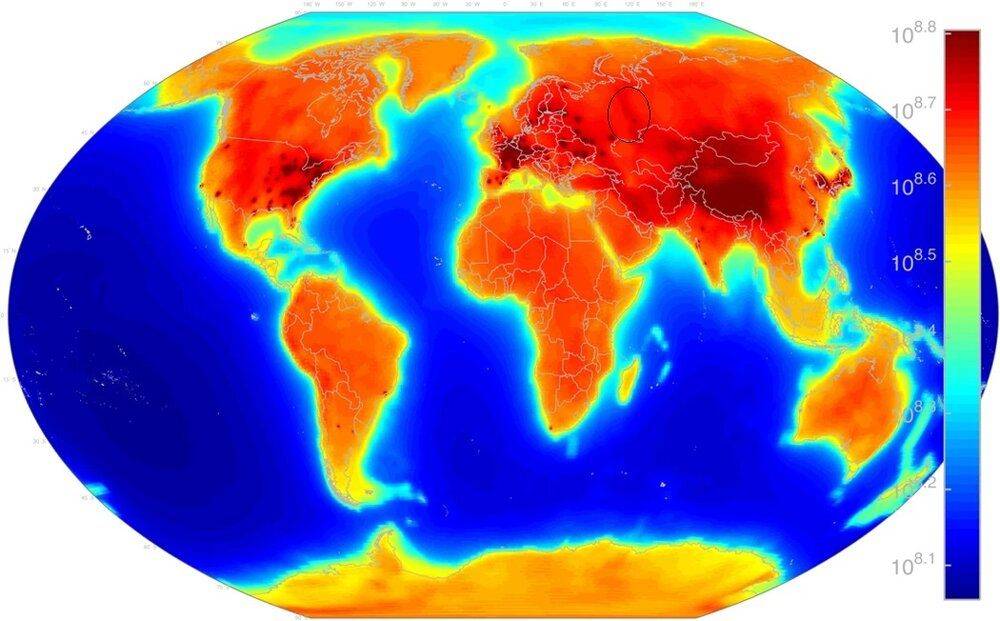
The discussion centers on the interpretation of an antineutrino map and the potential misconception of a nuclear meltdown in 2015. Participants clarify that the map is a model representing geoneutrino emissions rather than a direct indication of a meltdown. The colors used in the map, particularly red, may mislead viewers into thinking there are high temperatures associated with melting. The map highlights areas with nuclear activity, such as the Mayak facility in Russia, known for past accidents and nuclear waste processing.

PREREQUISITES
  • Understanding of antineutrinos and geoneutrinos
  • Familiarity with nuclear power plant operations and incidents
  • Knowledge of neutrino detection methods
  • Basic comprehension of scientific modeling and data visualization
NEXT STEPS
  • Research the implications of geoneutrino emissions in nuclear science
  • Study the historical accidents at the Mayak facility
  • Examine the role of neutrinos in nuclear decay processes
  • Explore best practices for scientific data visualization to avoid misinterpretation
USEFUL FOR

Researchers in nuclear physics, environmental scientists, and anyone interested in the interpretation of scientific data related to nuclear energy and safety.

TimeSkip
Messages
44
Reaction score
4
I was browsing a antineutrino map and was wondering if there was a meltdown in 2015 when it was taken.

I never heard about it in the news; but, here are some pictures from the paper:

https://www.nature.com/articles/srep13945

41598_2015_Article_BFsrep13945_Fig1_HTML.jpg

41598_2015_Article_BFsrep13945_Fig1_HTML.jpg


Thoughts?
 
Physics news on Phys.org
TimeSkip said:
was wondering if there was a meltdown in 2015 when it was taken.

Did you read the paper? Or even the abstract? It's a model. There was no day it was taken.
 
  • Like
Likes   Reactions: Astronuc
TimeSkip said:
I was browsing a antineutrino map and was wondering if there was a meltdown in 2015 when it was taken.

I never heard about it in the news; but, here are some pictures from the paper:

Thoughts?
What are you talking about? What leads you to believe there is a meltdown shown somewhere in those graphics?
 
  • Like
Likes   Reactions: Vanadium 50, Keith_McClary, Klystron and 1 other person
russ_watters said:
What are you talking about? What leads you to believe there is a meltdown shown somewhere in those graphics?
The article mainly refers to 'geoneutrino' emanations from the Earth including mixing models of the three known antineutrinos.

The colors selected for the maps: blue to yellow to red resemble temperature readings. The bright red color associated with antineutrino detection might mislead a cursory reader that something is melting due to high temperatures?

Fix: change map colors to complements. Red becomes green, blue to orange, yellow to violet. Incipient 'meltdowns' will instead resemble foliage. :smile:
 
Last edited:
The color doesn't look uniform around that circled spot.

Was just wondering.

As in: Something like wind blew something to the north of the reactor in question.
 
TimeSkip said:
The color doesn't look uniform around that circled spot.

Was just wondering.

As in: Something like wind blew something to the north of the reactor in question.
The dark splotches in the US, Europe, Asia (Japan, S. Korea, Taiwan, eastern China), S. Americal and S. Africa are operating nuclear power plants. One has to look at the energy levels of the neutrinos, since there is a mix of U, Th isotopes and their decay products, and fission products and their decay products. Note that beta decay involves the release of an electron (beta particle) and anti-neutrino.

The red circle encompasses the Ural mountains. In areas like that, it is mostly deposits of U and Th.
Edit/update: The darkest splotch (spot) in the red oval, toward the SE of center, is Mayak, where U and Pu are processed, and fission products (nuclear waste) are accumulated. There have been numerous criticality and other accidents at the site, but in the worst case, a plume spread to the northeast, or about 45 degrees from the darker area (Ural Mountains).
https://en.wikipedia.org/wiki/Mayak#List_of_accidents
https://en.wikipedia.org/wiki/Kyshtym_disaster
https://en.wikipedia.org/wiki/Kysht...e:Map_of_the_East_Urals_Radioactive_Trace.png

Please read the article.
 
Last edited:
  • Like
  • Informative
Likes   Reactions: russ_watters, Klystron, Vanadium 50 and 1 other person
Can someone enlighten me as to what happened in the Great Lakes in the US? Why so much antineutrino emission?
 
Will you please read the article?

Your original question about what was going on in the circle you drew was answered on Page 5. This question is answered on page 3, and you can get more details by clicking on the link on page 9.
 
  • Like
Likes   Reactions: Astronuc

Similar threads

  • · Replies 12 ·
Replies
12
Views
3K
  • · Replies 10 ·
Replies
10
Views
2K
  • · Replies 2 ·
Replies
2
Views
2K
  • · Replies 20 ·
Replies
20
Views
2K
  • · Replies 2 ·
Replies
2
Views
2K
  • · Replies 22 ·
Replies
22
Views
5K
  • · Replies 0 ·
Replies
0
Views
2K
  • · Replies 1 ·
Replies
1
Views
2K
  • · Replies 4 ·
Replies
4
Views
894
  • · Replies 4 ·
Replies
4
Views
4K