SUMMARY
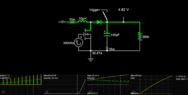
The forum discussion centers on issues encountered in a boost converter design aimed at converting input voltages of 12V, 15V, and 24V to an output of 200V. The user reports irregular output voltages at specific duty cycles (20%-40%), with sudden increases observed beyond these ranges. Key insights reveal that the boost converter's operation depends on the duty cycle, inductance values, and the need for a feedback controller to prevent overvoltage and inductor saturation. The discussion emphasizes the importance of understanding Continuous Conduction Mode (CCM) and Discontinuous Conduction Mode (DCM) for effective design.
PREREQUISITES
- Understanding of boost converter topology and operation
- Knowledge of Continuous Conduction Mode (CCM) and Discontinuous Conduction Mode (DCM)
- Familiarity with feedback control systems in power electronics
- Experience with simulation tools like Multisim for circuit analysis
NEXT STEPS
- Study the textbook "Fundamentals of Power Electronics" by Robert W. Erickson
- Learn about feedback control circuits for voltage regulation in boost converters
- Research the Texas Instruments application report on "Practical Feedback Loop Analysis for Voltage-Mode Boost Converter"
- Explore simulation techniques in LTspice to analyze boost converter behavior
USEFUL FOR
Electrical engineers, power electronics designers, and students seeking to understand boost converter functionality and troubleshooting techniques.