shushi_boi
- 44
- 0
In a circuit that I'm building, I have a power source of 5 volts DC that powers various components. A few of them are LED lights and light bulbs. -Background Info-
In circuit 1, I have a step up buck
"2A DC-DC boost step-up Conversion module MicroUSB 2-24V 3V to 5v-28V 12v 9v 24v"
http://www.ebay.com/itm/2A-DC-DC-boost-step-up-Conversion-module-MicroUSB-2-24V-3V-to-5v-28V-12v-9v-24v-/181870278933?hash=item2a58503915:g:V1kAAOSwuTxV9zpo
that converts 5 volts to 6 volts to power two light bulbs wired in parellel to each other that are rated at 6.3 Volts
"Eiko 46 T3-1/4 Miniature Screw Base Halogen Bulb, 6.3V/0.25 Amp"
https://www.amazon.com/gp/product/B002CYZFNE/?tag=pfamazon01-20
and under that same buck of 6 volts, I have another circuit (circuit 2) wired in parrallel to circuit 1, that has 3 LED lights wired in parallel to each other that runs on 6 Volts together (originally they ran on x2 3 Volt 2032 batteries that were wired in series to each other which totalled 6 Volts)
Circuit 3 on the other hand has a step down buck
"2x 2A DC DC Step Down Converter Module 4.75-6V to 0.8-4.5V Adjustable Buck Vol"
http://www.ebay.com/itm/2x-2A-DC-DC-Step-Down-Converter-Module-4-75-6V-to-0-8-4-5V-Adjustable-Buck-Vol-/281725386247?hash=item4198243e07:g:m~MAAOSwTdJXRZmy
that converts 5 volts to 4.5 volts which powers three led lights wired in parallel to each other (they originally ran on x3 1.5 v AAA batteries wired in series to each other which totals 4.5 volts).-The main question-
So my question is, because I'm using bucks to convert my voltage for these led and light bulbs circuit, do I need to protect those devices with rectifying diodes? From what I understand about bucks, they are similar to relays, in that they produce back EMFs, and when a relay switches off the magnetic field collapses and can produce a back emf of 50V or more which can kill devices.
In these circuits do I need to protect these leds and light bulbs with rectifying diodes? If so, what ratings would you recommend and how should I wire them to the leds/light bulbs?
Some suggest wiring them in between the bucks and leds,
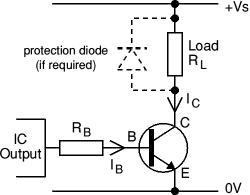
whereas others seem to suggest to wire the diodes across the loads/leds, like this
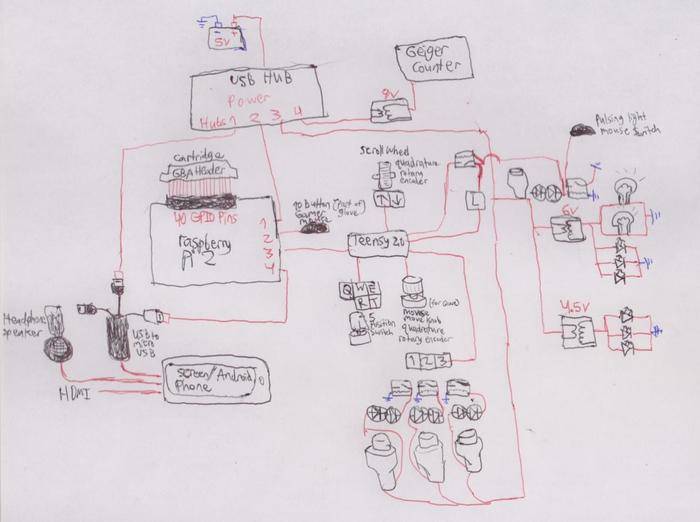
Here's a picture of my circuit if it helps (on the right side, I apologize for my bad drawings!)
In circuit 1, I have a step up buck
"2A DC-DC boost step-up Conversion module MicroUSB 2-24V 3V to 5v-28V 12v 9v 24v"
http://www.ebay.com/itm/2A-DC-DC-boost-step-up-Conversion-module-MicroUSB-2-24V-3V-to-5v-28V-12v-9v-24v-/181870278933?hash=item2a58503915:g:V1kAAOSwuTxV9zpo
that converts 5 volts to 6 volts to power two light bulbs wired in parellel to each other that are rated at 6.3 Volts
"Eiko 46 T3-1/4 Miniature Screw Base Halogen Bulb, 6.3V/0.25 Amp"
https://www.amazon.com/gp/product/B002CYZFNE/?tag=pfamazon01-20
and under that same buck of 6 volts, I have another circuit (circuit 2) wired in parrallel to circuit 1, that has 3 LED lights wired in parallel to each other that runs on 6 Volts together (originally they ran on x2 3 Volt 2032 batteries that were wired in series to each other which totalled 6 Volts)
Circuit 3 on the other hand has a step down buck
"2x 2A DC DC Step Down Converter Module 4.75-6V to 0.8-4.5V Adjustable Buck Vol"
http://www.ebay.com/itm/2x-2A-DC-DC-Step-Down-Converter-Module-4-75-6V-to-0-8-4-5V-Adjustable-Buck-Vol-/281725386247?hash=item4198243e07:g:m~MAAOSwTdJXRZmy
that converts 5 volts to 4.5 volts which powers three led lights wired in parallel to each other (they originally ran on x3 1.5 v AAA batteries wired in series to each other which totals 4.5 volts).-The main question-
So my question is, because I'm using bucks to convert my voltage for these led and light bulbs circuit, do I need to protect those devices with rectifying diodes? From what I understand about bucks, they are similar to relays, in that they produce back EMFs, and when a relay switches off the magnetic field collapses and can produce a back emf of 50V or more which can kill devices.
In these circuits do I need to protect these leds and light bulbs with rectifying diodes? If so, what ratings would you recommend and how should I wire them to the leds/light bulbs?
Some suggest wiring them in between the bucks and leds,
whereas others seem to suggest to wire the diodes across the loads/leds, like this
Here's a picture of my circuit if it helps (on the right side, I apologize for my bad drawings!)
Last edited by a moderator: