Relativistic Space Travel: Optimizing Proper Time [Project Hail Mary]

  • Context: Undergrad 
  • Thread starter Thread starter rocky
  • Start date Start date
rocky
Messages
5
Reaction score
0
TL;DR
Minor book spoilers. Optimizing for time in a fuel-constrained interstellar trip
Warning: Minor spoilers for the book Project Hail Mary ahead.

A ship has travelled to Tau Ceti (11.9 light years from Earth). The ship uses light as propulsion, and effectively converts the fuel mass into light energy. It carries 2,000,000 kg of fuel. During the journey it underwent a constant acceleration of 1.5g, speeding up until the midpoint, then slowing down in the second half. The ship experienced just under 4 years of proper time during this journey.

During a mishap, the ship jettisons 3 of its 9 fuel bays, reducing the total fuel capacity to 2/3 of the original amount. The ship refuels, and prepares to return to Earth. The pilot calculates that the most efficient (author's wording) course is a constant acceleration of 0.9 g, which will experience 5.5 years of proper time. However, they only have about 4 years worth of food. I am assuming that "efficient" is relating to time, since that is the limiting factor for the ship's occupant.

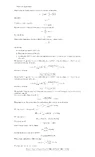
My question is: Why would the 0.9 g course be the most efficient? If they simply accelerate at 1.5 g up to the same maximum rapidity of this course, then coast in the middle before slowing down similarly, the proper time is significantly shorter. The attached image shows the math for the following three scenarios:

  1. Constant acceleration at 1.5g, which takes 3.9 years.
  2. Constant acceleration at 0.9g, which takes 5.5 years.
  3. Acceleration at 1.5g up to the same top speed from scenario 2, coasting at that speed, then slowing again at 1.5g. This only takes 4.05 years.

Andy Weir's work is generally somewhat accurate, but I could not figure out why this course might make sense. I could only think of a few possible reasons for the planned 0.9g course, but none of them really hold up:

  1. The engines are less efficient at higher acceleration. This is never mentioned, and doesn’t really make sense with how they work in the book.
  2. The maximum thrust is impacted by the missing fuel bays. This would be a plausible explanation, but I don’t believe it is ever mentioned in the book.
  3. The pilot simply didn’t think of this, and only calculated a constant acceleration course.

From a physics perspective, is there something that I'm missing here? If anyone is familiar with the book, was there some other reason, or does my proposed course make sense?
 

Attachments

  • hailmary.webp
    hailmary.webp
    18.3 KB · Views: 1
Physics news on Phys.org
My image got compressed beyond readability, so here is the PDF version
 

Attachments

@rocky please post your equations directly in the thread using the PF LaTeX feature. (There is a LaTeX Guide link at the bottom left of every post window.) Posting equations and text in attachments is not allowed.
 
PeterDonis said:
@rocky please post your equations directly in the thread using the PF LaTeX feature. (There is a LaTeX Guide link at the bottom left of every post window.) Posting equations and text in attachments is not allowed.
Apologies, here is the content of the attachment:

Relevant equations:
Proper time to travel a given distance at constant acceleration:
##\tau = \frac{c}{a}\cosh^{-1}\left(1 + \frac{a D}{c^2}\right)##
Rapidity:
##\phi = \frac{a \tau}{c}##
Velocity at a given rapidity:
##v = c \tanh{\phi}##
Distance traveled while accelerating up to a given rapidity:
##D = \frac{c^2}{a}(\cosh{\phi} - 1)##
Lorentz factor:
##\gamma = \cosh{\phi}##
Proper time experienced during a given Earth-time and Lorentz factor:
##\tau = \frac{t}{\gamma}##

Scenarios:
  1. Constant acceleration of 1.5 g's.
  2. Constant acceleration of 0.9 g's.
  3. Acceleration of 1.5 g's up to the max rapidity of scenario 2, coasting, and negative acceleration of 1.5 g's.
Scenario 1:
Proper time to travel 5.95 light years (half of 11.9 ly, the distance to Tau Ceti) with constant acceleration of 1.5 g's.
##\tau_{half} = \frac{c}{1.5g}\cosh^{-1}\left(1 + \frac{(1.5g) (5.95 ly)}{c^2}\right) \approx 1.95 y##
Total trip duration:
\tau_{total} = 2 * \tau_{half} \approx 3.9 y

Scenario 2:
Proper time to travel 5.95 light years (half of 11.9 ly, the distance to Tau Ceti) with constant acceleration of 0.9 g's.
##\tau_{half} = \frac{c}{0.9g}\cosh^{-1}\left(1 + \frac{(0.9g) (5.95 ly)}{c^2}\right) \approx 2.76 y##
Total trip duration:
##\tau_{total} = 2 * \tau_{half} \approx 5.5 y##

Scenario 3: Using the same fuel limitation from scenario 2, but accelerating at 1.5 g's until reaching maximum rapidity.
Maximum rapidity from Scenario 2:
##\phi_{max} = \frac{(0.9g)(2.76y)}{c} = 2.5633##
Rearrange to get the proper time to reach max rapidity with 1.5 g acceleration.
##\tau_{burn} = \frac{c}{a}\phi = \frac{c}{1.5g}2.56 = 1.66 y##
Distance traveled during each burn:
##D_{burn} = \frac{c^2}{1.5g}(\cosh{2.56} - 1) \approx 3.6ly##
Distance to coast:
##D_{coast} = 11.9ly - 2 (3.6ly) = 4.7ly##
Maximum speed:
##v = c \tanh{2.56} = 0.988c##
Earth time to coast 4.7ly at 0.988c:
##t = \frac{4.7ly}{0.988c} = 4.76y##
Lorentz factor at a rapidity of 2.5633:
##\gamma = \cosh{2.5633} = 6.53##
Proper time experienced while coasting:
##\tau_{coast} = \frac{t}{\gamma} \approx \frac{4.76y}{6.53} \approx 0.73y##
Total proper time for Scenario 3:
##\tau_{total} = \tau_{burn} + \tau_{coast} + \tau_{burn} \approx 1.66y + 0.73y + 1.66y = 4.05y##
 
Could be optimising for other things - fuel consumption is the obvious bound. Can the ship burn at 1.5g for long enough to follow your proposed plan?
 
Ibix said:
Could be optimising for other things - fuel consumption is the obvious bound. Can the ship burn at 1.5g for long enough to follow your proposed plan?
My proposed plan assumes it can reach the same rapidity as the calculated plan. Basically, I’m wondering why the author proposed a plan with a lower acceleration. It kind of seems like a plot hole, since the ship is capable of higher acceleration, and the fuel constraint doesn’t seem to increase the journey duration that much.
 
Ah yes, sorry - mixed up what you were proposing.

I haven't checked your numbers but your approach is correct. A higher acceleration means that at any point on the journey your speed is never less than, and often greater than, it would be at the same place on a lower acceleration profile. So you minimise elapsed time by maximising acceleration (true with Newton, even more so with Einstein).

Either there's some other constraint (no prolonged periods of zero g allowed? Engine efficiency is higher at lower thrust?) or it's a mistake.
 
Last edited:
Ibix said:
Ah yes, sorry - mixed up what you were proposing.

I haven't checked your numbers but your approach is correct. A higher acceleration means that at any point on the journey your speed is never less than, and often greater than, it would be at the same place on a lower acceleration profile. So you minimise elapsed time by maximising acceleration (true with Newton, even more so with Einstein).

Either there's some other constraint (no prolonged periods of zero g allowed? Engine efficiency is higher at lower thrust?) or it's a mistake.
Thanks! I couldn't think of any constraint that made sense in the book. I don't believe engine efficiency was mentioned. The way the engine works in the book is essentially by converting mass to light energy and shining that behind the ship. I was just hoping to confirm that my math made sense, and see if anyone else had noticed this in the book.
 
My gut reaction is that it's unrealistic to believe one can maintain such a high acceleration for such a long time. But that's not your question. I did notice that you didn't have the mass ratio equation in your set of equations, https://www.desy.de/user/projects/Physics/Relativity/SR/rocket.html gives the simple formula M/m =exp(aT/c)-1, where T is proper time. A would be in the neighborhood of 1.5 light years/year^2, and T was about 4 years of proper time, so the author appears to be assuming a mass ratio of about e^6, so about 400 or so. Which seems pretty ambitious. And a bit unnatural to have a fixed acceleration rather than a thrust limited one, especially considering the very high mass ratio.

Onto your actual question. I believe you are correct to think that if the rocket has the capability of accelerating at 1.5g, it would be a faster trip to use the full available acceleration, then coast. This would require powering off the engines to coast, of course. It's easy to imagine some authorial fiat where one need to keep the engines running (perhaps for power generation or whatnot). But apparently the author didn't do that. I haven't read the book.

I haven't worked through the numbers in any detail, but your observation seems OK to me. You can compare your equations to the reference I gave - I didn't do a close comparison.
 
  • Like
Likes   Reactions: rocky and Ibix
  • #10
pervect said:
And a bit unnatural to have a fixed acceleration rather than a thrust limited one, especially considering the very high mass ratio.
Depends on the limiting factor. If the (magic star-eating protozoa powered) engine can provide very high thrust then the limiting factor is the ability of the ship and crew to stand up to the acceleration. In that scenario fixed thrust of ~1g might actually make sense.
 
  • #11
Why guess when you can just ask him?
 
  • #12
I just pulled up the relevant passage and he does say he has enough food to survive the trip home at full fuel but nowhere near enough to the last five and a half years of a slower trip.

The implication does seem to be that the engine is more fuel efficient at .9g than it is at 1.5g.
 

Similar threads

  • · Replies 13 ·
Replies
13
Views
4K
Replies
1
Views
3K
  • · Replies 15 ·
Replies
15
Views
2K
  • · Replies 115 ·
4
Replies
115
Views
9K
  • · Replies 114 ·
4
Replies
114
Views
12K
  • · Replies 14 ·
Replies
14
Views
2K
  • · Replies 15 ·
Replies
15
Views
4K
  • · Replies 1 ·
Replies
1
Views
2K
  • · Replies 65 ·
3
Replies
65
Views
12K
  • · Replies 36 ·
2
Replies
36
Views
6K