Schottky diode with the correct voltage and current rating

Click For Summary
SUMMARY

The discussion focuses on selecting a Schottky diode for a non-isolated boost converter with an input voltage range of DC 8.5V to 50V and an output voltage range of DC 10V to 60V, capable of handling a maximum output current of 12A. Participants emphasize the importance of choosing a diode with a low forward voltage drop to minimize voltage loss. They recommend using resources like Digi-Key for selecting appropriate diodes and caution against misleading product listings on platforms like eBay and AliExpress. The conversation also highlights the need for clarity on the actual circuit setup to provide accurate suggestions.

PREREQUISITES
  • Understanding of non-isolated boost converter topology
  • Familiarity with Schottky diode specifications and characteristics
  • Knowledge of voltage and current ratings in electronic components
  • Experience with electronic component sourcing platforms like Digi-Key
NEXT STEPS
  • Research "Schottky diode low forward voltage drop" specifications
  • Explore "non-isolated boost converter design" principles
  • Learn about "Digi-Key diode selection tools" for component sourcing
  • Investigate "minimum output current requirements" for ATX power supplies
USEFUL FOR

Electronics engineers, hobbyists designing power supply circuits, and anyone involved in selecting components for boost converter applications will benefit from this discussion.
Sid55
Messages
26
Reaction score
1
TL;DR
Any suggestions on selecting correct voltage and current rating ?

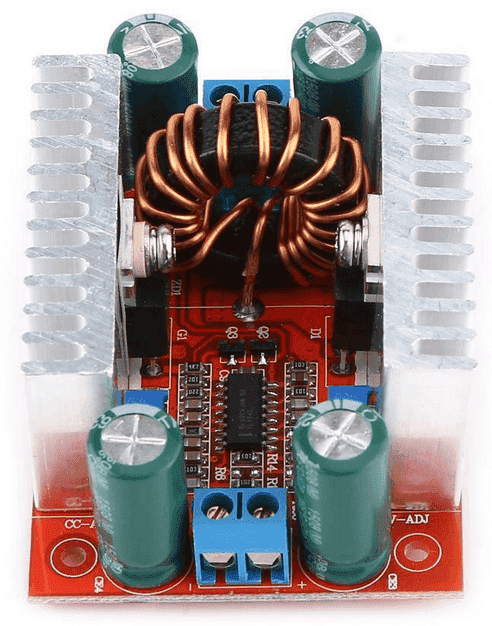
I would like to add a Schottky diode on the output of a boost converter to stop reverse current flow that can handle DC 10-60V up to 12A on the output but with as little voltage drop as possible.
Non-isolated boost converter
Input Voltage: DC8.5V to 50V
Output Voltage: DC10V to 60V
Max. Ouput Current: 12A
Frequency: 150KHz
1569794719560.png
 
Engineering news on Phys.org
Sid55 said:
Summary: Any suggestions on selecting correct voltage and current rating ?

I would like to add a Schottky diode on the output of a boost converter to stop reverse current flow that can handle DC 10-60V up to 12A on the output but with as little voltage drop as possible.

Non-isolated boost converter
Input Voltage: DC8.5V to 50V
Output Voltage: DC10V to 60V
Max. Ouput Current: 12A
Frequency: 150KHz
View attachment 250380
What reverse current flow?

And your input and output voltage ranges are not consistent with a Boost topology converter. Maybe a Sepic or Boost-Buck converter...
 
berkeman said:
What reverse current flow?

And your input and output voltage ranges are not consistent with a Boost topology converter. Maybe a Sepic or Boost-Buck converter...
It's a boost converter and it's certainly not a boost-buck converter.
 
There are several large component suppliers that provide selection tables.
As one example start here; https://www.digikey.com/

I found; Product Index > Discrete Semiconductor Products > Diodes - Rectifiers - Single

https://www.digikey.com/products/en/discrete-semiconductor-products/diodes-rectifiers-single/280?k=&pkeyword=&sv=0&pv1989=0&pv2071=u60V&pv914=35&sf=1&FV=ffe00118&quantity=&ColumnSort=0&page=1&pageSize=25
 
'Low forward voltage drop schottky' or 'low VF schottky' is a category on its own: maybe you should try searching with this from the start.
About the voltage: it is based on the actual setup. Serial diodes in the output are often used when more than one sources are powering a common circuit (like a battery and a DCDC in parallel). We need to know the actual circuit - the adjustable output boost converter alone is not enough to give a suggestion.
 
Sid55 said:
Non-isolated boost converter
Input Voltage: DC8.5V to 50V
Output Voltage: DC10V to 60V
Sid55 said:
It's a boost converter and it's certainly not a boost-buck converter.
So when the input voltage is 50V and the output is 10V, it is still operating in Boost mode?
 
berkeman said:
So when the input voltage is 50V and the output is 10V, it is still operating in Boost mode?
The key word is boost. Input Voltage: DC8.5V to 50V. Output Voltage: DC10V to 60V.
I believe the device illustrated produces Vout > Vin.
So for 8.5 Vin, it can produce from 10 to 60 Vout.
For 50 Vin, it probably produces from about 51.5 to 60 Vout.

The two pot adjustments set the regulated output voltage and the output current limit.

Chinese websites do not know what they sell, so they put catch-words in their listing title to get more hits and more sales. They copy the technical information from other sellers listings.

I just received a full refund from eBay/Paypal on DC converters listed as "buck, boost, step up, step down" when they were buck converters = step down only.
Where the listing may be deliberately misleading it pays a buyer to use eBay, and avoid Ali Express which protects the Chinese seller in a dispute. Caveat emptor.
 
  • Like
Likes   Reactions: berkeman
berkeman said:
So when the input voltage is 50V and the output is 10V, it is still operating in Boost mode?

It is pulling in the standard 12V DC from my old computer ATX PSU. The boost converter boosted 12V DC to
(maximum) 67.5V on the output.

PSU.jpg
 
Sid55 said:
It is pulling in the standard 12V DC from my old computer ATX PSU. The boost converter boosted 12V DC to
(maximum) 67.5V on the output.
Okie dokie. So ignore what you posted for specs, got it.

Can you say what your application is? You want a higher voltage for some application, and want to use a standard ATX PSU as the initial voltage source? We can help you figure out how to meet the minimum output current requirements for those PSUs so that your setup will work at lower output currents. Those PSUs have a minimum output current requirement or they shut down.
 
  • #10
You will want to watch how high you set that voltage. The capacitors from what little is shown of the label appear to be 63V. I would be wary about using them much above 50V for any reason and not much more than 30V if using them in any sort of high temperature environment.

You're lucky they didn't jump right off the board at 67.5V.

BoB
 
  • Like
Likes   Reactions: berkeman

Similar threads

  • · Replies 32 ·
2
Replies
32
Views
4K
  • · Replies 16 ·
Replies
16
Views
4K
Replies
39
Views
6K
  • · Replies 14 ·
Replies
14
Views
2K
  • · Replies 9 ·
Replies
9
Views
4K
  • · Replies 23 ·
Replies
23
Views
4K
  • · Replies 10 ·
Replies
10
Views
3K
  • · Replies 38 ·
2
Replies
38
Views
5K
  • · Replies 20 ·
Replies
20
Views
4K
  • · Replies 8 ·
Replies
8
Views
2K