SUMMARY
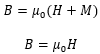
The forum discussion focuses on the relationship between temperature (K) and magnetism (mT), specifically how temperature affects the magnetic properties of materials. It highlights that as temperature increases, particularly to the Curie point (1417°F for iron), the magnetic dipoles within materials become disordered, leading to a loss of magnetism. The discussion also addresses the linear and non-linear relationships between magnetization (M) and magnetic field (B), emphasizing that ferromagnetic materials can exhibit saturation and negative susceptibility under certain conditions.
PREREQUISITES
- Understanding of Curie point in ferromagnetic materials
- Familiarity with magnetic dipoles and their behavior
- Knowledge of magnetization (M) and magnetic field (B) relationships
- Basic grasp of hysteresis curves in magnetism
NEXT STEPS
- Research the Curie point and its implications for different materials
- Explore the mathematical relationships between magnetization (M) and magnetic field (B)
- Study hysteresis curves and their significance in ferromagnetic materials
- Investigate the effects of temperature on other magnetic materials beyond iron
USEFUL FOR
Physicists, materials scientists, and engineers interested in magnetism, as well as students conducting experiments related to temperature effects on magnetic properties.