Understanding Surge Protector Specs for the Computer Age
- Thread starter kiki_danc
- Start date
Join the discussion
Registration is free. Start your own thread to ask a follow-up.
213 replies · 27K views · last reply
Engineering news on Phys.org
Science Advisor
Gold Member
- 5,661
- 4,509
That's an 18VCT transformer though.kiki_danc said: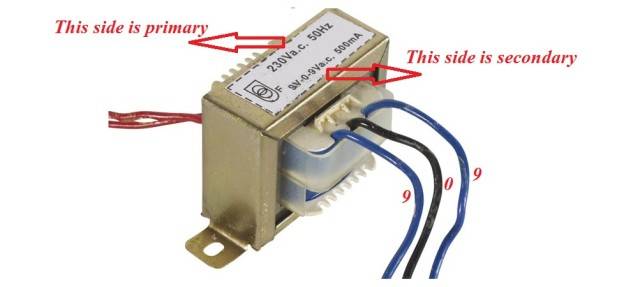
The black wire in the center... but then if you short the L1&L2 of the Siemens leads and connect it to one of the blue leads.. then what do you connect to the 2nd blue lead? This was what I was trying to figure out yesterday for an hour.
Here is what I was trying (un-successfully) to describe in words.
Attachments


kiki_danc
- 352
- 9
Tom.G said:That's an 18VCT transformer though.
Here is what I was trying (un-successfully) to describe in words.
View attachment 231767
But we were talking about the split phase Siemens with 2 Line 1 and Line 2, and neutral and ground. I'm still confused how do you connect it to the transfomers? pls use the following image instead.. thanks.
After your reply. I'd know all and can already decide. Thanks.
Attachments

kiki_danc
- 352
- 9
Tom.G said:Those drawings take me For-ever!
Just connect the L1 and L2 together and treat them as the Line in the post #152 drawing with the outlet strip. The Neutral and Ground also connect as shown there.
Ok. I got it. So you short L1 and L2 together and connect them to one transformer secondary terminal. While the 2nd terminal of transformer secondary is connected to neutral, and ground to transformer ground wire. Ok. I'd order the Siemens 140,000 at amazon now. It's the best type 2 surge protector in the market. I'd put it in the main panel breaker as type 2 in parallel with my existing 50,000A prosurge surge protector. then get the erico as type 3. I guess this would produce the best of all worlds.. so many thanks to you Tom and others. :)
kiki_danc
- 352
- 9
Tom. Jim still couldn't understand why I'd try to tap 120 volts to neutral in my country since he didn't have time to read our 9 pages of surge protection thread. So I need to know the following as finishing touch since you understand the context.
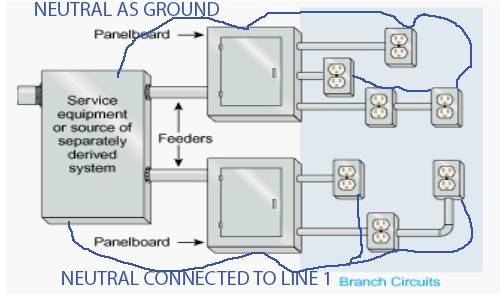
To avoid using transformers in the equipment for type 3 surge protection, I can just tap the Line to Neutral in my main panel for one particular breaker to the security equipment.
If you use the neutral of one subpanel as ground for the aircon metal casing (top subpanel).. while for another panel (bottom subpanel).. you use the neutral as conduit for line 1 (that is, line to neutral to get 120 volts service like in your country).. would the neutral in the top subpanel you are using as ground gets electrified? What would be the danger of combining it?
To avoid using transformers in the equipment for type 3 surge protection, I can just tap the Line to Neutral in my main panel for one particular breaker to the security equipment.
If you use the neutral of one subpanel as ground for the aircon metal casing (top subpanel).. while for another panel (bottom subpanel).. you use the neutral as conduit for line 1 (that is, line to neutral to get 120 volts service like in your country).. would the neutral in the top subpanel you are using as ground gets electrified? What would be the danger of combining it?
Attachments

Science Advisor
Gold Member
- 5,661
- 4,509
I don't understand what that means. Must be your turn to draw a picture showing details.kiki_danc said:you use the neutral as conduit for line 1

In the drawing, there is some text "NEUTRAL CONNECTED TO LINE 1". If I take that literally, it leads to BIG sparks, and tripped circuit breaker; it's called a "Short Circuit".
kiki_danc
- 352
- 9
Tom.G said:I don't understand what that means. Must be your turn to draw a picture showing details.
In the drawing, there is some text "NEUTRAL CONNECTED TO LINE 1". If I take that literally, it leads to BIG sparks, and tripped circuit breaker; it's called a "Short Circuit".
What I mean to say is. The equipment would be connected to Line 1 and neutral so I can use 120 volts surge protector type 3 without using transformer as you suggested earlier in the thread.. of course you won't short it.. mistake in the drawing :)
Science Advisor
Homework Helper
Dearly Missed
- 9,864
- 4,896
I asked the same question.
See my post #12 over at tripping thread.. https://www.physicsforums.com/threads/tripping-behavior-of-circuit-breakers.956954/#post-6067795
See my post #12 over at tripping thread.. https://www.physicsforums.com/threads/tripping-behavior-of-circuit-breakers.956954/#post-6067795
kiki_danc
- 352
- 9
kiki_danc said:What I mean to say is. The equipment would be connected to Line 1 and neutral so I can use 120 volts surge protector type 3 without using transformer as you suggested earlier in the thread.. of course you won't short it.. mistake in the drawing :)
This is the correct illustration: :)
Attachments

Science Advisor
Gold Member
- 5,661
- 4,509
We already covered that in the discussion about the security system. Safe and effective surge suppression is not directly compatible with your electrical system. Forget it! Use a transformer.kiki_danc said:What I mean to say is. The equipment would be connected to Line 1 and neutral so I can use 120 volts surge protector type 3 without using transformer as you suggested earlier in the thread.. of course you won't short it.. mistake in the drawing :)
kiki_danc
- 352
- 9
Tom.G said:We already covered that in the discussion about the security system. Safe and effective surge suppression is not directly compatible with your electrical system. Forget it! Use a transformer.
Yeah. It's the best then because if given the option to ground the building appliances (use the neutral as grounding) or use optimum surge protectors (120 volts without transformers). Then I'd choose grounding anyday because electrocution is worse than having fried computer you can replace. You can't replace a fried body :)
Well. For most of our office building with already neutral wires that aren't used (because we used line to line of 240 volts) only. Our neutral is our ground. It would be too costly to make separate ground wires because you have to redesign the entire building and it's no longer possible when it's fully constructed.. hence the least thing is to make our neutral wires as ground (by adding rods to Earth and connecting this to the neutral at main panel) as you described earlier. Unfortunately. We can no longer dig 8 feet of ground to insert the rods because the floor is already cemented with tiles. In case like this.. then the only option is to use the neutral to connect to metal enclosure.. at least it can trip the breakers if hot lines get into contact with the enclosure.
Science Advisor
Gold Member
- 5,661
- 4,509
There are drills made to put holes in concrete. Here in the US the Grounding is often done at the enclosure for the electric meter (they are usually outdoors) and then carried thru to the breaker box with the power wires.
If you decide to add a Ground, make sure it is legal and safe to do before attempting it.
If you decide to add a Ground, make sure it is legal and safe to do before attempting it.
kiki_danc
- 352
- 9
Tom.G said:There are drills made to put holes in concrete. Here in the US the Grounding is often done at the enclosure for the electric meter (they are usually outdoors) and then carried thru to the breaker box with the power wires.
If you decide to add a Ground, make sure it is legal and safe to do before attempting it.
Maybe adding those ground rods can minimize those electrical jolts in my concrete ceiling.. isn't it.. but can't we rely on the power utility Pole ground since neutral in the pole is already connected to the ground at soil (i'll confirm if my pole indeed ground its neutral).
kiki_danc
- 352
- 9
Tom.G said:Any ground at the pole is obviously not the same as your Neutral, you wouldn't get a shock if it was!
If all my neutral were connected to the breaker panel and it is connected to the pole and then to ground, you mean we won't get any shock?
Hmm... then I wonder where the shocks came from. If I'd hire electrician... I wonder how he would start since my panel were all properly connected... If hot wires are touching the concrete.. won't this trip the breaker? Maybe there is low threshold short from hot wire to concrete.. this is possible?
Science Advisor
Gold Member
- 5,661
- 4,509
Trip the breaker --- probably notkiki_danc said:If hot wires are touching the concrete.. won't this trip the breaker? Maybe there is low threshold short from hot wire to concrete.. this is possible?
short from hot wire to concrete.. possible --- yes
kiki_danc
- 352
- 9
As we came to the close of our discussions. Time for some bit of reflection. I wonder how many of you really use surge protectors. I have IBM XT that is still working even though I don't have a surge protector for 30 years. For some, surge protectors may be like nit picking, isn't it. I just need one now to protect a $1500 fire panel system with 30 smoke detectors.. but it's been on for a year without damage... so my inquiry into surge protectors is partly to gain more understanding of things electrical. Here I learned of the importance of proper grounding, etc.
kiki_danc
- 352
- 9
Tom.G said:Trip the breaker --- probably not
short from hot wire to concrete.. possible --- yes
Locally I'm being quoted for $400 for the Erico TSF6A120V (the only 330V clamping voltage UL 1449 4th edition strip surge protector in the planet?). Crazy price. I think I'll find a way to order it right at USA where it could be just below $100. If you find the micro physics how clamping voltage is related to surge current rating.. please let me know because I can't find any reference that explains the link. Thank you.
kiki_danc
- 352
- 9
Tom.G said:Yes.What center lead?Unlikely from the product description
Regarding the Leviton 5100-PS you found at Amazon:
If you are comfortable with the 600V VPR its as good as any. If you are interested in 330V VPR look at the TSFA6A120V here: https://www.erico.com/part.asp?part=TSF6A120V
One reference I ran across (can't find it now) is the lowest UL rating is 330V, then in goes up 400, 500, 600...
The 330V is from here: https://www.ewh.ieee.org/r3/atlanta/ias/IEEE_Meeting_SPD_Standards.pdf I wonder if those countries that use 220 volts electricity also use step down transformer 220V-110V to get lower clamping voltage by using 150Vac SPD. Anyone knows?
Not quite so, more like 4+ hours; most of it lately looking up data for, or explaining to, you!
More to follow...
Attachments

Science Advisor
Gold Member
- 5,661
- 4,509
Please take into account that a type 1 SPD typically has a very high surge current rating and a higher clamping voltage than a type 3 of the same MCOV. This may not be an inherent characteristic of the MOV, but just a design decision of the SPD manufacturers.kiki_danc said:If you find the micro physics how clamping voltage is related to surge current rating.. please let me know because I can't find any reference that explains the link.
We were probably thinking in slightly different contexts, but here are a couple examples of voltage rising with increasing current. I was mostly referrring to similiarly sized hardware that may be rated somewhat differently by different manufacturers.
http://www.ijeee.net/uploadfile/2016/0316/20160316114821550.pdf
Attachments

kiki_danc
- 352
- 9
Tom.G said:Please take into account that a type 1 SPD typically has a very high surge current rating and a higher clamping voltage than a type 3 of the same MCOV. This may not be an inherent characteristic of the MOV, but just a design decision of the SPD manufacturers.
Won't Type 2 SPD with high surge current rating and low clamping voltage be more advantageous.. I wonder why all manufacturers won't design it that way.. unless it's more expensive to design low clamping voltage?
We were probably thinking in slightly different contexts, but here are a couple examples of voltage rising with increasing current. I was mostly referrring to similiarly sized hardware that may be rated somewhat differently by different manufacturers.
http://www.ijeee.net/uploadfile/2016/0316/20160316114821550.pdf
View attachment 231777
kiki_danc
- 352
- 9
kiki_danc said:The 330V is from here: https://www.ewh.ieee.org/r3/atlanta/ias/IEEE_Meeting_SPD_Standards.pdf I wonder if those countries that use 220 volts electricity also use step down transformer 220V-110V to get lower clamping voltage by using 150Vac SPD. Anyone knows?
View attachment 231775
By the way, the Erico 330V clamping voltage SPD model has only Imax of 20kA (nominal of only 3kA). I wonder what would happen if say a 30kA surge cross it? Would the MOV be damaged or just ignore that higher transient than it's capacity? For voltage.. anything higher than the MCOV can short and shorten the lifespan of the MOV. I wonder what higher transient than capacity would behave? Got any idea?
Science Advisor
Gold Member
- 5,661
- 4,509
Staged Protection. http://lit.powerware.com/ll_download.asp?file=SA01005003E_150dpi0607.pdfkiki_danc said:Won't Type 2 SPD with high surge current rating and low clamping voltage be more advantageous.. I wonder why all manufacturers won't design it that way..
Used to be would short the MOV and trip the breaker, these days many (most?) of the SPDs built into outlet strips come with built-in fuses to disconnect the MOVs when they short. This sometimes stops the breaker tripping but disables the protection, as indicated by the little red Idiot Light labeled "PROTECTED" not being illuminated.kiki_danc said:I wonder what higher transient than capacity would behave? Got any idea?
By the way, an SPDs lifetime is one full-rated surge. It is a sacrificial device, cheaper than the equipment it protects. Lifetime increases with smaller surges.
kiki_danc
- 352
- 9
Tom.G said:Staged Protection. http://lit.powerware.com/ll_download.asp?file=SA01005003E_150dpi0607.pdf
Used to be would short the MOV and trip the breaker, these days many (most?) of the SPDs built into outlet strips come with built-in fuses to disconnect the MOVs when they short. This sometimes stops the breaker tripping but disables the protection, as indicated by the little red Idiot Light labeled "PROTECTED" not being illuminated.
I was asking about surge current. I know higher surge voltage can short the MOV.. But maybe you also mean if the surge current is say 30kA, it can also short the 20kA SPD even if the surge voltage is below the MCOV of say 320Vac?
By the way, an SPDs lifetime is one full-rated surge. It is a sacrificial device, cheaper than the equipment it protects. Lifetime increases with smaller surges.
kiki_danc
- 352
- 9
http://lit.powerware.com/ll_download.asp?file=SA01005003E_150dpi0607.pdfTom.G said:Staged Protection. http://lit.powerware.com/ll_download.asp?file=SA01005003E_150dpi0607.pdf
Thanks for the link. I ordered the Siemens 140kA already and will order the Erico via local channels next week. I guess it's install and forget
(that is after I install it.. I can forget everything about surge protector). The most important thing I learned in this thread is grounding (more than surge protectors). I put my gadgets inside metal panels and sometimes I used my head to hold the cover in place while I fixed it. Now it gives me the creeps knowing what would happen if the metal enclosure gets electrified (without grounding).. it's almost like electric chair. So grounding will now be mandatory at my end. You are so helpful and has even saved a life. Thanks very much Tom! :)
Used to be would short the MOV and trip the breaker, these days many (most?) of the SPDs built into outlet strips come with built-in fuses to disconnect the MOVs when they short. This sometimes stops the breaker tripping but disables the protection, as indicated by the little red Idiot Light labeled "PROTECTED" not being illuminated.
By the way, an SPDs lifetime is one full-rated surge. It is a sacrificial device, cheaper than the equipment it protects. Lifetime increases with smaller surges.
Science Advisor
Homework Helper
Dearly Missed
- 9,864
- 4,896
kiki_danc said:so my inquiry into surge protectors is partly to gain more understanding of things electrical. Here I learned of the importance of proper grounding, etc.
I think you should imvest some time in two endeavours.
1. Learn basic DC circuit analysis skills.
Here's an outline i once offered a student
https://www.physicsforums.com/threa...t-live-and-neutral-wires.892309/#post-5613568
and there are plenty of tutorials online.
"Grounding" is widely misunderstood. Here's an old PF thread on it
https://www.physicsforums.com/threads/energy-network-earthing.813106/#post-5104354
and another
https://www.physicsforums.com/threads/want-to-know-how-alternating-current-really-works.722911/
you would do yourself an colleagues a service to dig into Philipinees Electrical Code and write an explanation of Grounding Bonding Earthing and good wiring practices.
Best book i know of to explain the basic electrical theory is our IEEE 142 , commonly called "The Green Book"
https://www.mercury-group.com/wp-content/uploads/2017/02/groundingandbonding.pdf
kiki_danc
- 352
- 9
jim hardy said:I think you should imvest some time in two endeavours.
1. Learn basic DC circuit analysis skills.
Here's an outline i once offered a student
https://www.physicsforums.com/threa...t-live-and-neutral-wires.892309/#post-5613568
and there are plenty of tutorials online.
"Grounding" is widely misunderstood. Here's an old PF thread on it
https://www.physicsforums.com/threads/energy-network-earthing.813106/#post-5104354
and another
https://www.physicsforums.com/threads/want-to-know-how-alternating-current-really-works.722911/
you would do yourself an colleagues a service to dig into Philipinees Electrical Code and write an explanation of Grounding Bonding Earthing and good wiring practices.
Best book i know of to explain the basic electrical theory is our IEEE 142 , commonly called "The Green Book"
https://www.mercury-group.com/wp-content/uploads/2017/02/groundingandbonding.pdf
Don't worry I will always consult with local electrical engineers in all electrical works. It's just that they have no background in Surge Protector Device that was why I was asking here. Even the local electrical experts I talked to confuse let-thru voltage and MCOV. They thought it's the same thing that is why they are very happy with 320Vac MCOV SPDs because they said this is close to the 330Vac clamping voltage.
kiki_danc
- 352
- 9
Btw Tom (Tom told me to ask technical concerns here instead of private so newbies can learn too.. so let me ask something..), Tom you must have searched Erico 330vac VPR SPDs by googling "VPR 330 L-N"? I'm looking for other brands but couldn't seem to find other type 3 SPDs with VPR of 330Vac.. In case you found a list of it. Please let me know where to see the list. Because nVent local supplier is selling it to me at twice the price. In the US price list, the Erico TSF6A120V is selling for $190. In my country. It's being sold to me for $380. And I can't order direct from the US. I wonder if there are other brands that has some online ordering system. Also have you tried other nVent products? Is its really quality and state of the art design? or just average?
Science Advisor
Gold Member
- 5,661
- 4,509
That came across as somewhat confusing! You won't get any significant current flow below the MCOV, if I recall correctly, they start to turn on at the clamping voltage (MCOV = Maximum Continuous Operating Voltage). And yes, either overvoltage or overcurrent will lead to failure.kiki_danc said:I was asking about surge current. I know higher surge voltage can short the MOV.. But maybe you also mean if the surge current is say 30kA, it can also short the 20kA SPD even if the surge voltage is below the MCOV of say 320Vac?
Here is the search I used: https://www.google.com/search?&q=surge+protector++vpr++330kiki_danc said:I'm looking for other brands but couldn't seem to find other type 3 SPDs with VPR of 330Vac.. In case you found a list of it. Please let me know where to see the list.
Never tried them, never heard of them before. Only found them with the above search.kiki_danc said:Also have you tried other nVent products? Is its really quality and state of the art design? or just average?
Cheers,
Tom
p.s. Here is a link you may find interesting. https://www.nemasurge.org/faqs/
Similar threads
- sevensages
- · Replies 25 ·
- Electrical Engineering
- Replies
- 25
- cf879
- · Replies 1 ·
- Electrical Engineering
- Replies
- 1
- CaptainQuasar
- · Replies 14 ·
- Electrical Engineering
- Replies
- 14
- Danger
- · Replies 4 ·
- Computing and Technology
- Replies
- 4
- Evo
- · Replies 43 ·
- General Engineering
- Replies
- 43