Discussion Overview
The discussion centers around the benefits and characteristics of a 3-phase electrical system compared to a single-phase system. Participants explore concepts related to conductor requirements, current flow, power calculations, and the role of neutral and earthing in both systems.
Discussion Character
- Technical explanation
- Conceptual clarification
- Debate/contested
Main Points Raised
- Some participants note that a 3-phase system requires less conductor material than a single-phase system, questioning the reasons behind this.
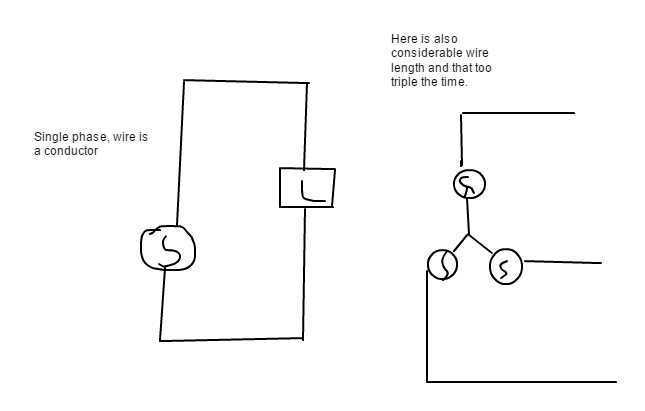
- It is mentioned that a single-phase line rated for 1MW requires 2km of wire, while a 3-phase line rated for 3MW requires only 3km of wire, suggesting efficiency in wire usage.
- Participants discuss how a 3-phase system can lower amperage, which may allow for thinner wires, despite having more wires overall.
- There are calculations presented for current in both single-phase and 3-phase systems, with some participants questioning the methodology behind these calculations.
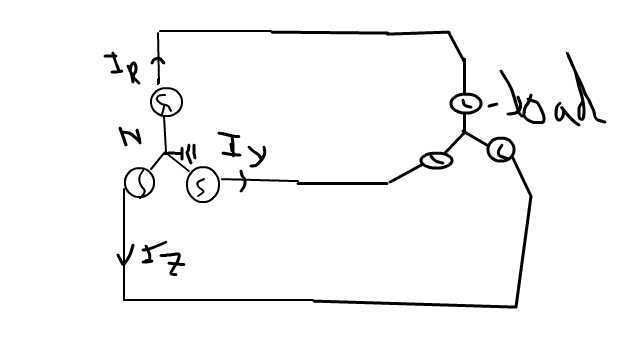
- One participant raises a query about the flow of current in relation to neutral and earthing, leading to a discussion about the roles of neutral and earth in current flow.
- It is proposed that in a balanced 3-phase load, the three currents cancel at the load's star-point, ideally resulting in no current in the neutral wire.
- Concerns are raised about the implications of unbalanced loads in a 3-phase system and the necessity of a neutral wire for safety and to manage imbalances.
- Some participants express confusion about the function of earthing and its relationship to current flow, with clarifications provided about its role in establishing reference voltage and safety.
Areas of Agreement / Disagreement
Participants express multiple competing views regarding the efficiency and functionality of 3-phase versus single-phase systems, particularly concerning current flow, the necessity of neutral wires, and the implications of unbalanced loads. The discussion remains unresolved on several points, particularly around the role of earthing and the behavior of current in different scenarios.
Contextual Notes
There are limitations in the discussion regarding assumptions about load balance, the definitions of neutral and earthing, and the mathematical steps involved in power calculations. These factors contribute to the complexity and uncertainty of the claims made.