What happens to power when voltage is negative

Join the discussion
Ask a follow-up here, or get your own question answered by working scientists, mathematicians and engineers — people, not an autocomplete.
Real named experts · corrections over time · the nuance an AI answer skips
10 replies · 2K views
anj16
Messages
38
Reaction score
0
Hello,

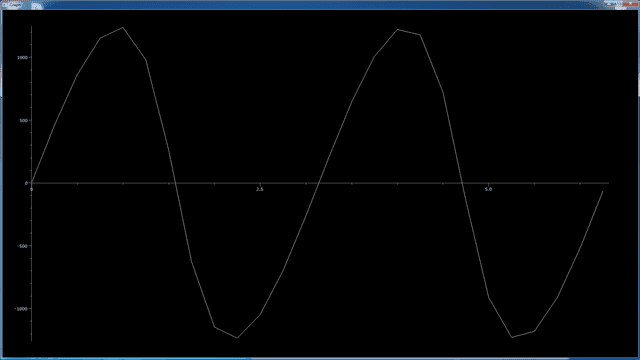
In the following voltage vs time graph as we can see the voltage becomes negative often time.
My question is: if power= V*I then when voltage is negative do I have negative power?
12682059.png
 
on Phys.org
When your voltage switches direction, your current would as well. So if V = +ve, then I = +ve and if V= -ve then I=-ve.

So either way P is always positive.
 
Ah true, didn't realize that. Thank You.
 
rock.freak667 said:
When your voltage switches direction, your current would as well. So if V = +ve, then I = +ve and if V= -ve then I=-ve.

So either way P is always positive.

For a load that's not purely resistive, there'll be a period of time where your voltage and current is of opposite sign, which means whatever was consuming power before is now providing it. The power factor of your load is a measure of how "severe" this effect is.

The extra line loss associated with this return flow of power (reactive power) is one of the reasons why electric utilities won't provide you with power unless you bring your power factor up to code.
 
Last edited:
For pure resistance V and I are in phase so power is always positive and power is dissipated.
For pure inductance and pure capacitance V and I are out of phase by 90 degrees which means that power goes positive then negative and zero power is dissipated over one cycle.
these components are described as 'reactive' to distinguish them from 'resistive'
 
If I take a single coil of wire and take magnet and induce a Voltage will the R in v=IR be the internal resistance of the wire?

Edited.
 
Last edited:
If you take a magnet and wave it around near a coil of wire you will induce a VOLTAGE (not a flux).
The current you get will be given by V/r
 
That 'r' will it be the internal resistance of the wire?

Therefore r =ρL/A were ρ=resistivity, L=length, A=cross sectional area ?
 
Last edited:
changing the subject...not as interested.
 
technician said:
changing the subject...not as interested.

Quite rude to try to change subject without answering the question when you are not the one that asked the question in the first place...

If you don't want to answer then just don't.
 
Ok, sorry but did not want to go onto something else.
If you want to raise a different topic you are supposed to open a new thread so that everyone can see a new topic.