Discussion Overview
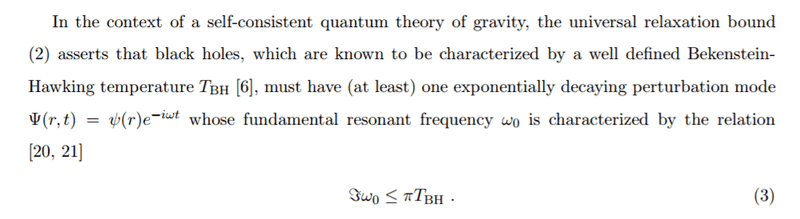
The discussion revolves around identifying the name of a scripted letter used in a mathematical paper, specifically in the context of an equation. Participants explore different script styles used in LaTeX, including Fraktur, and clarify the meaning of the letter in question.
Discussion Character
- Technical explanation
- Conceptual clarification
Main Points Raised
- One participant inquires about the name of a scripted letter that resembles a scripted T in equation (3).
- Another participant suggests that the letter appears to be a J in Fraktur script, referencing the mathfrak command in LaTeX.
- A different participant asserts that the letter is actually an I, representing the imaginary part, and provides a mathematical expression using \Im.
- One participant expresses frustration with MathJax not rendering the font correctly and shares how to test LaTeX commands in the editor.
- Additional details are provided about commonly used LaTeX fonts, such as \mathbb{}, \mathcal{}, and \mathfrak{}.
Areas of Agreement / Disagreement
Participants express differing views on the identity of the scripted letter, with some suggesting it is a J in Fraktur and others asserting it is an I representing the imaginary part. The discussion remains unresolved regarding the exact identification of the letter.
Contextual Notes
There are references to specific LaTeX commands and potential rendering issues with MathJax, but no consensus is reached on the correct identification of the scripted letter.