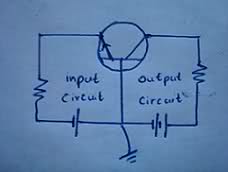
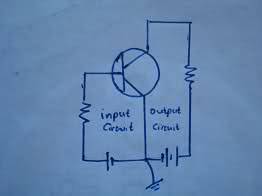
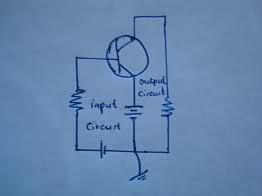
What is the reason for grounding a circuit ?

Click For Summary

Discussion Overview

The discussion revolves around the reasons for grounding circuits, including its practical applications, safety considerations, and its role in circuit design. Participants explore various contexts in which grounding is applied, such as in test equipment and specific circuit diagrams, while also questioning the necessity of grounding in certain scenarios.

Discussion Character

  • Exploratory
  • Technical explanation
  • Debate/contested
  • Homework-related

Main Points Raised

  • Some participants propose that grounding serves practical reasons, such as providing a common reference point for voltage measurements and enhancing safety by preventing floating potentials.
  • Others argue that not all grounds are actual Earth connections, as some may connect to a chassis or represent a common power supply rail.
  • A participant mentions a "single point grounding system" used in their workplace, which helps ensure consistent voltage measurements across different equipment and acts as a safety mechanism.
  • Questions arise regarding the necessity of grounding in specific circuit diagrams, particularly in relation to measuring current across a diode and drawing V-I characteristic diagrams.
  • Some participants suggest that grounding in certain practice circuits may not have a significant purpose and could simply be a design choice.
  • Concerns are raised about the third procedure in using transistors, specifically regarding which points should be grounded to maintain zero potential and the reasoning behind it.

Areas of Agreement / Disagreement

Participants express a variety of views on the necessity and purpose of grounding in circuits, indicating that multiple competing perspectives remain without a clear consensus on specific applications or designs.

Contextual Notes

Limitations include potential misunderstandings about the role of grounding in different circuit configurations and the varying definitions of what constitutes a ground in circuit design.

shalikadm
Messages
63
Reaction score
0
I have seen that in some circuits there's grounding...I know that earthing is for keep a part of a circuit in a zero potential...Don't know why it's done...Here's some circuit's..Tell me why it's been earthed..
30tmhox.jpg
2lsinsy.jpg
2z80ln8.jpg
ivd5aa.jpg
 
Physics news on Phys.org
Grounds on circuit diagrams can be there for practical reasons or for convenience, or both.

Note that not all circuit grounds are actual Earth connections -- that is, not all grounds have a physical connection to the Earth. They may connect to a metal chassis (or circuit container) or just represent one of the common power supply rails (usually the 0V supply reference point, particularly for circuits with multiple supply voltages such as +/- 15V, or 12V and 5V, and so on).

When used for convenience they represent a common reference point from which circuit potentials can be measured, and are treated as though wires were drawn connecting them all together. This serves to unclutter diagrams, especially where if the wires were actually drawn in they would cross over other wires and make the drawing harder to understand.

The practical reasons include shielding (from stray electromagnetic noise), polarity recognition for interconnecting circuits, and safety features. Actual Earth connections are important for safety reasons so that equipment potentials don't 'float' far from Earth potential and create shock hazards when people come in contact with the chassis or controls; This is true particularly when AC mains voltages are involved. Actual Earth connections can also be important for high performance antenna systems, where a 'pool' of charges at constant potential (Earth ground potential) is helpful for allowing maximum current flow in the antenna circuit in response to induced signal voltages.

Circuit grounding is actually a pretty complex subject, and in some cases is more of an art than a science particularly in sensitive circuits where noise suppression and avoidance of exotic feedback paths is necessary. Google "ground loop" or "phantom loop" for a taste of the topic.
 
Our building at work has a "single point grounding system" for all of the test equipment. This enables all of the different pieces of testing equipment, which aren't all connected directly to each other, to use the same reference point for measuring voltage values and serves as a safety mechanism in case of electrical equipment faults. Without this, different grounds could have different potentials and cause testing failures.
 
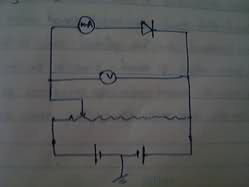
The first diagram shows a circuit that is used to measure current across the diode against voltage and to draw V-I characteristic diagram for a diode..when the current flows to the left direction the diode is forward biased and when the current flows to right direction the it's reverse biased...But I wonder what the reason is for grounding between the two batteries having opposite terminals connected...explain this for me..
 
shalikadm said:
The first diagram shows a circuit that is used to measure current across the diode against voltage and to draw V-I characteristic diagram for a diode..when the current flows to the left direction the diode is forward biased and when the current flows to right direction the it's reverse biased...But I wonder what the reason is for grounding between the two batteries having opposite terminals connected...explain this for me..

There may not be any reason other than that was simply how the diagram was designed. If these are practice circuits then they don't need to be real items.
 
Drakkith said:
There may not be any reason other than that was simply how the diagram was designed. If these are practice circuits then they don't need to be real items.

So can we use that circuit to draw the V-I graph without that grounding between the the two cells ?
 
shalikadm said:
So can we use that circuit to draw the V-I graph without that grounding between the the two cells ?

If you aren't involving the ground at all, then I don't see why not.
 
In our coursework it mention,that we must undergo 3 procedures before using transistors..

1.forward bias EB junction with low voltage
2.reverse bias BC junction with high voltage
3.ground points where it should be kept in a zero potential.

I don't understand the 3rd step..what are the points that should undergo a zero potential and why ?
 

Similar threads

  • · Replies 18 ·
Replies
18
Views
4K
  • · Replies 15 ·
Replies
15
Views
2K
  • · Replies 7 ·
Replies
7
Views
2K
  • · Replies 7 ·
Replies
7
Views
3K
  • · Replies 14 ·
Replies
14
Views
6K
  • · Replies 6 ·
Replies
6
Views
2K
  • · Replies 16 ·
Replies
16
Views
4K
  • · Replies 11 ·
Replies
11
Views
2K
  • · Replies 7 ·
Replies
7
Views
3K
  • · Replies 7 ·
Replies
7
Views
3K