MarkDECE
- 1
- 0
Hi,
I am struggling to understand the maths in the text shown below.
(1) How does: r(t) = Acos(wt)+Bsin(wt)
become; sqrt((A^2)+(B^2))cos(wt - arctan(B/A))?
(2) He states that we can represent the input as a phasor and in one of three ways but doesn't say which one.
(3) He then focus on the forced response {R(s)} the laplace transform of the input.
(4) He then then separates the forced solution from the transient solution by performing a partial faction expansion but I am unsure what is meant by this separation?
Any help genuinely appreciated.
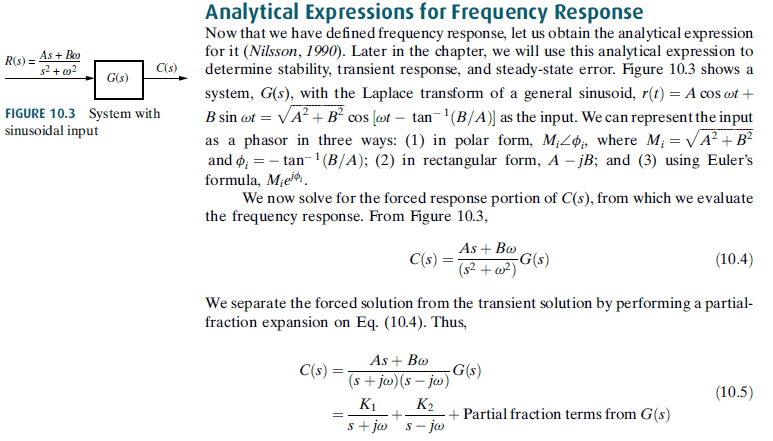
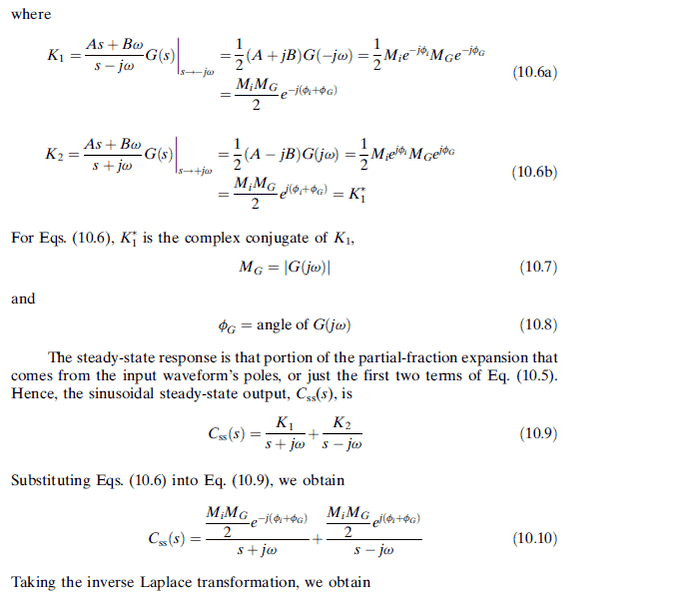
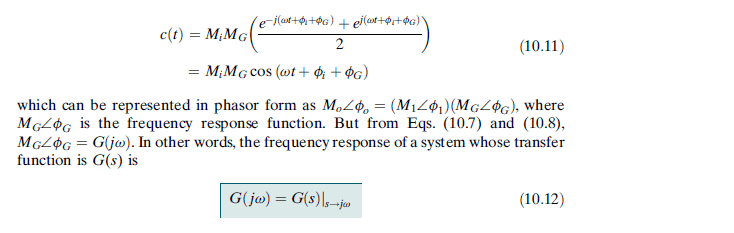
I am struggling to understand the maths in the text shown below.
(1) How does: r(t) = Acos(wt)+Bsin(wt)
become; sqrt((A^2)+(B^2))cos(wt - arctan(B/A))?
(2) He states that we can represent the input as a phasor and in one of three ways but doesn't say which one.
(3) He then focus on the forced response {R(s)} the laplace transform of the input.
(4) He then then separates the forced solution from the transient solution by performing a partial faction expansion but I am unsure what is meant by this separation?
Any help genuinely appreciated.