dE_logics
- 742
- 0
Ok, just for simplicity morph the original question by a bit, with only 1 image -
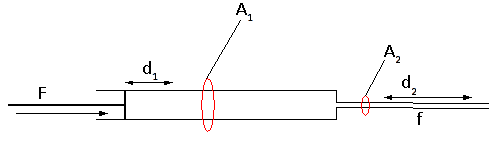
And assume that we have another piston towards the narrower cross section just to not allow the fluid to 'spill', i.e ensure that the whole cross section is filled with the fluid; both the pistons are mass-less.
If, initially the piston towards the LHS applies a force so as to make the fluid gain a momentum, then, after a while, the force application stops, but the pistons keeps pace with the fluid to avoid it's spilling...ensuring that the fluid fills the cross section.
Assuming the length of the narrow cross section is long enough, will all the fluid in the wider cross section move into the narrow cross section without application of any additional force?...i.e solely by virtue of the momentum gained by the fluid?
And assume that we have another piston towards the narrower cross section just to not allow the fluid to 'spill', i.e ensure that the whole cross section is filled with the fluid; both the pistons are mass-less.
If, initially the piston towards the LHS applies a force so as to make the fluid gain a momentum, then, after a while, the force application stops, but the pistons keeps pace with the fluid to avoid it's spilling...ensuring that the fluid fills the cross section.
Assuming the length of the narrow cross section is long enough, will all the fluid in the wider cross section move into the narrow cross section without application of any additional force?...i.e solely by virtue of the momentum gained by the fluid?
Last edited: