Discussion Overview
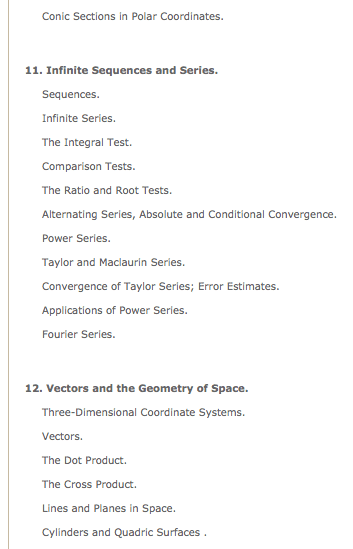
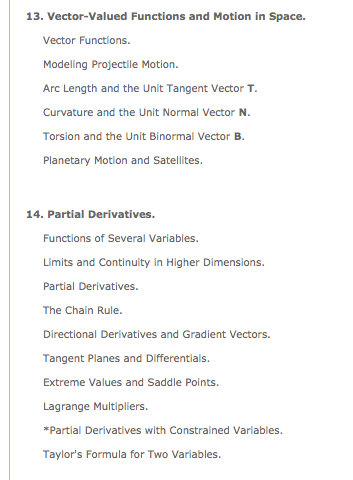
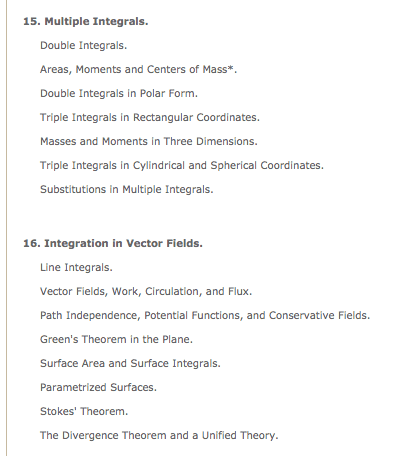
The discussion revolves around preparing for quantum mechanics (QM) by brushing up on calculus and related mathematical topics. Participants share their thoughts on which mathematical concepts and resources are essential for a solid foundation in QM, touching on various textbooks and their contents.
Discussion Character
- Exploratory
- Debate/contested
- Technical explanation
Main Points Raised
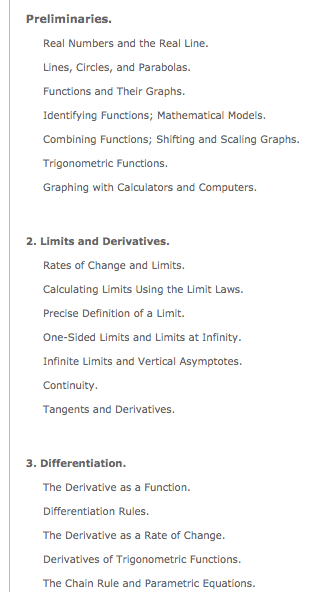
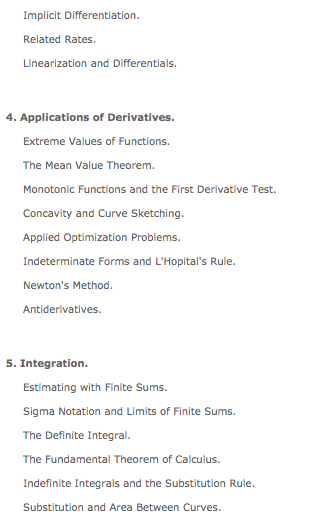
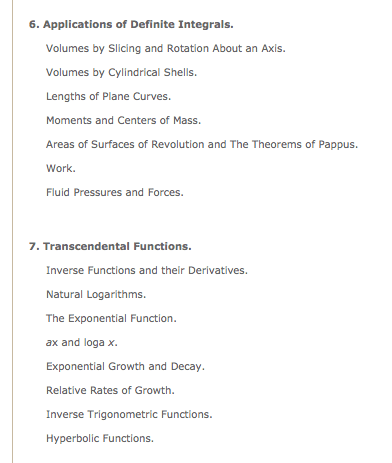
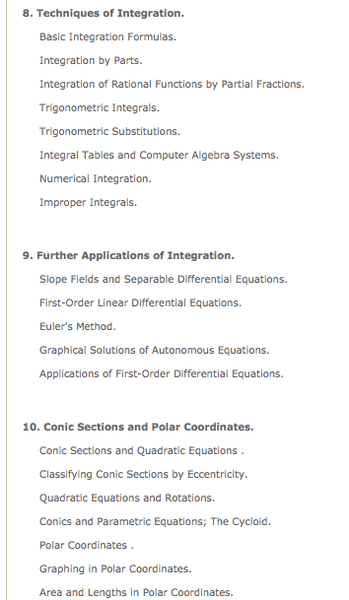
- One participant expresses the need to master calculus to prepare for QM, referencing specific topics and functions mentioned in Griffiths' book but excluding them from study recommendations.
- Another participant emphasizes the importance of being comfortable with linear algebra and partial differential equations (PDEs) in addition to calculus for QM preparation.
- A different participant advises against using Griffiths' book, suggesting M Boas' Mathematical Methods in the Physical Sciences as a better alternative, along with Landau and Lifgarbagez's book for an introduction to QM.
- Concerns are raised about Griffiths' book being poor in explanations, with some participants preferring resources that provide answers to exercises, such as Schaum's Outline of Advanced Mathematics for Engineers and Scientists and Advanced Engineering Mathematics by Kreizig.
- One participant stresses the importance of developing geometric and physical intuition for calculus, particularly regarding the meanings of derivatives and integrals, as well as specific techniques like integration by parts and the use of polar and spherical coordinates.
Areas of Agreement / Disagreement
Participants express differing opinions on the suitability of Griffiths' book for learning QM, with some recommending alternatives. There is no consensus on which resources are definitively the best for preparing for QM, indicating multiple competing views.
Contextual Notes
Participants highlight the need for a solid understanding of various mathematical concepts, but there is uncertainty about the best resources and methods for achieving this understanding. Some participants express dissatisfaction with certain textbooks due to lack of explanations or solutions, which may affect their learning experience.