Discussion Overview
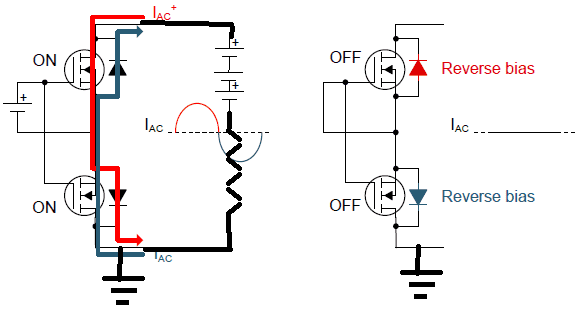
The discussion revolves around the generation of a floating voltage in a circuit without the use of an auxiliary low voltage battery. Participants explore various methods and considerations for achieving this, including the use of MOSFETs, transformers, and opto-isolators, while addressing the implications of different circuit designs and requirements.
Discussion Character
- Exploratory
- Technical explanation
- Debate/contested
- Mathematical reasoning
Main Points Raised
- One participant suggests generating a floating voltage directly from an external supply connected to the load, questioning the need for an auxiliary battery.
- Another participant asks for clarification on what is meant by "floating voltage," prompting a discussion about its definition and the conditions under which it exists.
- A participant proposes using a voltage divider with resistors to create the necessary voltage for logic gates, while also seeking alternative methods.
- There is a suggestion to generate the power supply for the gates from AC and use an opto-isolator for control.
- One participant critiques the initial circuit diagram and emphasizes the importance of defining the expected voltage difference and current requirements for the floating voltage.
- Another participant offers various methods to achieve a stable voltage, including using a magnetic relay, transformer, or Zener diode, while noting the vagueness of the original diagram.
- Several interpretations of the original post are discussed, including the creation of a power supply disconnected from the main supply and the use of a transmission gate.
- Participants discuss the need for an isolated voltage source to drive the MOSFET gates, with suggestions for using opto-couplers or photovoltaic relays.
- One participant mentions the use of a basic astable circuit to control the MOSFETs, indicating that the circuit functions correctly under certain conditions.
Areas of Agreement / Disagreement
There is no consensus on the best method to generate a floating voltage, with multiple competing views and interpretations of the requirements and circuit designs presented by participants.
Contextual Notes
Participants express uncertainty regarding the specific requirements and configurations of the circuit, highlighting limitations in the provided diagrams and the need for clearer definitions of terms like "floating voltage."
Who May Find This Useful
Individuals interested in circuit design, particularly those working with MOSFETs, voltage generation, and isolation techniques in electronic applications.