Efficient Integration of Step Function with Variable Denominator

Click For Summary

Homework Help Overview

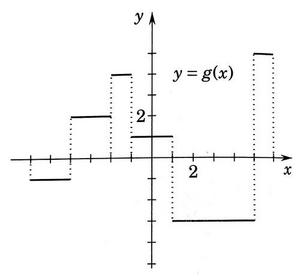
The discussion revolves around calculating the integral of a step function, specifically ## \int^6_{-6} \frac{g(x)}{2+g(x)} \ dx ##. Participants are exploring the integration of a function with a variable denominator and constant values over specific intervals.

Discussion Character

  • Exploratory, Problem interpretation, Assumption checking

Approaches and Questions Raised

  • Participants discuss rewriting the integral using long-division and breaking the integral into segments based on the constant values of the step function. Questions arise about how to evaluate the integral over these segments and the implications of the function's behavior in different intervals.

Discussion Status

Some participants have suggested breaking the integral into pieces corresponding to the intervals where the function is constant. There is acknowledgment of the need to evaluate the integral for each segment, but no consensus has been reached on the complete method or solution.

Contextual Notes

Participants note that the function ## g(x) ## takes on constant values over various intervals, which is crucial for setting up the integral properly. There is also mention of specific intervals and their corresponding values for ## g(x) ##, which may influence the integration process.

Rectifier
Gold Member
Messages
313
Reaction score
4
The problem
I want to calculate ## \int^6_{-6} \frac{g(x)}{2+g(x)} \ dx ## for the step function below.
2YSK7nM.jpg
The attempt
I started with rewriting the function as with the help of long-division
## \int^6_{-6} \frac{g(x)}{2+g(x)} \ dx = \int^6_{-6} 1 \ dx - 2\int^6_{-6} \frac{1}{g(x)+2} \ dx##

I know that ##\int^6_{-6} 1 \ dx = 12## but that's about it. I am not sure how I should continue.

And here is where I get stuck.
 
Last edited:
Physics news on Phys.org
If you look closely at ## g(x) ##, it takes on constant values for various intervals. You need to break up the integral from -6 to 6 into these various segments.
 
  • Like
Likes   Reactions: Rectifier
Rectifier said:
The problem
I want to calculate ## \int^6_{-6} \frac{g(x)}{2+g(x)} \ dx ## for the step function below.
2YSK7nM.jpg
The attempt
I started with rewriting the function as with the help of long-division
## \int^6_{-6} \frac{g(x)}{2+g(x)} \ dx = \int^6_{-6} 1 \ dx - 2\int^6_{-6} \frac{1}{g(x)+2} \ dx##

I know that ##\int^6_{-6} 1 \ dx = 12## but that's about it. I am not sure how I should continue.

And here is where I get stuck.
This shouldn't be too difficult. On the interval [-6, -4], g(x) = -1, so g(x) + 2 = 1. What is ##\int_{-6}^{-4} \frac 1 1 dx##? Do the same for the other intervals.
 
  • Like
Likes   Reactions: Rectifier and Charles Link
Hi Rectifier:

I suggest breaking the integral into six pieces, one piece for each step. For each piece, g(x) has a specific constant value, so the integrand is a specific constant.

Hope this helps.

Regards,
Buzz
 
  • Like
Likes   Reactions: Rectifier
Thank you for your help, everyone!
 
  • Like
Likes   Reactions: Charles Link

Similar threads

Replies
3
Views
2K
  • · Replies 4 ·
Replies
4
Views
2K
Replies
9
Views
2K
  • · Replies 105 ·
4
Replies
105
Views
11K
Replies
2
Views
2K
  • · Replies 6 ·
Replies
6
Views
2K
  • · Replies 22 ·
Replies
22
Views
3K
  • · Replies 9 ·
Replies
9
Views
2K
  • · Replies 14 ·
Replies
14
Views
3K
  • · Replies 5 ·
Replies
5
Views
3K