camerafinn
- 3
- 0
Hello Everyone,
I just registered here to try to get some answers on a question that has been bugging me for a few days.
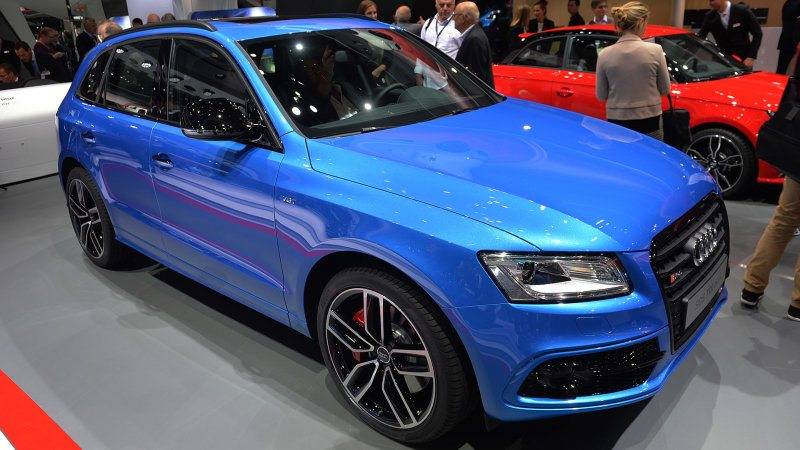
So back in June, Audi announced the upcoming SQ5, a medium sized SUV, but in the sport package. In Europe, the car will receive a 3.0L TDI engine, however it will be released with one large turbocharger, and one electric supercharger. I put the article below if you are interested:
http://www.autoblog.com/2016/06/14/2018-audi-sq5-48v-electric-supercharger/
The electric supercharger is made by a French company called Valeo, they seem to make many OEM parts. The power rating is 7kW at 48 Volts. I believe that this is the product in the Audi:
http://www.valeo.com/en/page-transv...a-pts-en/diaporama-electric-supercharger.html
Anyway, they don't sell that to the public. (perhaps because the car won't even be released until next year...)
The purpose of the electric supercharger is to provide instant boost pressure under hard, and sudden, acceleration -- to eliminate turbo lag. I would like to use a similar system in a car I am building. My engine will be a twin turbocharged Buick 350 (that equals 5.7L), hopefully capable of near 800 crank HP. So, I'm looking to mimic the system that Audi/Valeo developed. I was wondering how many HP/kW I need in an electric motor to push the turbo. I have found some BLDC motors, ranging from 3kW to 20kW.
Some motors I've looked at: http://www.goldenmotor.com/frame-bldcmotor.htm
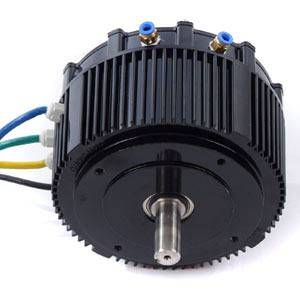
I would spline the motor into a gear up box (I know it's not ideal, but I can't seem to find any 5-10kW 75,000 RPM motors) and then the output was splined onto an additional turbocharger's shaft in place of the turbine. This is essentially the setup of a ProCharger: https://www.procharger.com/auto-superchargers/models
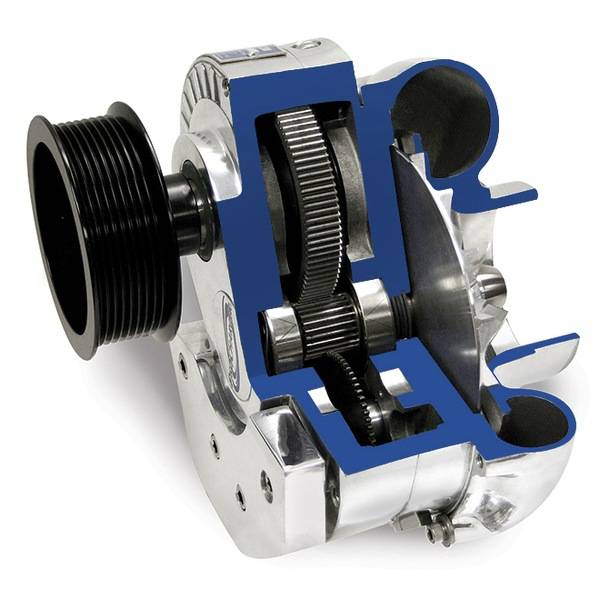
I would want to provide 5-10lbs of boost up from idle (600 RPM) through about 3000 RPM, while the normal turbos spool. The motor and compressor would only have to operate for about a three second interval.
So, after all of that the question is essentially how many kW do I need in an electric motor? Is there an idealized way to calculate/estimate how much power is needed to push 1lb/min at a pressure ratio between 1.25 and 1.75?
Thank you to anyone who can help. This math is far above my head.
-Finn
I just registered here to try to get some answers on a question that has been bugging me for a few days.
So back in June, Audi announced the upcoming SQ5, a medium sized SUV, but in the sport package. In Europe, the car will receive a 3.0L TDI engine, however it will be released with one large turbocharger, and one electric supercharger. I put the article below if you are interested:
http://www.autoblog.com/2016/06/14/2018-audi-sq5-48v-electric-supercharger/
The electric supercharger is made by a French company called Valeo, they seem to make many OEM parts. The power rating is 7kW at 48 Volts. I believe that this is the product in the Audi:
http://www.valeo.com/en/page-transv...a-pts-en/diaporama-electric-supercharger.html
Anyway, they don't sell that to the public. (perhaps because the car won't even be released until next year...)
The purpose of the electric supercharger is to provide instant boost pressure under hard, and sudden, acceleration -- to eliminate turbo lag. I would like to use a similar system in a car I am building. My engine will be a twin turbocharged Buick 350 (that equals 5.7L), hopefully capable of near 800 crank HP. So, I'm looking to mimic the system that Audi/Valeo developed. I was wondering how many HP/kW I need in an electric motor to push the turbo. I have found some BLDC motors, ranging from 3kW to 20kW.
Some motors I've looked at: http://www.goldenmotor.com/frame-bldcmotor.htm
I would spline the motor into a gear up box (I know it's not ideal, but I can't seem to find any 5-10kW 75,000 RPM motors) and then the output was splined onto an additional turbocharger's shaft in place of the turbine. This is essentially the setup of a ProCharger: https://www.procharger.com/auto-superchargers/models
I would want to provide 5-10lbs of boost up from idle (600 RPM) through about 3000 RPM, while the normal turbos spool. The motor and compressor would only have to operate for about a three second interval.
So, after all of that the question is essentially how many kW do I need in an electric motor? Is there an idealized way to calculate/estimate how much power is needed to push 1lb/min at a pressure ratio between 1.25 and 1.75?
Thank you to anyone who can help. This math is far above my head.
-Finn
Last edited by a moderator:
