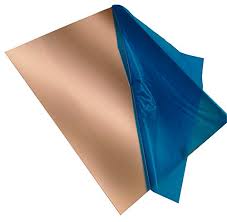
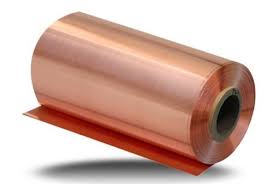
Generator stator: Copper wire or copper sheets?

Click For Summary

Discussion Overview

The discussion revolves around the design of a stator for an electric generator, specifically comparing the use of copper wire versus flat copper sheets. Participants explore the implications of surface area, length, and the geometry of the materials in relation to generating electricity and interacting with magnetic fields. The conversation includes considerations for low voltage DC applications and the efficiency of generator designs.

Discussion Character

  • Exploratory
  • Technical explanation
  • Debate/contested
  • Homework-related

Main Points Raised

  • One participant suggests that flat copper sheets might be more effective due to increased surface area on a single magnetic axis, questioning the necessity of using copper wire.
  • Another participant expresses confusion about the initial post and requests a clearer description of the machine and its intended function.
  • A later reply clarifies that the goal is to produce current by maximizing contact with magnetic field lines, proposing that layers of flat copper sheets could potentially yield more surface area than a round copper coil.
  • Concerns are raised about the mechanical feasibility of using sheets instead of wire, particularly regarding the number of turns of wire that can intersect the magnetic flux.
  • Participants discuss the importance of various factors in motor winding design, including the cross-sectional area of copper, insulation, and manufacturing considerations.
  • One participant suggests measuring the efficiency of existing designs to identify causes of inefficiency before making changes, implying that improvements may be incremental rather than revolutionary.

Areas of Agreement / Disagreement

Participants express differing views on the effectiveness of copper sheets versus wire, with no consensus reached on which design would be superior for the stator. The discussion remains unresolved regarding the optimal material choice and design considerations.

Contextual Notes

Participants acknowledge a lack of formal education in electrical engineering, which may influence their understanding of the concepts discussed. The conversation includes speculative ideas about the design and function of the generator stator.

Who May Find This Useful

Individuals interested in electric generator design, particularly those exploring alternative materials for stators, as well as students beginning their education in electrical engineering.

Vandan
Messages
7
Reaction score
0
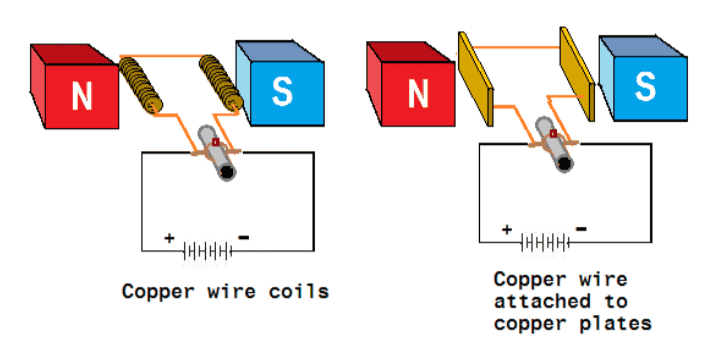
Inside a electric generator. To produce the most electricity catching the greatest number of electrons. Instead of spinning a magnet in front of a copper loop or spinning a copper loop between 2 magnet poles my thinking is flat copper sheets would have more surface area on a single magnetic axis. Do I need to catch multiple magnetic axis's (x,y,z)? Is that why we use copper wire and not flat sheets? As first sheet layer saturates then next sheet sheet, and next...
Wouldn't flat copper sheets be more effective?
f70E3.png

Is wire used because it's round to attach multiple axis fields? Is length important where I would be better off rolling a long 0.5mm sheet of copper then? Very confused why not "wide" layers of "flat" copper foil? Why wire?
Screenshot_20220410-024213.png
images - 2022-04-10T024058.859.jpeg
images - 2022-04-10T024123.409.jpeg


How important is length vs surface area for collecting electrons? Both have layers. Sheets won't have much length.

For low voltage dc stator.
 
Last edited:
Physics news on Phys.org
What? I have no idea what your talking about. Something about Cu conductors and magnets, I guess.
Try again with a detailed description of your machine and what you want it to do. Unfortunately, we just are great at mind reading here.
 
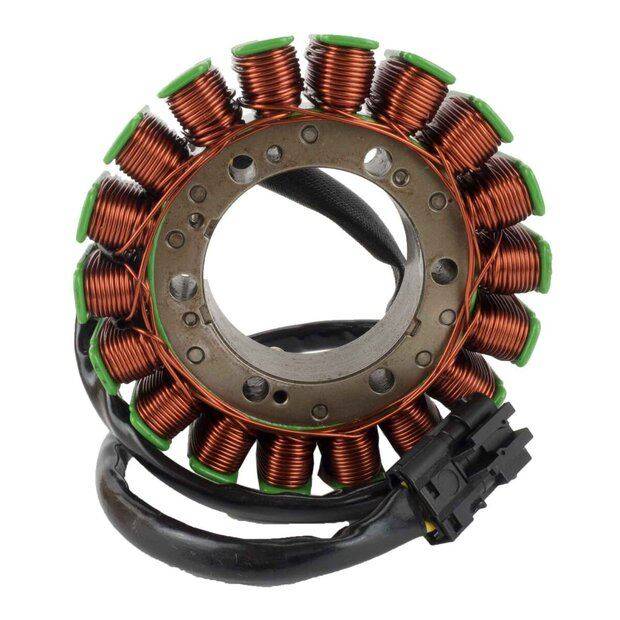
mtp8991_stator-lichtmaschine.jpg


I edited the first post. Creating an electric generator, specifically the stator. Where the permanent magnet and copper wire meet to produce the current. I'm thinking more current would be produced with layers of flat sheets instead of copper coil or even rolled copper sheets if needs round shape. Does it need to be round?. Length of copper wire is much longer but foil layers cover more surface. Therefore a tightly packed insulated copper foil would be more mass, more surface than a big round copper coil? I thought in concept the idea was to give electrons a path. Create as much contact to the magnetic field lines as possible and a big flat sheet bigger than the magnet with multiple layers I thought would create the most surface hitting the maximum number of magnetic field lines.

About 20 layers of copper foil (3 ft of copper foil). Vs 100 ft copper wire per magnet. Actual volume just a number made up for length comparison doesn't reflect actual length. I just wanted to show copper wire would be more than 30x longer length.

Is the goal to make an electromagnet or catch electrons? Or both? Where length generates a bigger electromagnet? I thought electromagnets are only for "motors" but this is for a generator stator to catch electrons to extract a current from the flux? I might be very confused do I need an electromagnetic field to generate a flux? I thought the copper moving quickly passed the magnets magnetic field lines would create the flux. My end goal is to increase the efficiency of an electric generator machine. Where I've done everything mechanical already I could, increased power output, reduced drag. I'm now trying to improve the stator design. Every watt produced counts!

For low voltage dc stator.
 
Last edited:
Vandan said:
For low voltage dc stator.
Just to note, experimenting on small safe scaled down unit for education and testing. I'm starting education in electrical. Likely clear lacking education there. All guidance is super appreciated. Final project is a full scale version supervised and later towards end of education. This scaled down version limited to low voltages and amps for safe use incapable of delivering a harmful surge of current. Thank you all for helping. :)
 
An important consideration in motor windings is the number of turns of wire that intersect the magnetic flux. I think you will have a hard time mechanically reproducing that with sheet materials. You tend to only see that sort of construction in magnetic designs that require high current and a relatively low turns count. It's also usually more expensive. Cost is a big issue in motor design because the technology is so mature. Everything has already been tried before and improvements tend to be incremental.
 
  • Like
Likes   Reactions: Vandan and berkeman
DaveE said:
An important consideration in motor windings is the number of turns of wire that intersect the magnetic flux.
Another important consideration is the cross sectional area of the copper because of ##I^2 R## losses. And another is the steel cross sectional area. And the back iron area. And insulation between the copper and the steel. And phase insulation. And ability to install the copper when manufacturing. All at minimum cost. All of these are balanced so that the entire design is optimized.

I suggest that you take an existing design and measure the total efficiency vs power. Then measure the various causes of inefficiency. Make a loss budget - the sum of the various losses should match the total inefficiency. Then, and only then, will you be able to improve the design and justify the changes. I suspect that you will end up taking a design that was optimized for one set of circumstances and and optimizing it for a different set of circumstances.
 
  • Like
Likes   Reactions: Vandan

Similar threads

  • · Replies 8 ·
Replies
8
Views
2K
  • · Replies 100 ·
4
Replies
100
Views
11K
  • · Replies 36 ·
2
Replies
36
Views
6K
  • · Replies 2 ·
Replies
2
Views
2K
Replies
28
Views
3K
  • · Replies 1 ·
Replies
1
Views
2K
  • · Replies 5 ·
Replies
5
Views
2K
  • · Replies 11 ·
Replies
11
Views
2K
Replies
2
Views
3K
  • · Replies 5 ·
Replies
5
Views
1K