Discussion Overview
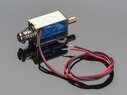
The discussion revolves around the wiring and functionality of a 12V DC linear actuator, specifically focusing on the connectors involved and their roles in controlling the actuator's movement. Participants explore the actuator's design, including its use of solenoids, and the implications for its operation in a project requiring bidirectional movement.
Discussion Character
- Exploratory
- Technical explanation
- Debate/contested
- Experimental/applied
Main Points Raised
- One participant describes the actuator as utilizing a magnetic coil and plunger design, likening it to a solenoid, and seeks clarification on the function of its connectors.
- Another participant suggests measuring the male socket pin to determine if it serves as a ground connector, hypothesizing that the female sockets are for driving the actuator in both directions.
- Concerns are raised about the actuator's ability to provide push-pull action, with suggestions that a return spring or an additional coil may be necessary for such functionality.
- Participants inquire about part numbers and datasheets to better understand the actuator's specifications and capabilities.
- One participant mentions that the actuator is intended to shift a motorcycle transmission, implying it should function in both directions.
- Another suggests testing the actuator with a 12V power supply to verify its operation, while also requesting resistance measurements between the connectors.
- Discussion includes links to external resources for similar solenoids and installation guides, though some participants express frustration over the lack of specific information about the actuator in question.
- There is speculation that the actuator may contain multiple solenoids controlled by three wires, with a possibility of a center return spring.
Areas of Agreement / Disagreement
Participants express differing views on the actuator's design and functionality, particularly regarding its ability to achieve bidirectional movement. There is no consensus on the exact role of the connectors or the internal mechanism of the actuator, leading to ongoing exploration and inquiry.
Contextual Notes
Participants note the absence of part numbers and specific data, which limits the ability to draw definitive conclusions about the actuator's wiring and operation. The discussion relies heavily on assumptions and hypotheses that remain unverified.
![20230126_111459[1].jpg](https://www.physicsforums.com/attachments/20230126_111459-1-jpg.321195/ "20230126_111459[1].jpg")
![20230126_111452[1].jpg](https://www.physicsforums.com/attachments/20230126_111452-1-jpg.321196/ "20230126_111452[1].jpg")