Discussion Overview
The discussion revolves around the feasibility of printing images that are intentionally blurred in a manner that allows individuals with significant vision impairments to see them clearly, while appearing indistinct to those with normal vision. The conversation explores theoretical and practical aspects of optics, image processing, and the limitations of current technology.
Discussion Character
- Exploratory
- Technical explanation
- Debate/contested
Main Points Raised
- Some participants question whether it is possible to print blurred images that can be clearly seen by those with strong prescriptions while remaining unreadable to those with normal eyesight.
- One participant argues that blurred images cannot be "corrected" because the original information is lost, referencing past experiences in photo printing.
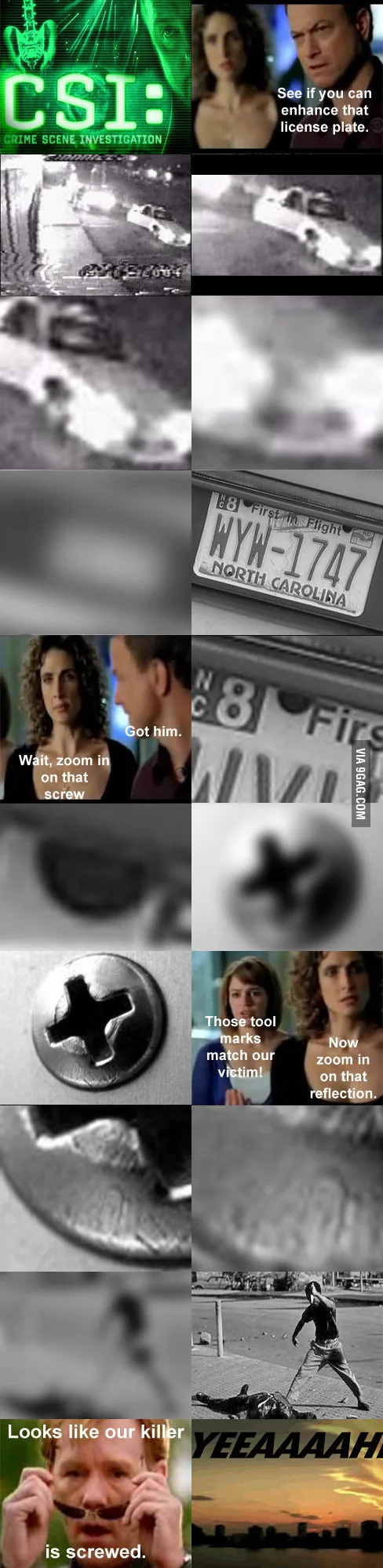
- Another participant suggests that while current image processing can enhance blurred images, it is not commercially viable and does not equate to reversing blur optically.
- Some participants discuss the concept of using lenses to achieve a form of "anti-blur," proposing that if one knows their prescription, it might be possible to calculate counter-deformations to create readable text for themselves.
- There are concerns about the terminology used, particularly regarding the definition of "blur" and whether it accurately describes the visual experience of those with glasses.
- One participant mentions that if glasses do not correct vision adequately, it may indicate an incorrect prescription or a change in vision over time.
Areas of Agreement / Disagreement
Participants express differing views on the possibility of printing images that can be read by those with vision impairments while remaining unclear to others. There is no consensus on whether the concept of "anti-blur" is valid or achievable, and the discussion remains unresolved regarding the practical application of these ideas.
Contextual Notes
Participants highlight limitations in current optical technology and the challenges of accurately reproducing images for specific visual impairments. The discussion also touches on the subjective nature of vision and the potential for varying interpretations of "blur." Unresolved assumptions about the effectiveness of lenses and image processing techniques are present.


 But
But 