Problems in Copper and Zinc Electroplating

Click For Summary
SUMMARY

The forum discussion centers on the electroplating process of copper and zinc on iron nails. Participants clarify that copper plating on an iron nail is spontaneous and does not require an external current, although using a current can enhance the plating speed and thickness. The setup involved using a 3.0V power source from two 1.5V batteries, copper(II) sulfate solution at approximately 0.5M concentration, and two iron nails as electrodes. The discussion also touches on the spontaneity of zinc electroplating due to its more negative standard electrode potential.

PREREQUISITES
  • Understanding of electroplating principles
  • Familiarity with standard electrode potentials
  • Knowledge of copper(II) sulfate solution preparation
  • Basic electrical circuit concepts
NEXT STEPS
  • Research the effects of current on electroplating thickness and speed
  • Learn about the standard electrode potentials of common metals
  • Explore the preparation and concentration measurement of copper(II) sulfate solutions
  • Investigate the differences between galvanizing and electroplating processes
USEFUL FOR

This discussion is beneficial for hobbyists and professionals involved in metal finishing, electroplating technicians, and anyone interested in understanding the nuances of copper and zinc electroplating processes.

hojess02
Messages
5
Reaction score
0
TL;DR
Hi~
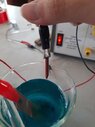
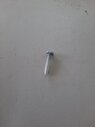
Pic 1: The first time we electroplated iron nail with copper. The surface of the nail had black substance after electroplating it.
Pic 2: The second time we did it & we used a lower concentration of copper(II) sulphate as electrolyte.

I wonder is that black substance copper oxide & what is the relationship between that black substance and the concentration of copper(II) sulphate.

Thanks!!
20211207_122131.jpg
 

Attachments

  • 20211209_104847.jpg
    20211209_104847.jpg
    28.6 KB · Views: 184
Chemistry news on Phys.org
20211207_120851.jpg
 

Attachments

  • 20211207_131955.jpg
    20211207_131955.jpg
    17.8 KB · Views: 161
Welcome to PF. :smile:

Can you say more about your plating setup? What settings are you using? How long are you letting the plating process run?
 
Cu plating on an iron nail is spontaneous. You shouldn’t have needed any current. What was the other electrode made of? Were those galvanized nails?
 
chemisttree said:
Cu plating on an iron nail is spontaneous.
With current the process can be definitely speed up (and you can plate much thicker layers).
 
berkeman said:
Welcome to PF. :smile:

Can you say more about your plating setup? What settings are you using? How long are you letting the plating process run?

We used 3.0V (combination of two 1.5V batteries), copper plate, iron nail, 2 wires with crocodile clips, copper(II) sulphate solution (about 0.5M) (We didn't measure the concentration precisely) ThxThx
 
Last edited by a moderator:
chemisttree said:
Cu plating on an iron nail is spontaneous. You shouldn’t have needed any current. What was the other electrode made of? Were those galvanized nails?
I see... Is zinc electroplating on iron spontaneous too? Since zinc has a more negative standard electrode potential. Those were non-galvanized nails.
 
Borek said:
With current the process can be definitely speed up (and you can plate much thicker layers).
I see... thanks!
 
You are using two iron nails for electrodes. Only one will produce copper. Which one is black? Anode or cathode?
 
  • #10
chemisttree said:
You are using two iron nails for electrodes. Only one will produce copper. Which one is black? Anode or cathode?
There is a problem with OP post formatting, but I believe they used copper plate for the anode.
 

Similar threads

  • · Replies 4 ·
Replies
4
Views
2K
  • · Replies 5 ·
Replies
5
Views
2K
  • · Replies 1 ·
Replies
1
Views
2K
  • · Replies 10 ·
Replies
10
Views
3K
  • · Replies 2 ·
Replies
2
Views
3K
Replies
4
Views
2K
  • · Replies 3 ·
Replies
3
Views
1K
  • · Replies 2 ·
Replies
2
Views
3K
Replies
20
Views
4K
  • · Replies 3 ·
Replies
3
Views
2K